Assignment One

Initial experiments and ideas

From my previous exercises and collection of work I have already created, I had a clear vision going into this assignment of what piece of work I wanted to create for my final still life drawing for this part of the module. I really liked my more recent pieces, experimenting with my style, creating atmosphere and how I create tone in a piece of work. Furthermore I feel the style I have recently developed while looking at Odilon Redon’s work, being influenced by how his markings hold a lot of atmospheric weight and effectively purvey tone, is one I would like to explore further. I like how my experiments with ink and etching came out, and knew that they would be drawing mediums I would want to utilise for this piece.
Keeping in mind my ideal mediums and ideas I decided the objects I would focus on would be lamps as they can be very atmospherical. Especially if one were turned on, I thought that would create an atmospherically unique composition. To keep to my minimalistic aesthetic within my drawing, I decided two lamps would be most effective, to create further intrigue within my composition I decided on a hanging light and a floor or table lamp, with a bold black background, to help guide the focus onto my two objects.
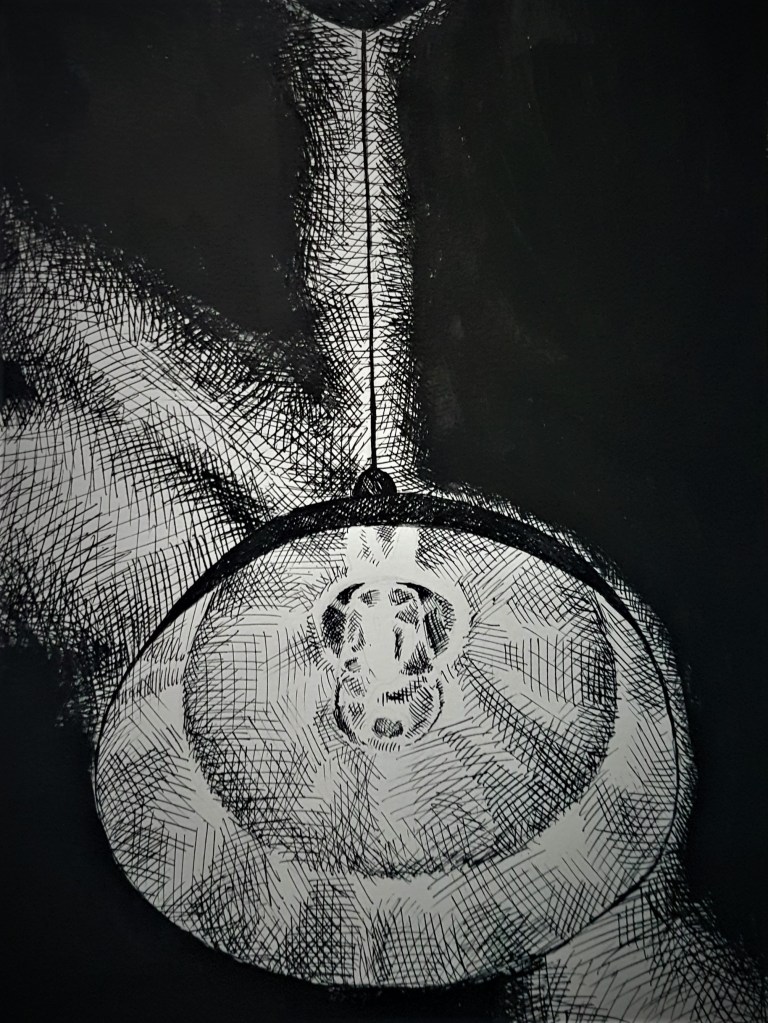
Sketch idea for one object in ink

To begin with I decided to test out my ideal drawing style in ink on one of the lamps I wanted to draw. I like this angle I decided on as the some of the bulb details are very clear and I like the way the light reached out from the shade. I had to highlight around the darker parts of the lamp that would have otherwise disappeared into the black background to help show the shape. I t feel this adds to the glow of the light which I quite like. However I feel that some of the highlights, such as around the cord, are to bright and would be better executed by drawing with the highlights. However I like the mysterious and foreboding atmosphere I have created within this drawing.
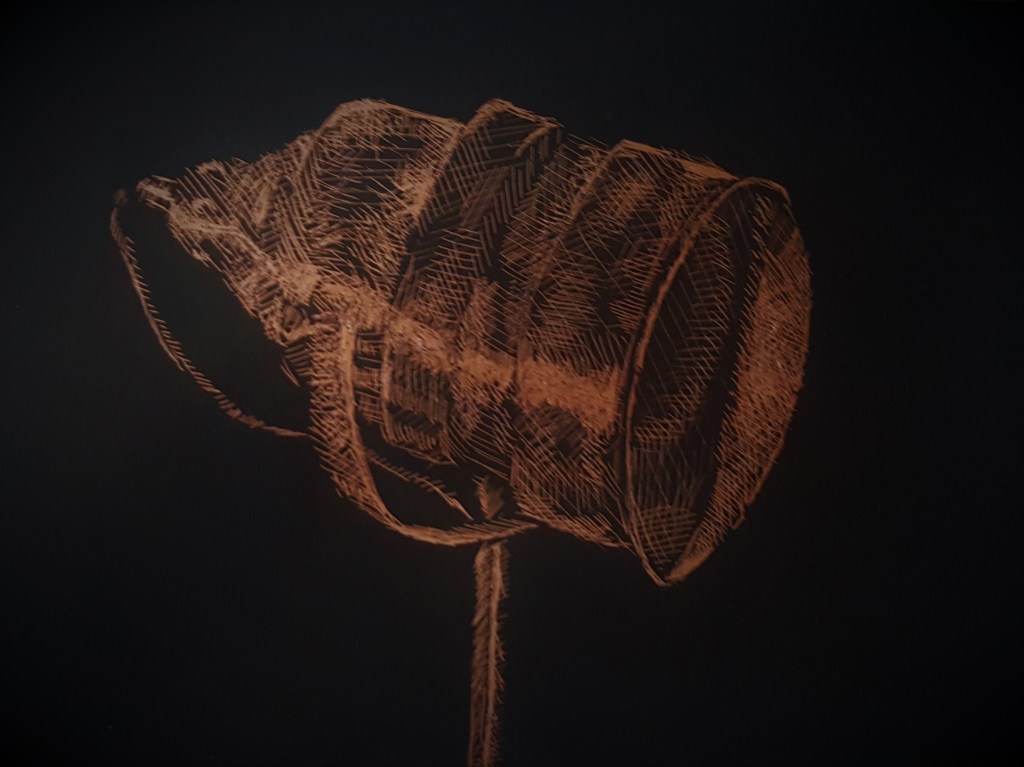
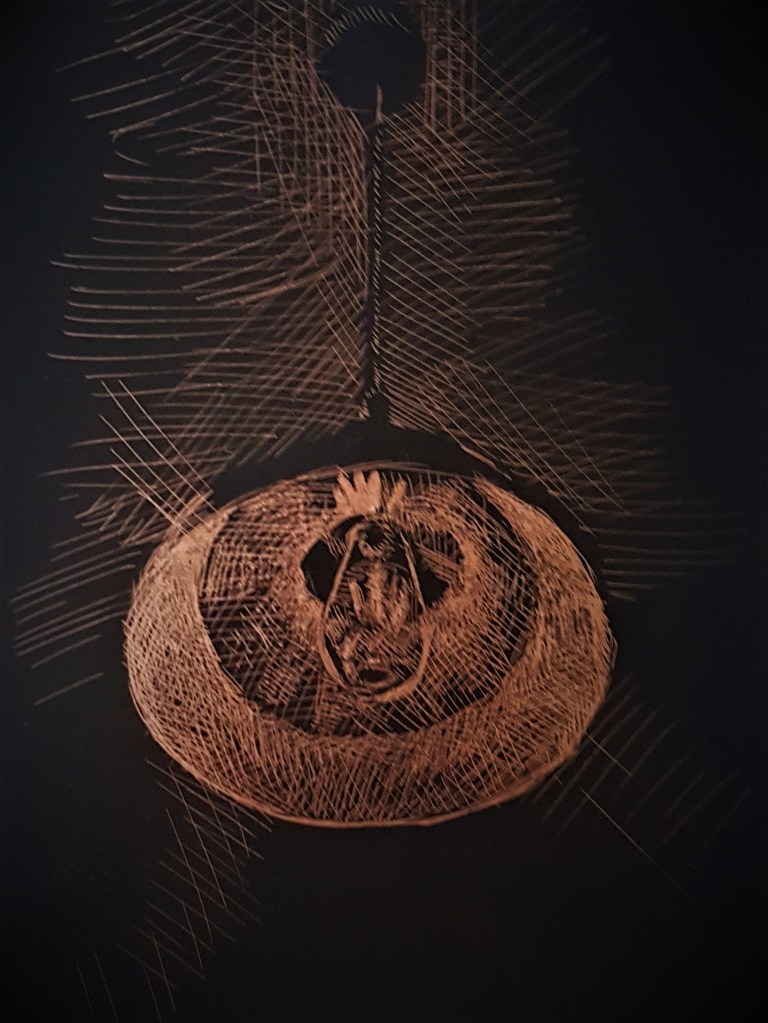
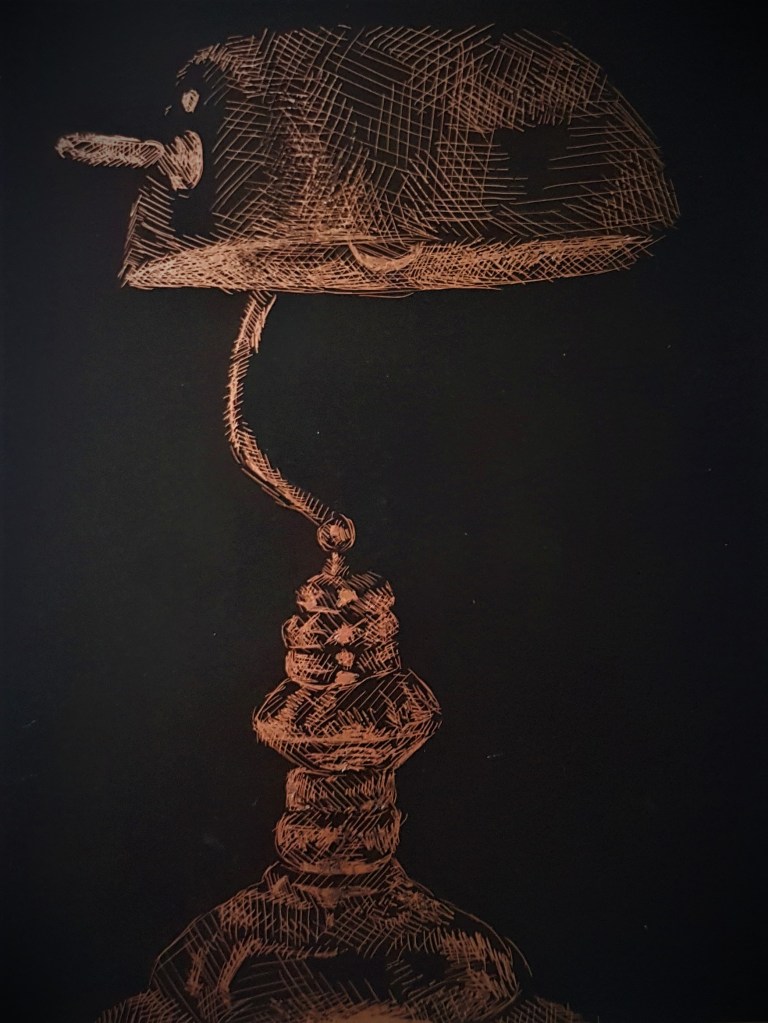
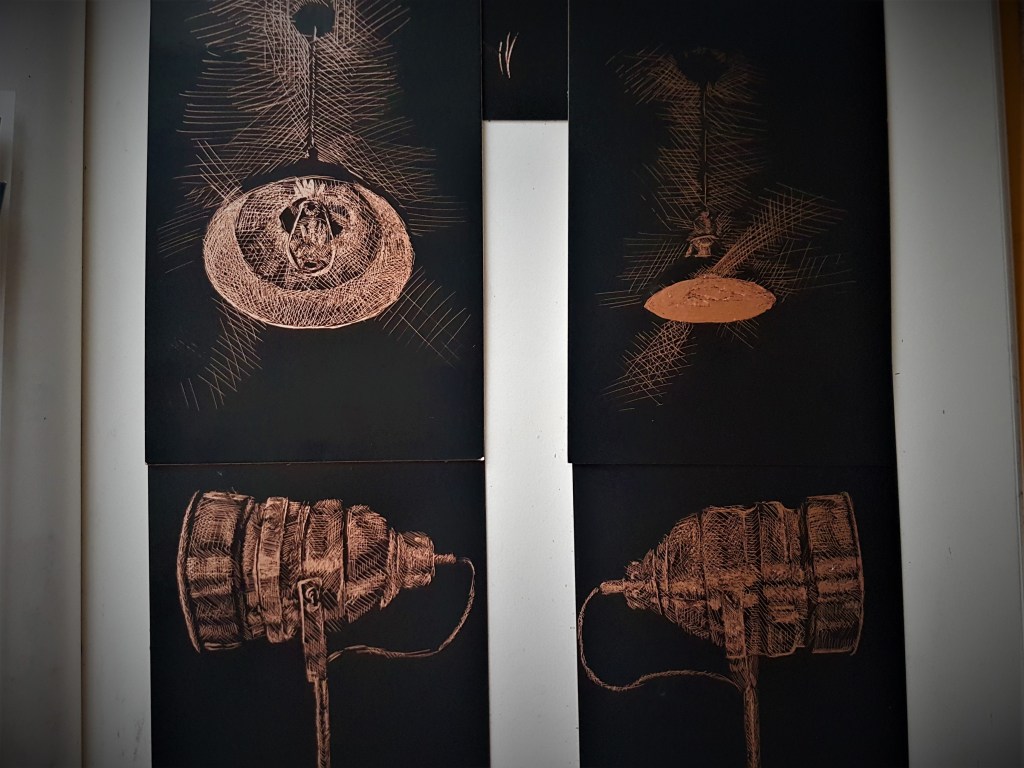
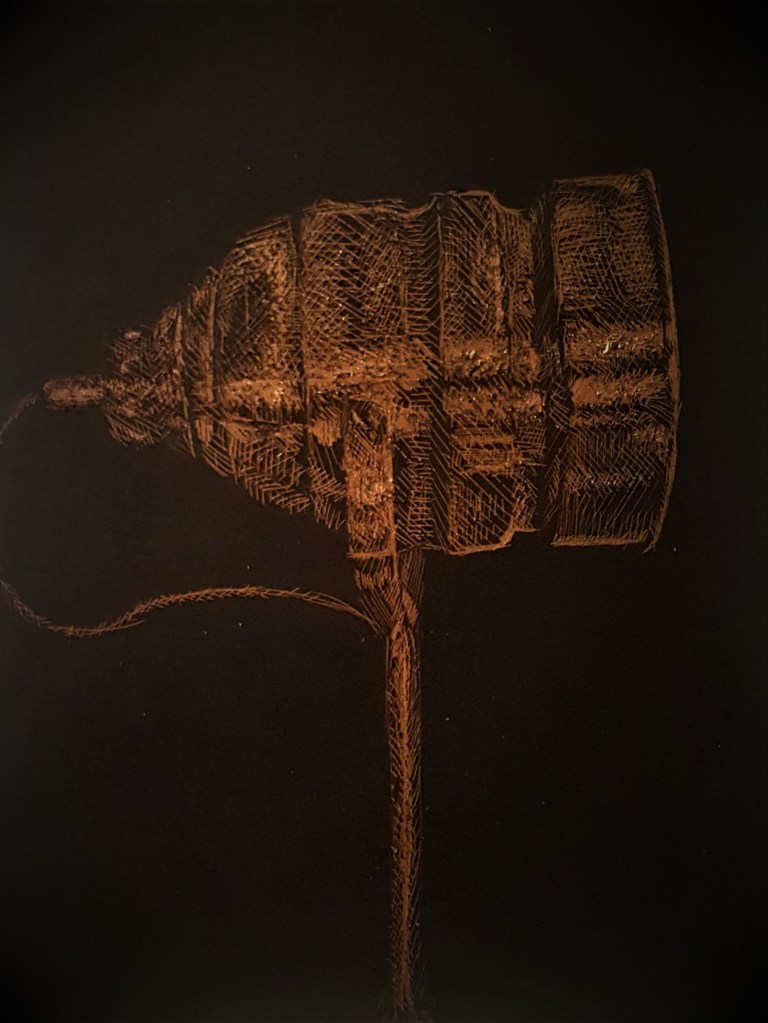
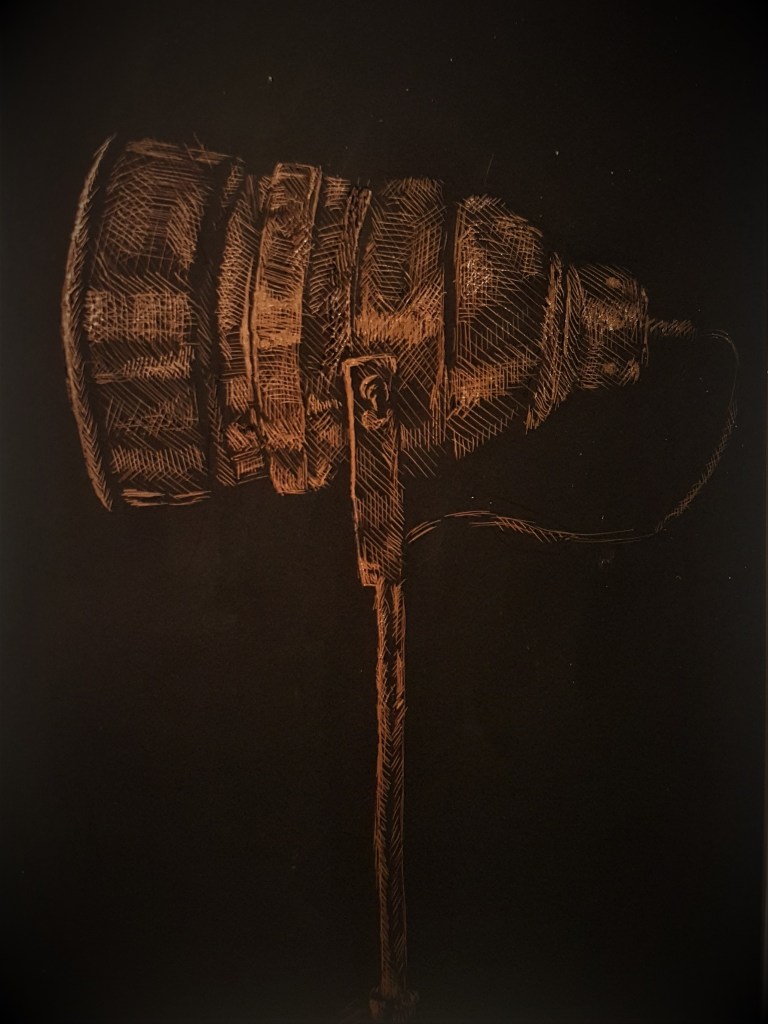
Moving on, I began experimenting with another idea of using the copper etchings as a effectively show use of tone in a unique way, due to the shine of the coper foil. I like the way I can show the shine of the light from the ceiling lights in a much more natural and more effective way, its way more subtle than how I did it with the ink. In terms of choosing between the floor and table lamp for my second object, I think lamp[1] has more interesting details than lamp [4]. Furthermore I think the lamp shade from drawing [4] is too bland and not as interesting tonally as lamp [1] with the metallic head.

Experimenting with composition

In order to decide on my composition I laid out all of my cards, keeping in mind the possibility of doing them in ink. The cards were useful for deciding how to place my composition and to decide on my which lights/lamps would be the two I’d like to use.
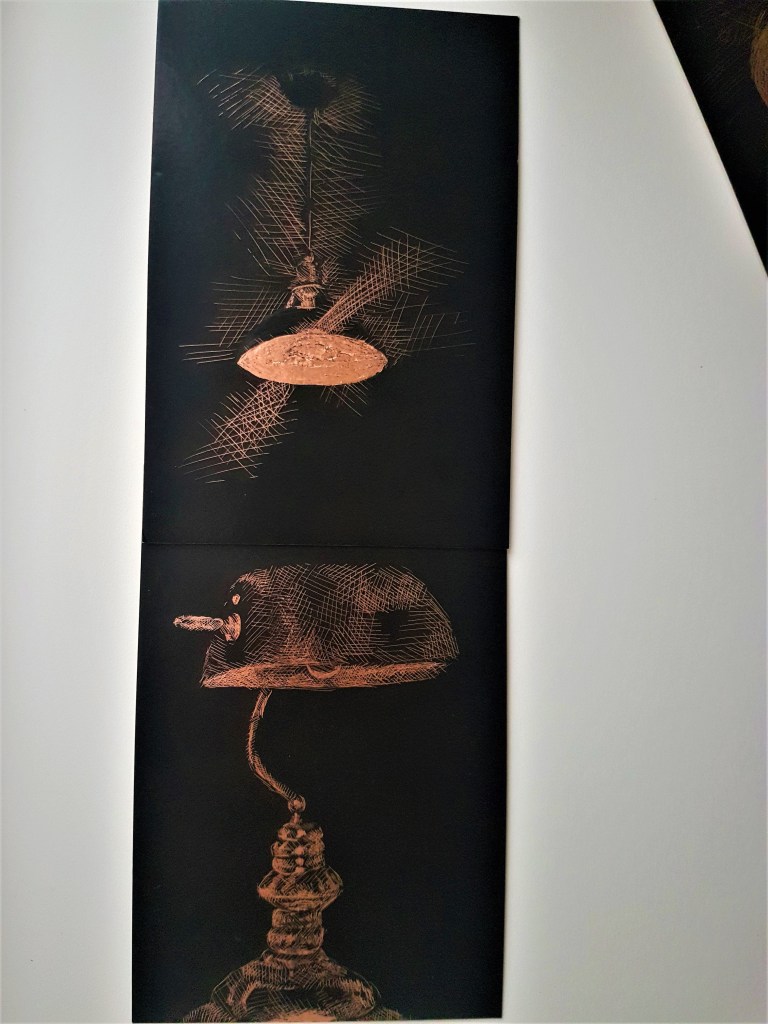
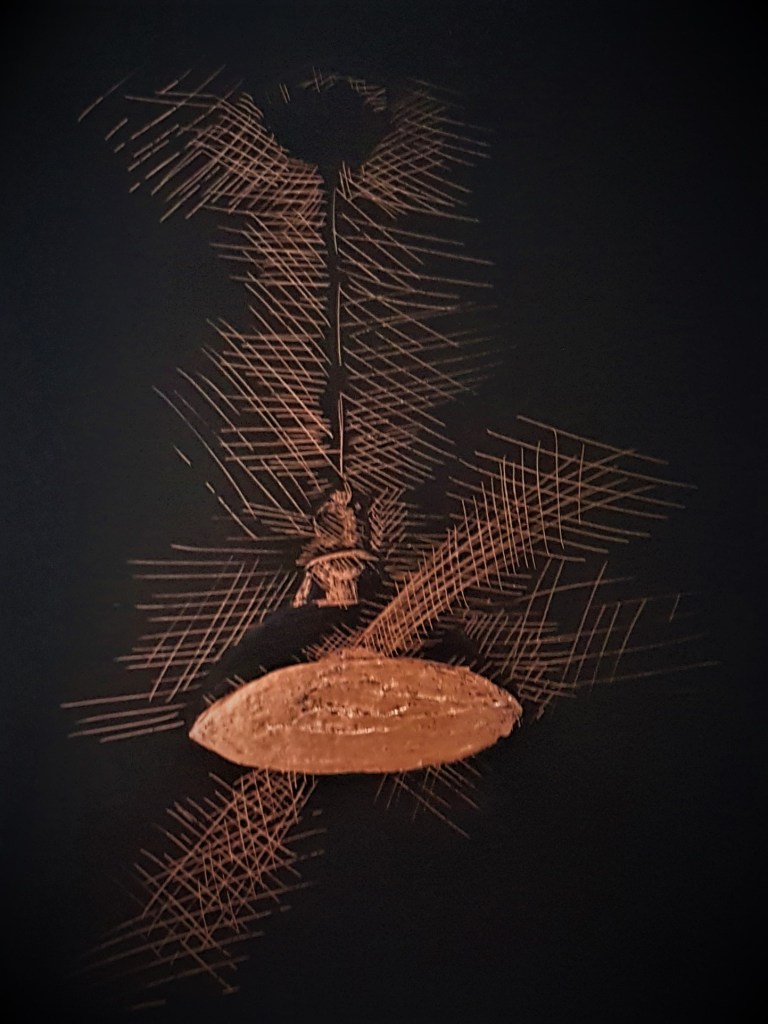
By placing out all of the cards like such, it helped me to understand how the lamps could possibly look when arranged together for a still life. As discussed before, I quickly ruled out possibilities [1] and [2] due to the bottom lamp, it wasn’t as interesting as the metallic one but also it would be hard to position under the ceiling lamp. I also ruled out [3] as I didn’t like the angle I chose for the bottom lamp, I found I much preferred a simple side view, which fit into the minimalistic style I wanted better than if it were at an angle. I really do like the attempt at the ceiling lamp in [5] with how bright it is, however I preferred being able to see the detail of the light bulb, and thus I went with composition [4].
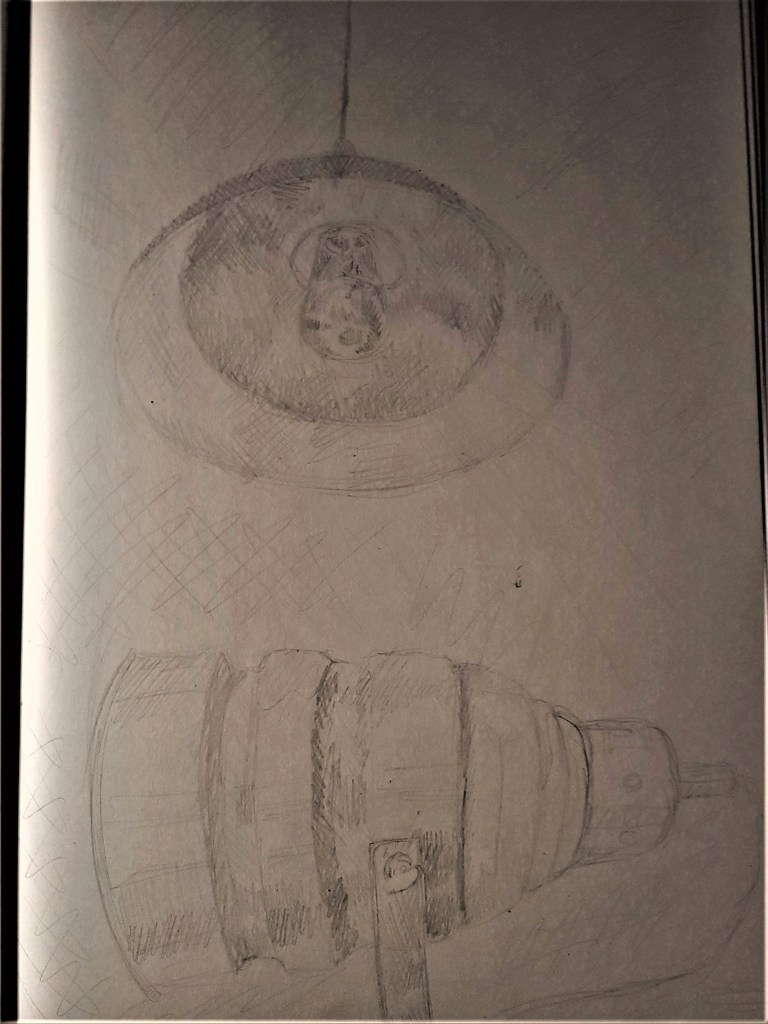
To finish off this process, I did a quick pencil sketch of what I wanted to achieve with my assignment piece. I then thought about what media I wanted to use to produce the piece. I did like the traditional look of using ink. However I thought the use of metallic foil added an industrial feel, was more effective in portraying the highlights of lights and created a mysterious atmosphere that I liked. I decided on the metallic foil card and etching, however the biggest card available for the foil was A4, I decided to take a risk and do a smaller assignment piece in order to have my stylistic choice, as I feel it is more effective in showing the feeling of my markings and portraying the tone of the objects.

Assignment One
Assignment One

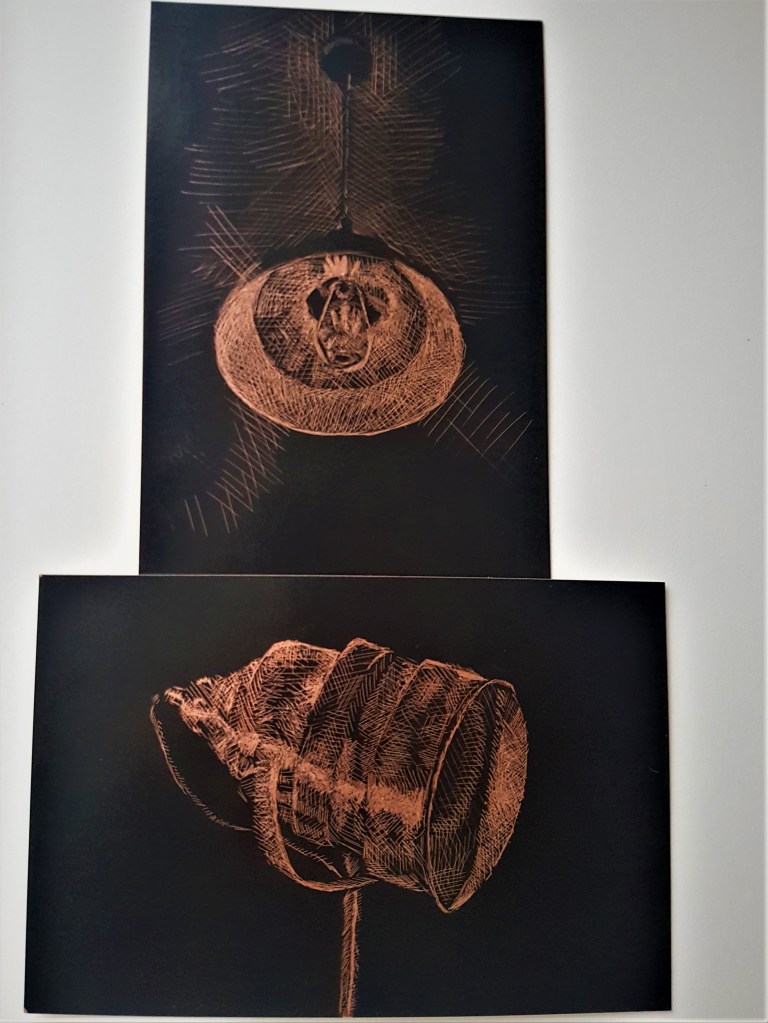
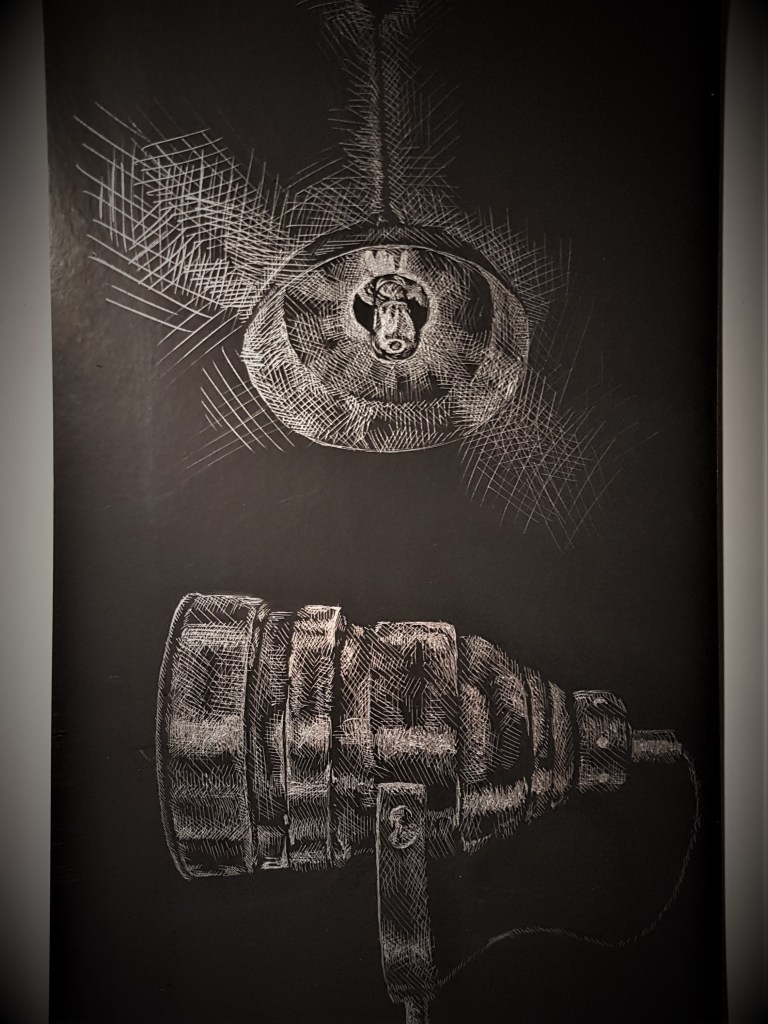
I went for a silver foil card, in order to creating a bigger contrast between the black background and my markings, and cropped the card so my two chosen objects were much more centre. I think I could have improved on the bottom lamp by having more areas of shadow to create more detail, as for the ceiling lamp, I regret adding highlights to the outside shade, I feel it would have been a more effective use of tone to not highlight that area. I do love the way I captured the rays of light flaring from the ceiling light, and highlighting the cord of the ceiling light. I think I did well at creating a mysterious, foreboding atmosphere, in terms of my markings, I feel they’re very calming and smooth. I’m happy with the finished product and the process to getting it to this point.

Reflection on progress

I feel I have a good grasp on my technical and visual skills, however I could work on making sure my proportions are accurate, as sometimes they are slightly off. This is due to not having a proper working space yet and sitting at an angle, so I need to sort out a proper desk to work from. I feel as though my writing could be improved, especially with how I analyse other Artists work, finding references and sources discussing the work etc. I think I could be a bit more experimentive, and try out many more ways of drawing and experimenting with media, and in the process develop more of a personal voice, especially within my art work.
Shadows and reflected light

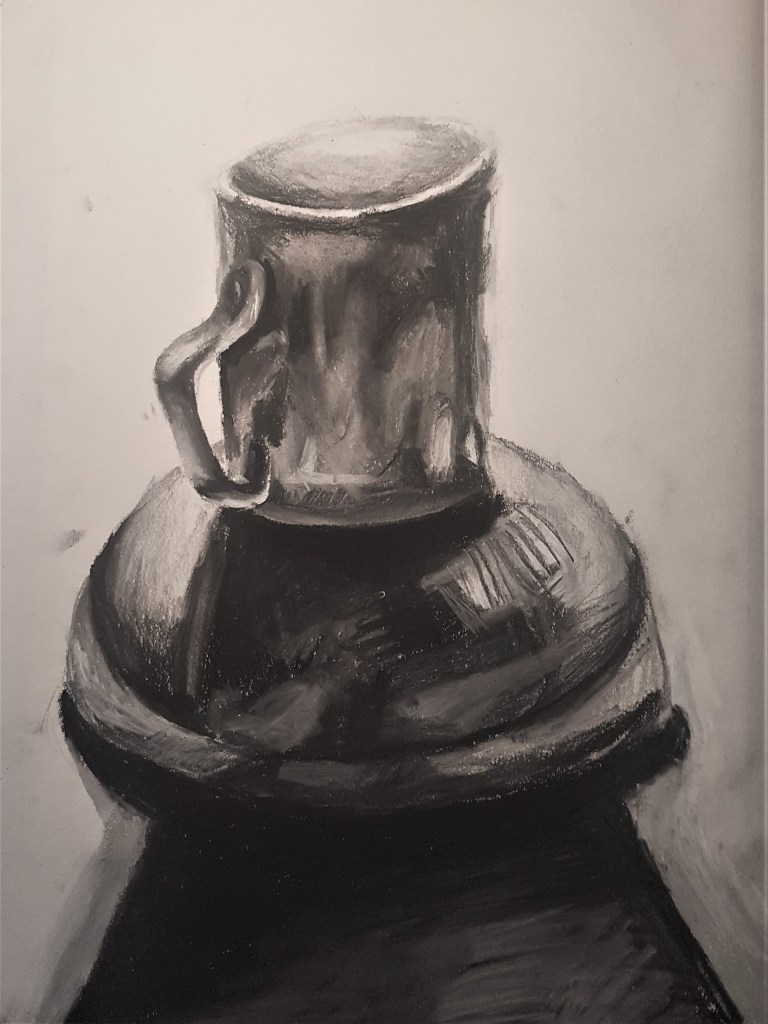
In order to practice and develop my skills of drawing light and shadow more effectively, especially reflective surfaces, I did a drawing to practice and develop my tonal skills. For this exercise I used a range of charcoal from white to grey to black and a putty rubber for accentuating highlights. I chose two objects with reflective and shiny surfaces, I used a white mug and bowl, positioning the mug on top of the bowl for an interesting composition but also so they could create interesting shapes on one another with their shadows and reflections.

Charcoal still life

I am very happy with how this came out, although the proportions of the lip of the mug are a bit skewered. I really like the shadows the mug made from being on top of the bowl, and how it created highlights around the shadow. I think the composition I created was an interesting one. I am not a fan of using charcoal, but I think having various tones of greys helped me to create much more interesting shadows. The putty also helped me to maintain straight lines and certain shapes. I’m very happy with how this one came out.
However, I wanted experiment with reflective surfaces in order to show shadows and reflected light in a drawing, and furthermore experiment further with a style similar to Odilon Redon’s work. I used in ink in the previous exercise in order to capture his black and white colour palette, however this time I wanted to try etching into a material in order to more accurately capture his style, as his pieces were mostly etched prints.

Scratch card (copper) Practice markings

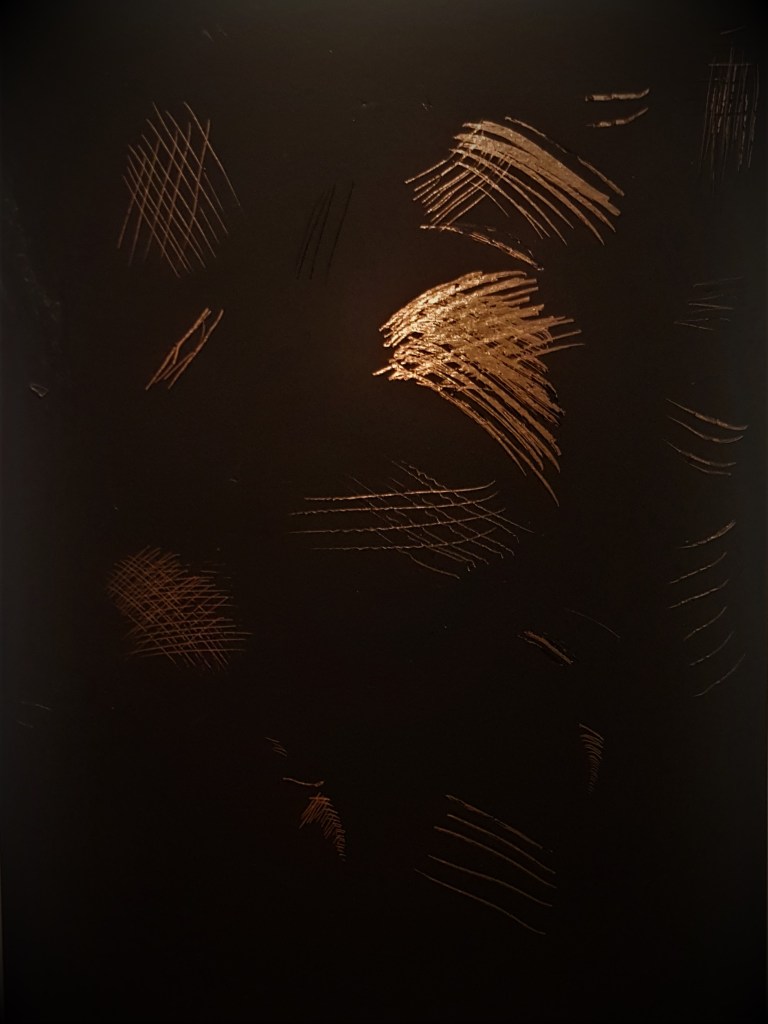
I decided to experiment with scratch cards which reveal a copper foil, I planned on utilising cross hatching on these as that is a common technique of Redon’s. However on these cards, you are drawing with a highlight, not a shadow such as drawing with a pencil, which is something I’ve never done before, so I was nervous going into these etchings/sketches.

I was really surprised with how well these came out and also how the copper reinforces the metallic texture I’m trying to capture on the lamp. I found I really enjoyed drawing with highlights rather than shadows and again love the minimalistic black background. Furthermore I think it really captures the industrial quality of both the lamp and Redon’s personal style. the cross hatching works really well capturing highlights as well as for capturing shadows. With my assignment next, I know this is something I want to explore a little more and think about incorporating into my final assignment piece.

Creating shadow using lines and marks

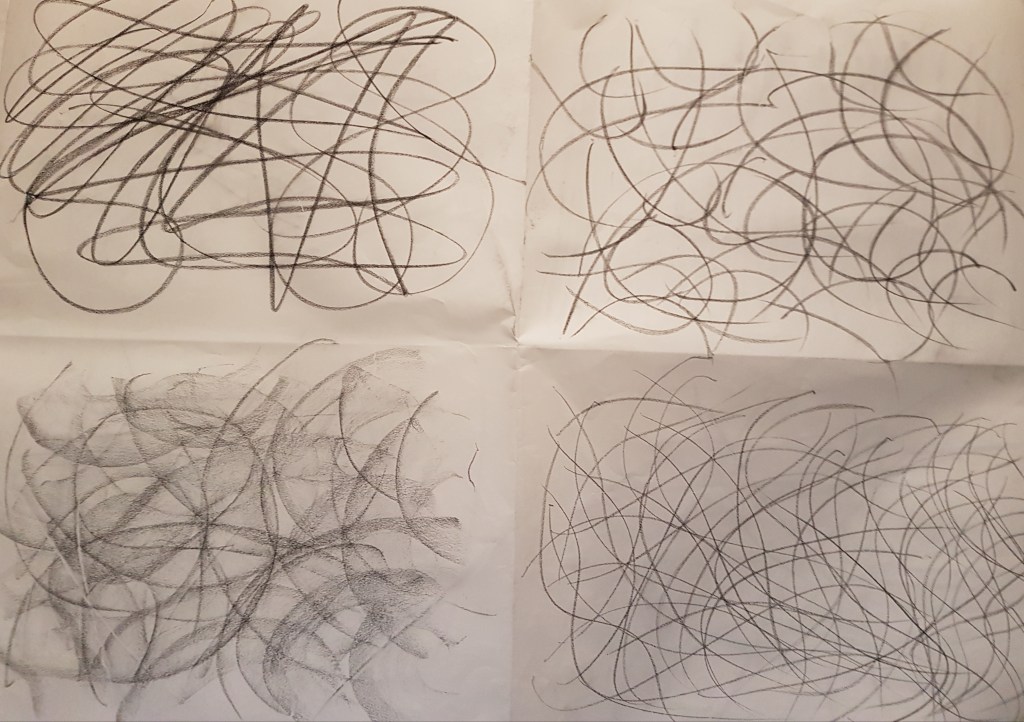
In this exercise, I began looking at my use of tone in more detail, how do I go about creating it effectively within my work. To start with I began experimenting with four different mediums and how they varied with different approaches to applying tone.

Experimenting with materials and cross hatching.

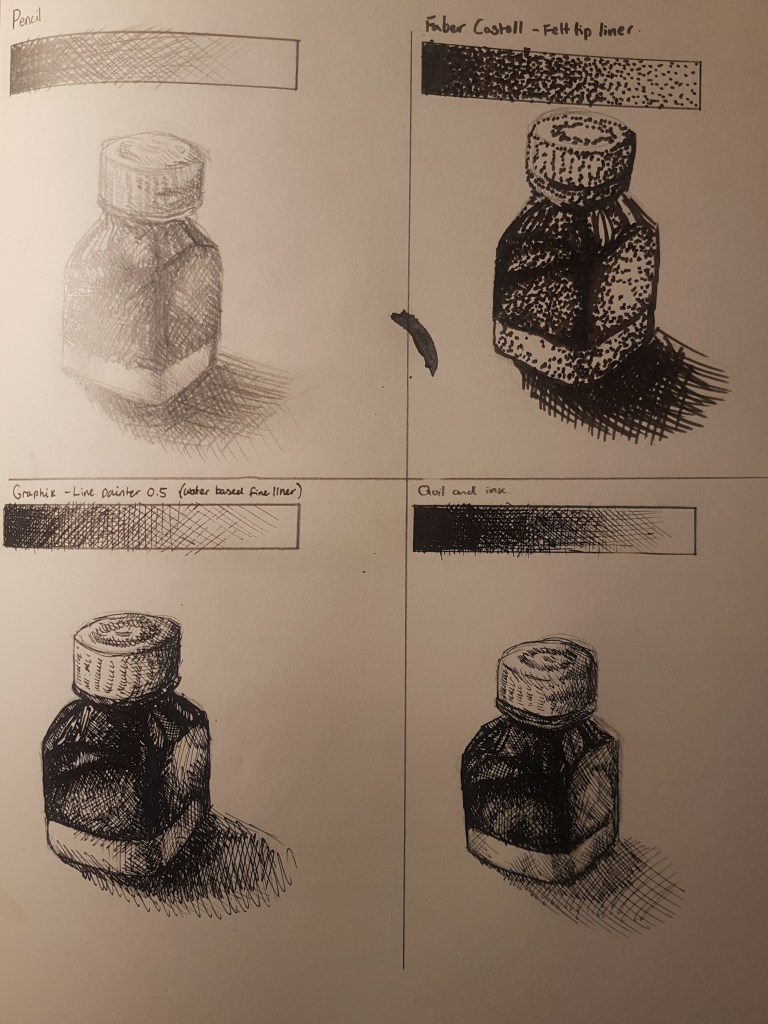
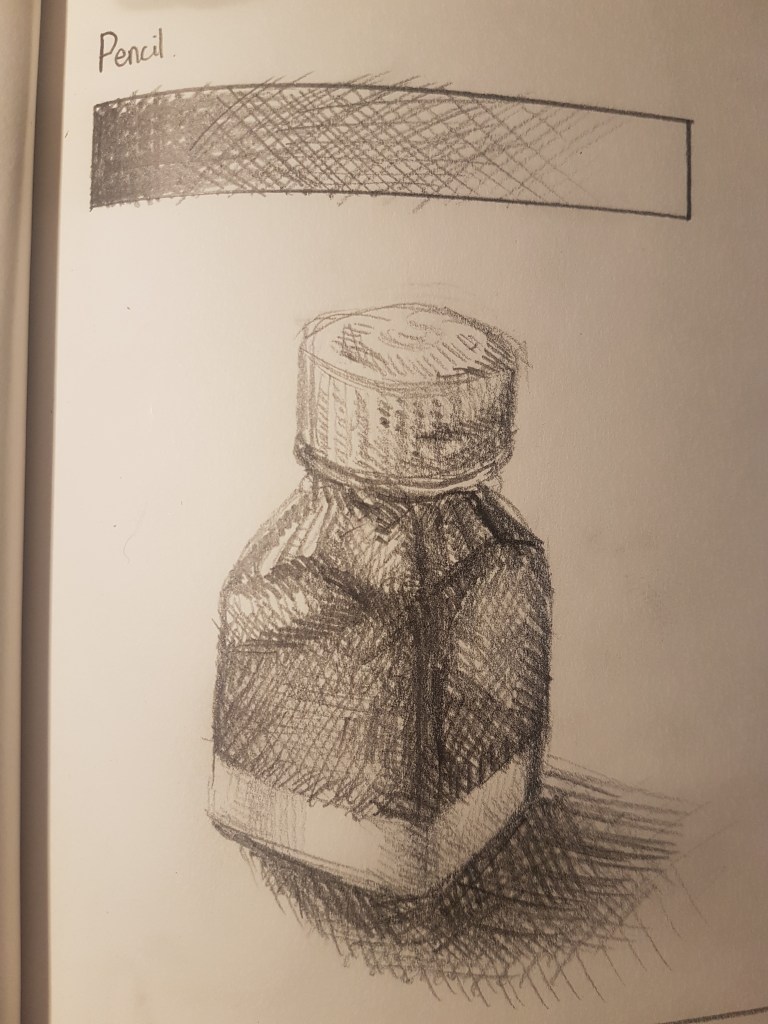
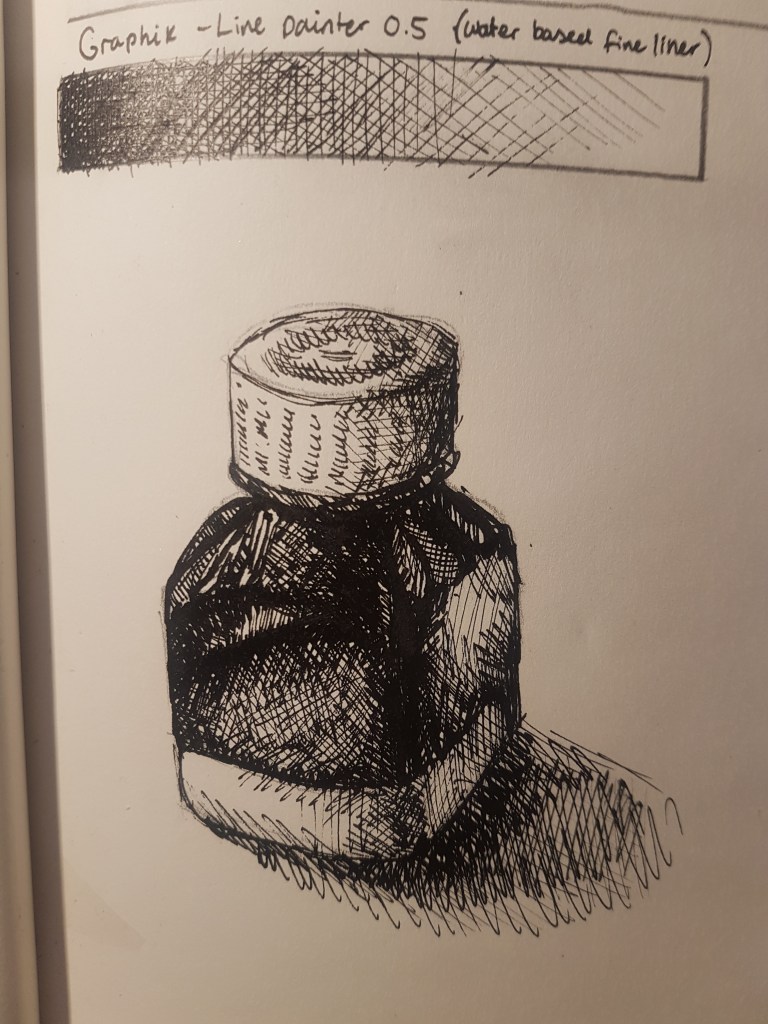
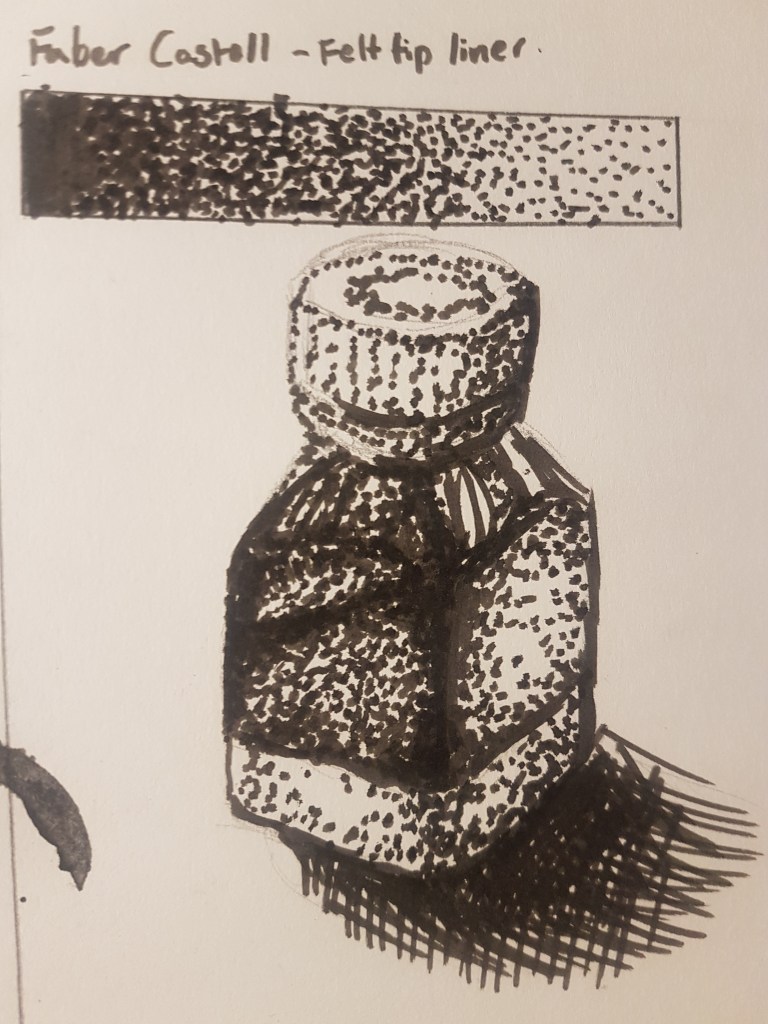
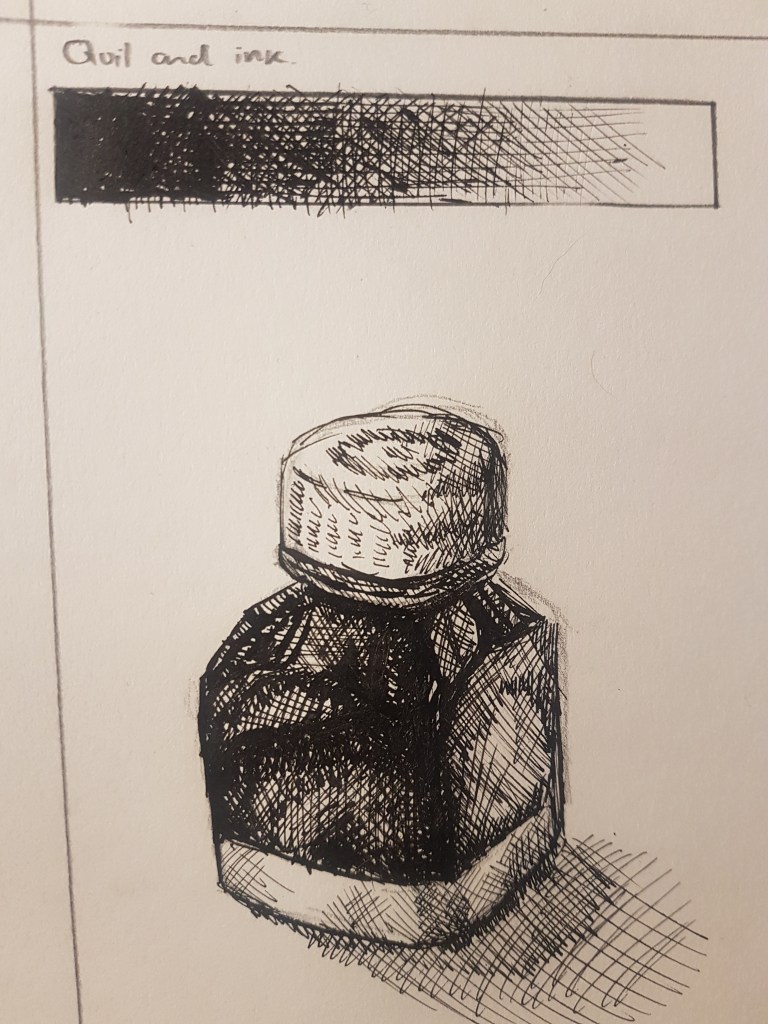
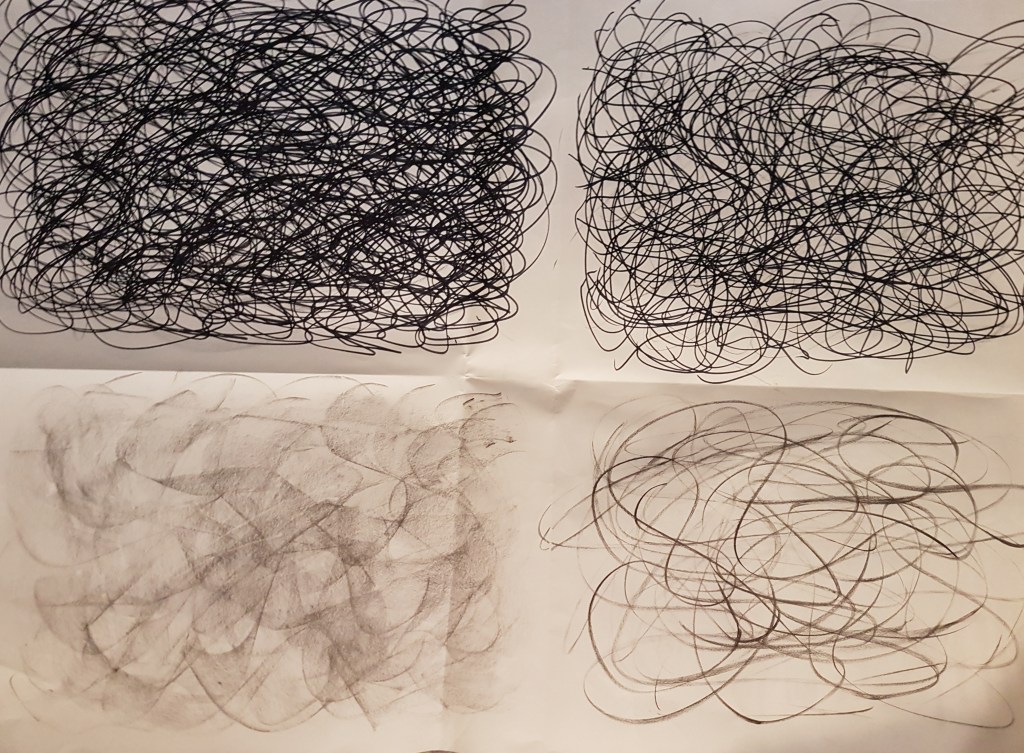
I began by creating four rectangular boxes, and choosing four different drawing tools to draw with; pencil [top right], Faber Castell felt tip liner [top left], Graphik line painter [bottom left] and ink with a calligraphy pen [bottom right]. By filling in the boxes, creating a a gradation of tone allowed me to see how the material works and how I could best use it in order to effectively show tone. With the felt tip liner [Top right] I tried a different approach to cross hatching as the strokes were very thick, instead I tried using spots to show my gradation of tone. I’m happy with how all the rectangles of tone look, three of them obviously came out looking very similar. As for my attempt at using spots, I think using another medium could have looked better or being a bit more sparing with my use of dots towards the end of the rectangle could have helped bring it together more. I then moved on to see these techniques in action. I used the same item to draw when looking at each medium, to accurately judge my use of each technique and drawing tool.

I think the outcome of these two attempts are very similar, due to my use of cross hatching, a technique I’m very comfortable with. I am happy with the pencil sketch I did but can’t but feel I should do move with it, such as blend or smudge the markings for a more realistic approach to a tonal sketch. I think that because I used a HB pencil it was harder to capture the darker areas than if I used a 2B pencil, something darker. As for the Graphik liner attempt, I was much happier with how this one came out. It was a lot easier to create tone with cross hatching since the darkness of the material doesn’t vary with pressure. Its all a solid colour. So building up lines to create darker areas wasn’t as difficult as using a pencil where your pressure matters.

Faber Castell felt tip liner attempt.

I am not as happy with this attempt, I don’t think I really nailed this technique, but maybe with more practice or using a different medium I could utilise it better within my work. I think the felt liner is a bit thick and I didn’t use that efficiently here to show off tone effectively. I think the cap is almost there, I should have used it more so to show areas of light and dark rather than to outline the shape of the object. So moving forward with my work on tone I plan to not focus on the outline of the shape, but more so just areas of light and dark. However I did also utilise cross hatching in the shadows, as I thought the long lines would capture how the shadow stretches better than dots could. Maybe with a finer pen the dots could have worked better, or if I gave more thought to how I used them in my composition.

Final attempt, ink and calligraphy pen.

I think I am most happy with this piece. I like how the ink can vary in thickness depending how you hold the quill/pen, but it never is too thick. Furthermore the strokes become invisible when you build it up and blend into the ink already on the page. I like this effect and how the ink isn’t streaky, which can sometimes take away from the tonal aspect of a drawing. I found it resembles Odilon Redon’s traditional style and his use of ink and cross hatching. I would like to experiment further with the medium and see what I can create, especially taking into account Redon’s work and seeing how that may influence my work and style as an artist.

Part 2- Creating a still life

Looking more into how to create a tonally interesting still life, I gathered a group of objects in order to try and capture a still life using the techniques I just looked at.

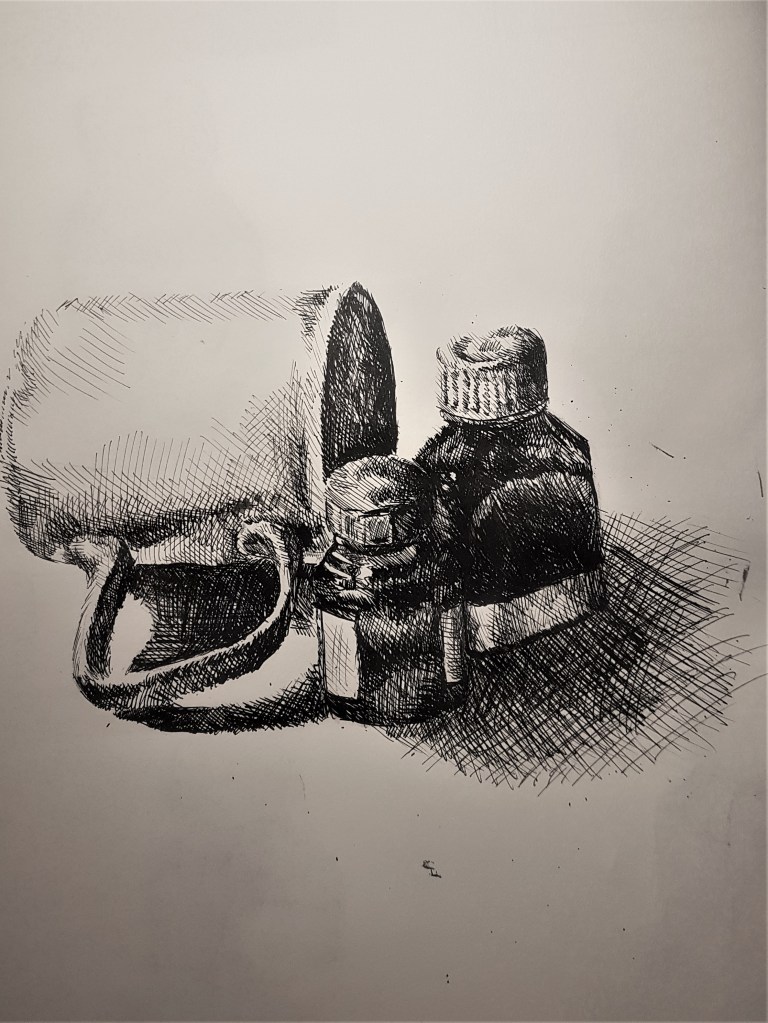
For my composition, I gathered three objects, two ink pots and a mug. I liked the contrast with the white mug, compared to the dark little pots of ink, furthermore by placing a light source from an above angle it creates an interesting shadow with the mug handle and nice reflections on the pots and mug. I started with a loose line drawing to get my proportions and composition right. I then used cross hatching with ink, as I really wanted to experiment further with this medium and I found that I really enjoy using it. Especially since it is not a material I have ever thought of using before. I began by going for the darkest areas first, working left to right as not to smudge any wet ink. I was careful, especially with the darker pots, to leave areas for highlights and light reflections. After finishing off with the ink, I then went back over it rubbing out the pencil outlines to leave an entirely tonal piece.
I am very happy with this piece, I think I captured the tone and proportions really well this time. This exercise and crafting this drawing really helped me to better understand my use of tone and how I can effectively use it to create much more realistic and accurate tonal pieces, and understand that not every drawing needs an outline to capture the shape of the subject effectively. It is somewhat reminiscent of Odilon Redon’s work, but I want to try something similar in order to create an effective atmosphere as Redon does so well in his work.

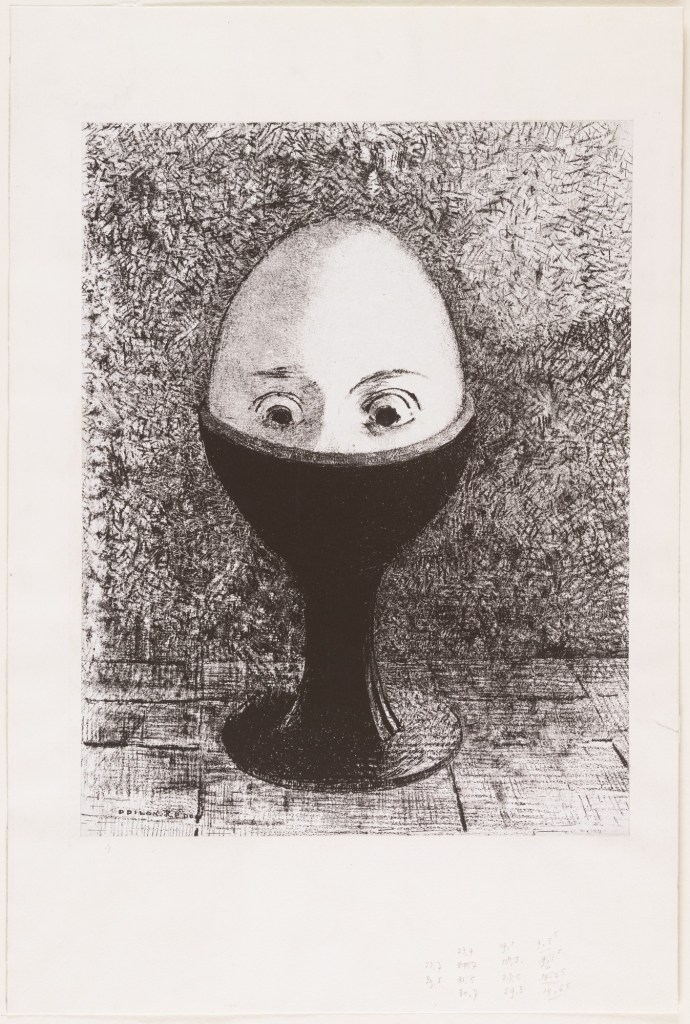
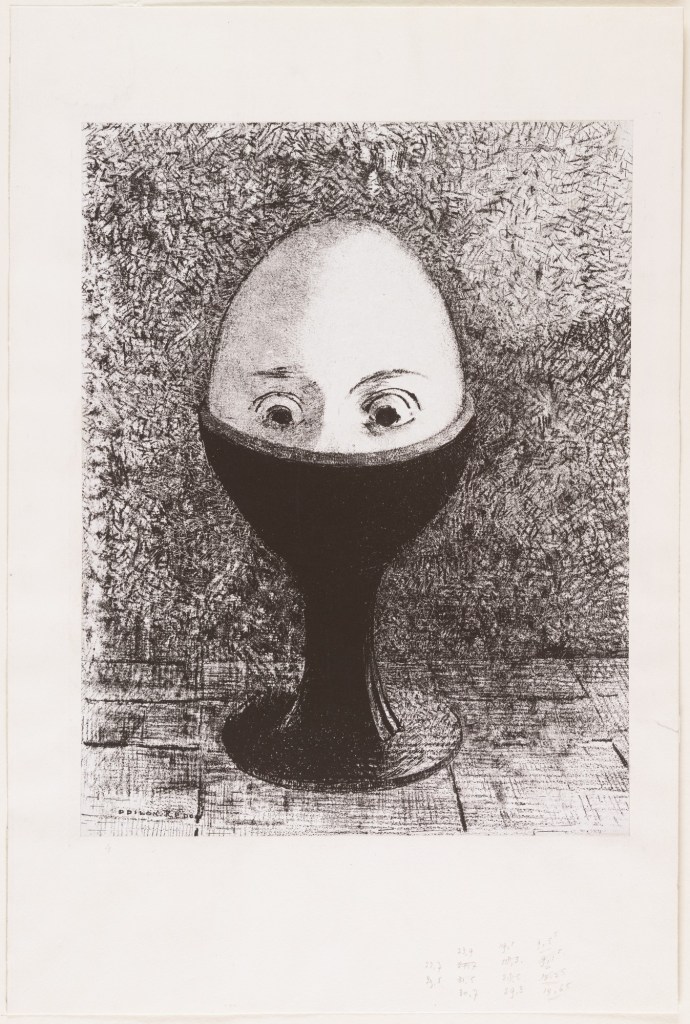
I decided to do one more drawing for this exercise, but this time, much more heavily influenced by Redon’s style, but still try and make it my own. I was inspired by his piece ‘The Egg’.

There is a lot of texture here, as well as minimalism within the composition. The focal point is clear and surreal. All of this combined helps to create a mysterious but creepy atmosphere, very effectively. I would like to do something similar. I wanted to create a drawing where my technical skills of tone can effectively capture a texture, and have a minimalistic aesthetic, utilising a dark background to help create an atmosphere. Keeping with Redon’s style of course but still somewhat making it my own.

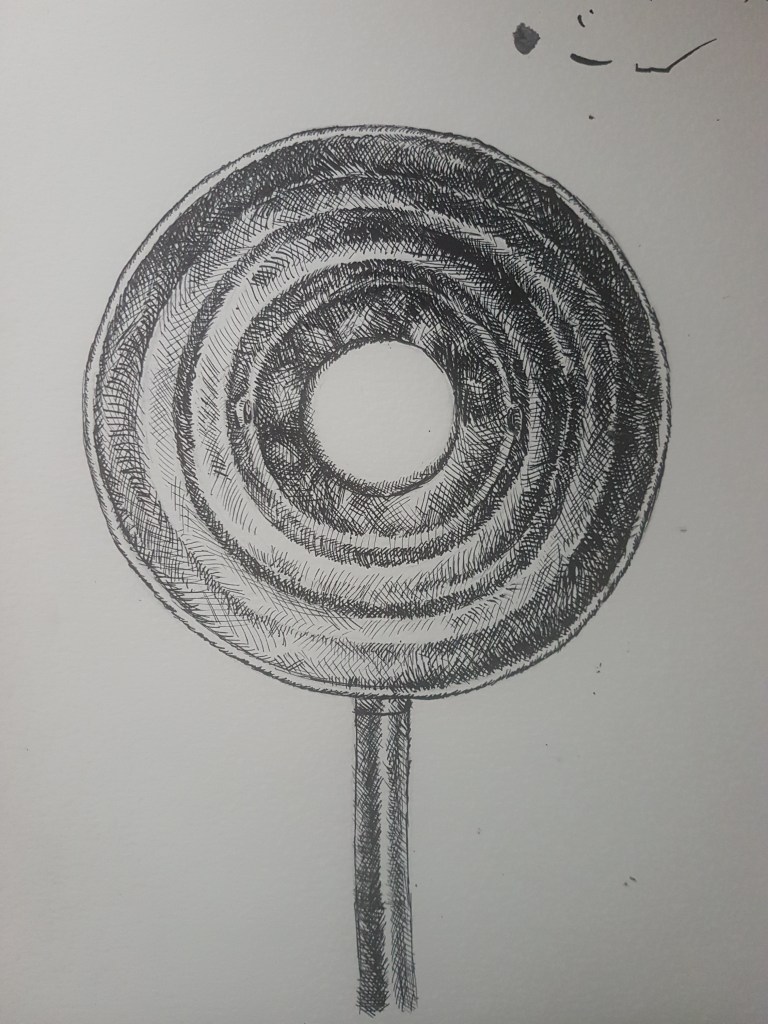
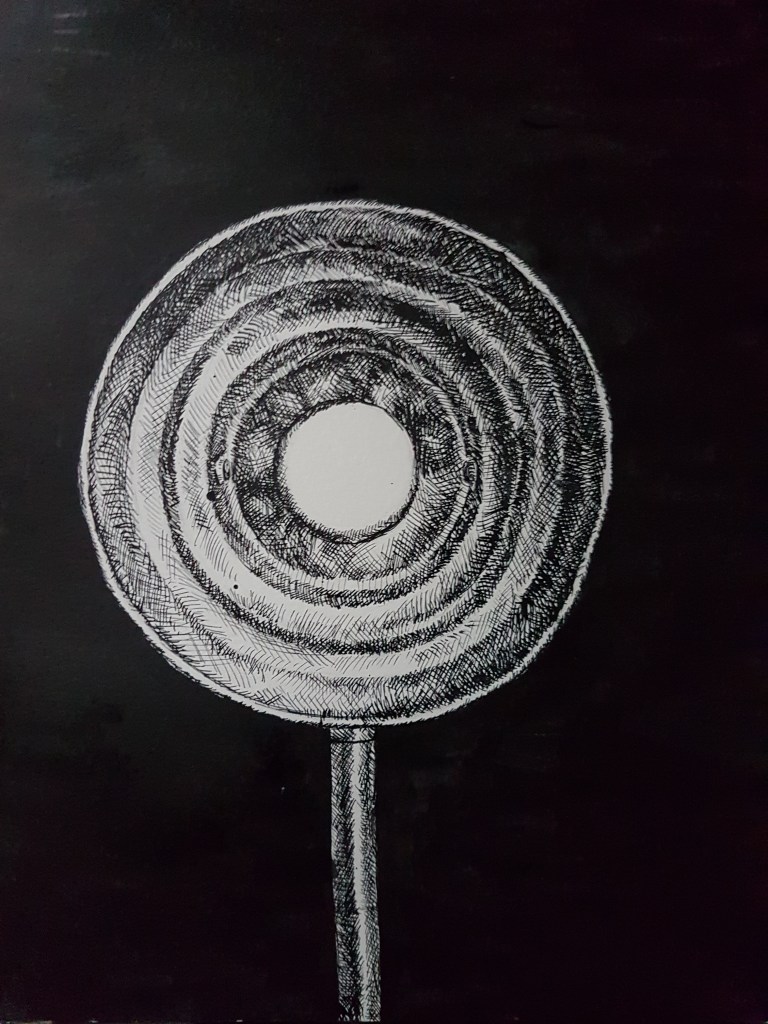
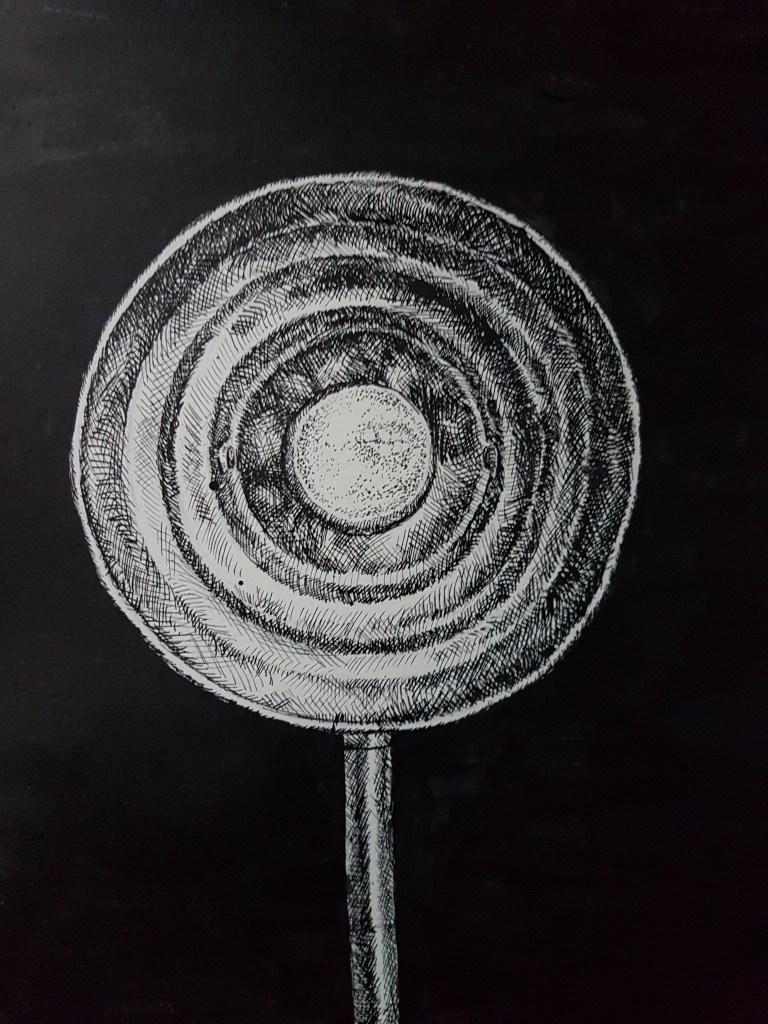
For my composition, I decided to stick with one object, to keep to a minimalistic approach and also to have one clear, main focal point. As Redon did with his print, I had my object ( a front facing lamp) front and centre. I think the pole on the bottom of the lamp, and the rings created by the ridging, help to point and draw the viewers eyes straight to the bulb of the lamp, making the bulb the clear, main focal point. I think I captured the smooth and reflective texture of the metallic lamp, especially on the pole. I wasn’t sure how to go about adding tone to the bulb, so left it bare for the time being, unsure of whether I wanted it white, or wanted to add the detail of the reflection on the bulb. While thinking on that aspect of the drawing I went ahead and added a smooth black background to create an atmosphere. I like how the ink wasn’t streaky and dried very smooth and clean. I feel the black background helped bring the piece together, and made it look much more finished than with just a white background. I really liked how it looked, but couldn’t help but feel that the drawing would not be complete without the reflection of a window which can be seen in the bulb. However I didn’t want to use more cross hatching, as I felt this would blend the bulb in with the rest of the drawing, I wanted it to stand out and be different compared to the rest of the lamp. I wanted it to be clear and pop out in contrast to the rest of the drawing. So I went and looked at Redon’s piece again, and saw how he made the egg different to the rest of the drawing by changing his way of creating tonal markings from cross hatching to using dots, or specks. So I decided to give that a try, changing my markings to keep the bulb and lamp still somewhat separate from one another.

The finished product

I love my use of dots as a way of tone in this piece, it helps to create a delicate feel to the bulb, which I rather like. I also think my use of the dots as a way of tone has improved since my last attempt. I used the dots sparingly to keep the light colour of the bulb, while also incorporating the reflection of the window that I really wanted to incorporate into the drawing. I think that looking at the finished drawing, I have somewhat been able to capture an atmosphere, however instead of the surreal aspect of Redon’s work, I have created more of an abstract one. Upon receiving feedback, many people did not get that it was a lamp until it was pointed out, which after the lamp was all they could see. I feel the rings add an abstract quality to my piece as they come across much more like a pattern, than part of a lamp or object. One viewer of my work told me it looked like a planet or portal, while others saw a lollipop or a pan with a fried egg. I am happy with the piece, as I have created something very broad and open. I think I did capture some of Redon’s style. This style is something I would like to look into further and experiment with more in order to create minimalistic and atmospheric drawings of still life.

Artist Research- Odilon Redon

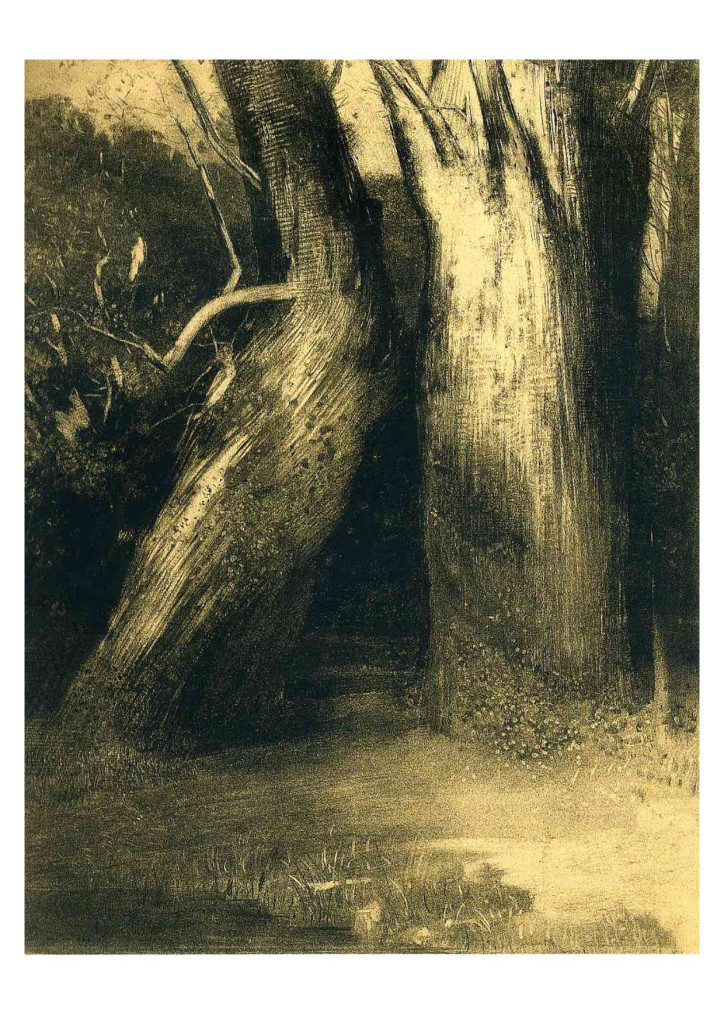
Redon, O. (n.d.). Two Trees. [Charcoal on paper] Available at: https://lucyannwaterhouse.co.uk/category/odilon-redon/ [Accessed 3 Jan. 2020].

Odilon Redon is an important artist when looking at tone. In this first piece; ‘Two Trees’ my eyes are instantly drawn to the centre due to the contrast created by the dark shadows behind the trees and where the light hits the trees. This focal point being in the centre is also helped by the lines of the two trees connecting/ meeting in the centre of the drawing. Furthermore the composition helps to give an eerie feeling to his work. For example the way the trees are bare but also seem twisted and crooked. But also his technique in his drawing adds to his gothic style, the cross hatching and use of line with the dark tonal background work well to create something dark and mysterious. As stated in an online blog ‘Odilon Redon was greatly inspired by the author/poet Edgar Allen Poe’ [“Pencil-Case.” (2016). Odilon Redon – “Pencil-Case.” [online] Available at: https://lucyannwaterhouse.co.uk/category/odilon-redon/ [Accessed 6 Jan. 2020]
This influence can be clearly seen in his other works, which have a more surreal quality to them.

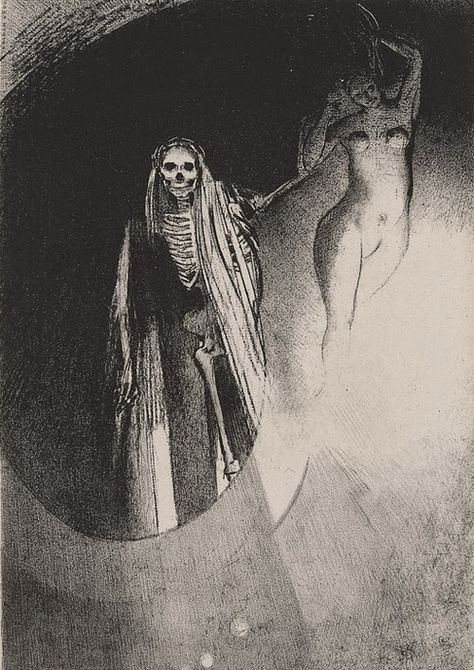
Redon, O. (n.d.). Death: It Is I Who Makes You Serious; Let Us Embrace (La Mort: C’est moi qui te rends serieuse; enlaçons-nous) from The Temptation of Saint Anthony (La Tentation de Saint-Antoine)  1896. [One from a portfolio of 23 lithographs on chine appliqué] Available at: https://www.moma.org/collection/works/97984 [Accessed 6 Jan. 2020].

In this piece, an etching in a series based on the Temptation of Saint Anthony, the influence of Edgar Allan Poe is still relevant in his interest in exploring death as a figure. His tonal detail in these etchings is amazing. His use of line, and having the lines moving in the directions of light/shadow from the figure of death helps create direction, rather than by showing light with shading or cross hatching. It draws your eye to the figures, but more so the figure of death, making them it a clear focal point. There is a strong narrative in his work, enforced by his use of tone. The woman, surrounded by light, being pulled into darkness by death, knowing she will fade. I love the details in how he shaded the nude woman, the stipples and light cross hatching, highlighting the curves of her body. The narrative of the piece could also be seen as representing a cycle in a sense, with the use of a circular hole which the figure of death peers out of, but furthermore how the abdomen of the woman is where the source of light is coming from. As women are a source of life, biologically, the light may be reflecting this idea of life. The piece could be commenting on who greets you as you come in and leave life.
Redon’s markings are subtle and beautiful and tie the piece together, creating a dark atmosphere, brimming with meaning.

Redon, O. (n.d.). The Egg. [Lithograph with chine appliqué] Available at: https://www.moma.org/collection/works/61960 [Accessed 6 Jan. 2020]

In this piece titled ‘The Egg’, Redon uses his tonal markings to create a creepy and surreal atmosphere. He often created characters, influenced by his knowledge of literature and writings and ideas during his period of time [1885]. As said best in a write up on this piece on the MoMA site ;’Redon populated his work with a cast of hybrid characters such as this one. These inventions reflected the artist’s knowledge of Darwin’s theory of evolution, his visits to the natural history museum, lectures he attended at a medical college, and his own dreams and fantasies.’ [Odilon Redon (2020). The Egg (L’Œuf). [online] The Museum of Modern Art. Available at: https://www.moma.org/collection/works/61960 [Accessed 7 Jan. 2020]. The surrealist quality and markings create an element of confusion between the work and the viewer. The random and irregular markings in the background help enforce a sense of shock and surrealism, with a weird, creepy atmosphere. I love the use of lines towards the bottom of the piece which create the texture of a wooden table/floor/material effectively. From the way he created lines varying in size, and his use of cross hatching you get a sense of the wood being on the rougher side in terms of texture, which helps add to an almost unwelcoming feeling, almost as if you’re intruding on this egg. This is also enforced from the eggs startled and shocked expression. I like how he varied his technique in his markings when creating shadows, which is needed when creating such a dark, tonal piece. For example his use of stippling and making small, subtle markings for shading the white egg. It helps keep the contrast between the egg and the background, had he used harsher strokes or markings on the egg, it would have made for a complicated piece tonally, as it would have blended the foreground and background together. Looking at the markings used and the picture as a whole, I would describe it in one word as: confusing. Its not meant to make sense, and to me, this is strengthened by his markings in the background not making sense. His markings hold weight and meaning, from the way he applied them, which links back to on of my first exercises, where I used emotion to control how my markings came out. To see this in practice from another artist just shows how important your markings are and how you can do so much more with them in evoking emotions.

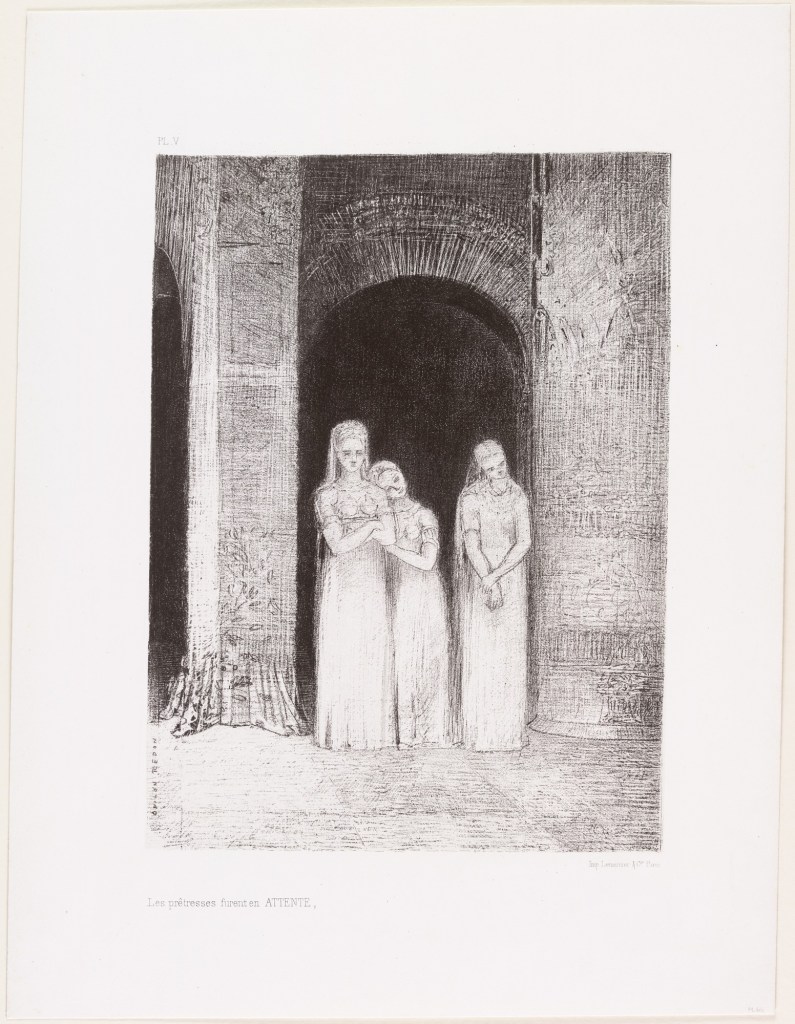
Redon, O. (n.d.). The Priestesses Were Waiting (Les Prêtresses furent en attente)  1886. [Lithograph with chine appliqué] Available at: https://www.moma.org/collection/works/70866 [Accessed 6 Jan. 2020].

This piece is a lot lighter than the previous drawings/etchings I have looked at. It has an airiness to it. I love the contrast of the priestesses compared to the dark door way behind them, it helps highlight them and symbolise the purity and morality of their position as priestesses. The texture shown is limited as the building and surroundings are made of stone. This is helped by the subtle tonal markings Redon has used; keeping his lines smooth and straight for the most part. The focus on highlights in this piece help to forge an atmospheric tone somewhat different to his previous work, his previous etchings are dark and present a gloomy and dark atmosphere. However in this piece by limiting his use of darker tones he creates a sense of bright day as the Priestesses are waiting. The dark use of tone used behind the priestesses adds a sense of dread upon closer inspection, as two of the girls look down and are not very eager of what they are waiting for. Looking at Redon’s past work and his focus on the dark and gloomy, leads me to believe that in this narrative he has created, the bright light is a false sense of security as the darkness looms behind them, perhaps foreshadowing something dark that they are awaiting.

Looking at the work of Odilon Redon has helped me to further realise the importance of my use of tone and markings in order to create an atmosphere or potentially form a narrative within my work. By choosing the directions of my lines to correspond with the direction of light and by carefully choosing the way I make my markings for texture, I can create my desired atmosphere. But furthermore how ones markings can evoke emotion helps purvey more about the atmosphere, so I should experiment even further with that, especially when it comes to capturing and creating tonal elements in my work.

Experimenting with tone-Observing shadow using blocks of tone

In order to create a sense of reality within ones work, the use of tone is crucial. The use of tone, creating areas of light and dark, help to make a 2D drawing have a 3D feel, and along side texture, helps to create a real feeling drawing. I wanted to experiment with some drastic lighting and objects casting shadows to play around and experiment with the aspect of tone, and how well I can create a life like drawing. I chose objects with smooth surfaces and not much texture to them to keep the focus on the tonal side of creating a drawing.

First attempt at the exercise (lead)

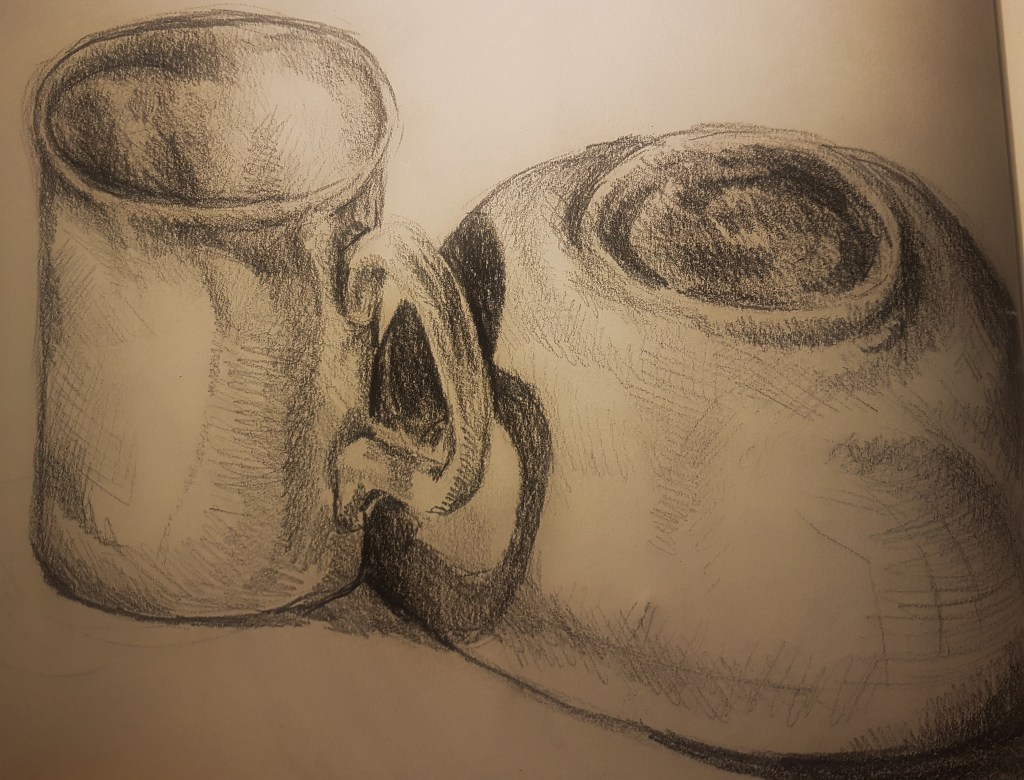
For this first attempt of the exercise, I sat a coffee mug next to an upside down bowl, and lit them from an angle in order to cast an interesting shadow. I then sketched out the basic shapes of my composition, and blocked in areas of tone, using cross hatching, lines and shading. I was happy with the results but knew I could do better once I got into the swing of it. I decided I would adjust the angle of light and try again.

Attempt 2

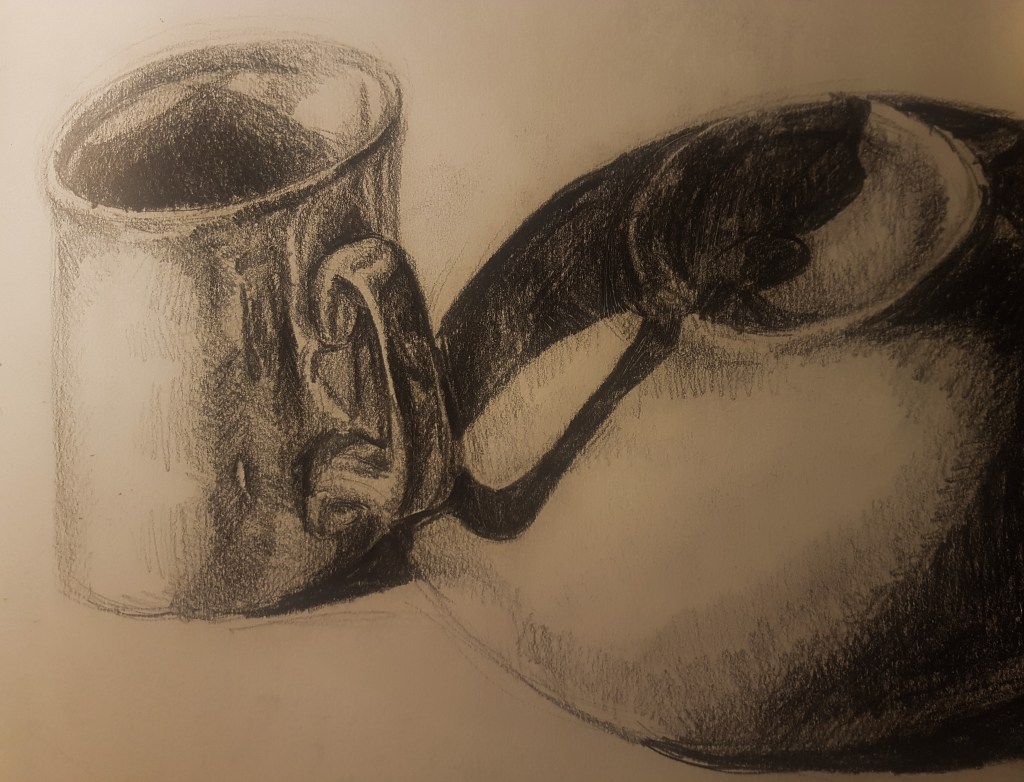
I adjusted the angle of my light source in order to cast larger and longer shadows, that would make sketching my composition a lot more interesting. I had larger areas of tone to block in, in new interesting curves and shapes cast onto the bowl. I like how the shape of the mug handle is cast onto the bowl , curving around the bowl. When creating the areas of tone, I decided to make them a lot more intense, especially in the darker areas, which helped me to create a much more realistic piece than my previous attempt.

Attempt 3

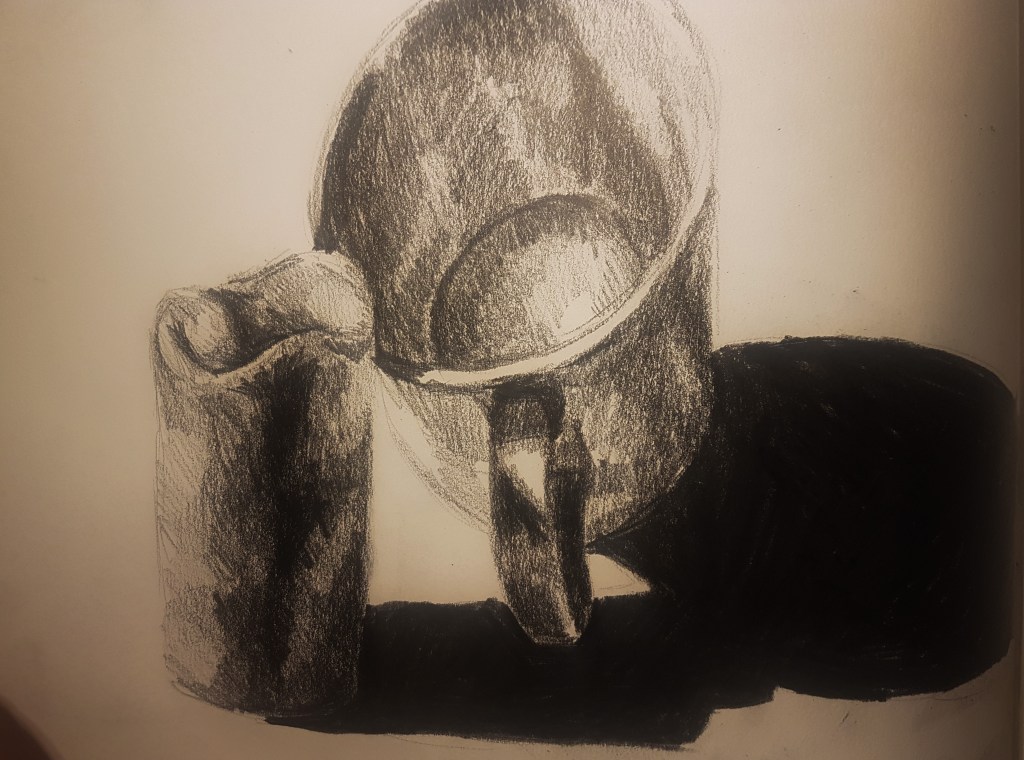
For my third attempt I decided to try a new composition including a new object, a small candle. I kept with using smooth, rounded objects. The candle was new and interesting to draw as it was a matte material, where as the mug and bowl have a porcelain shine and reflect light. So I added some lighter shading to the lighter areas of the candle to try and capture the dullness of the was material. I like how I captured the translucent area towards the top of the candle, where the thickness of the candle has been thinned out by the flame, and therefore the light from my light source shines through just a little bit. I am happy for the most part with how I created blocks of tone on the mug, however I feel I could have gone darker on the side of the mug that the light didn’t really hit. As I went quite dark in my approach to the handle, it doesn’t make sense why it wouldn’t be that dark on the right side of the mug. To improve next time I should take my time to observe my drawing and make sure I am completely happy with my areas of tone.

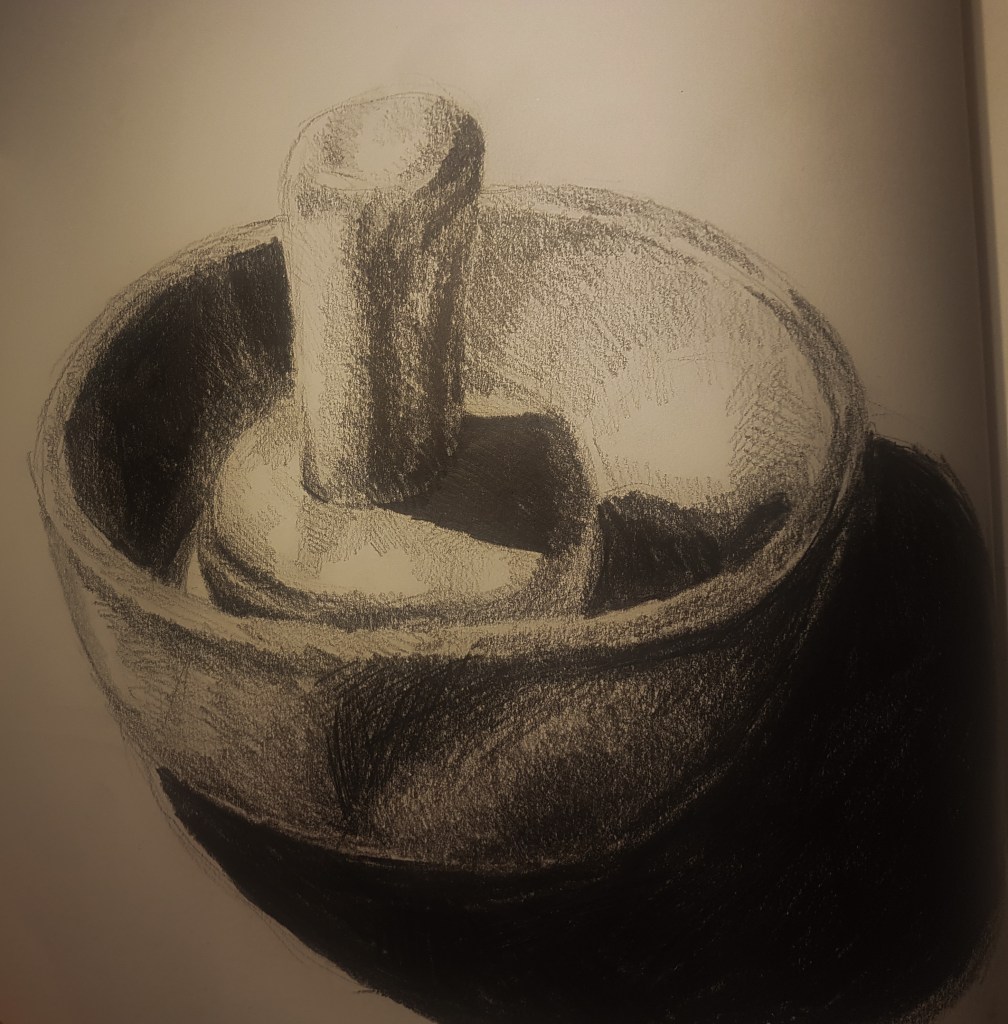
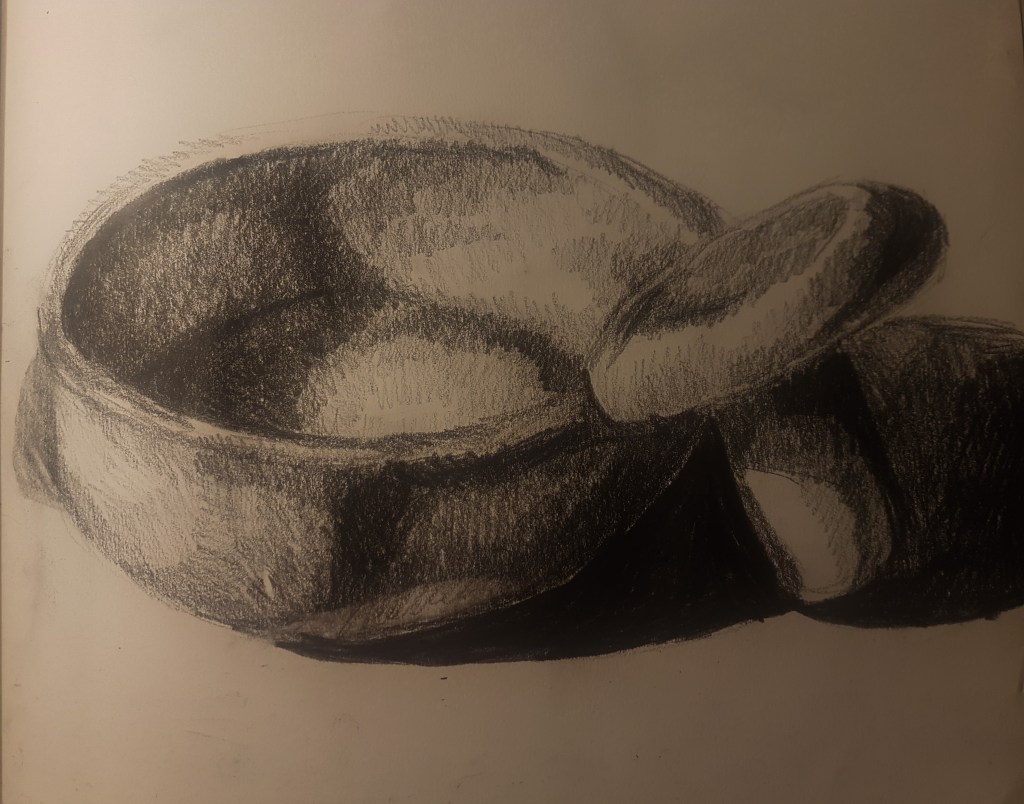
I tried new objects and a new composition for my fourth and fifth attempts, using a mortar and pestle in two different positioning’s. In drawing [4] I think I did well on creating areas of block tone, however my proportions of the bowl are a bit off, which is annoying. I like the clear shadow created by the handle and how it curves in the bow, but is also broken up by other shapes. In drawing [5] I think my proportions are improved. I like how my blocked out areas of tone are clear, however I could improve on the dip in the pestle, it could use some highlights to define the shape further.

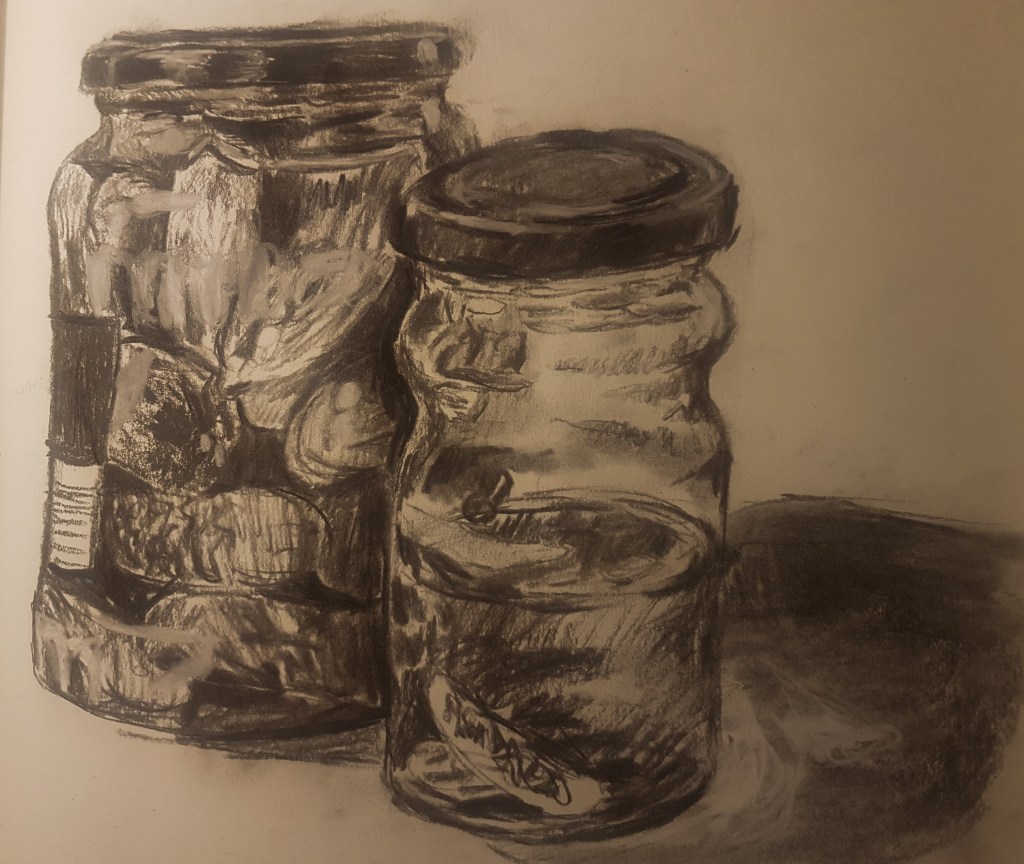
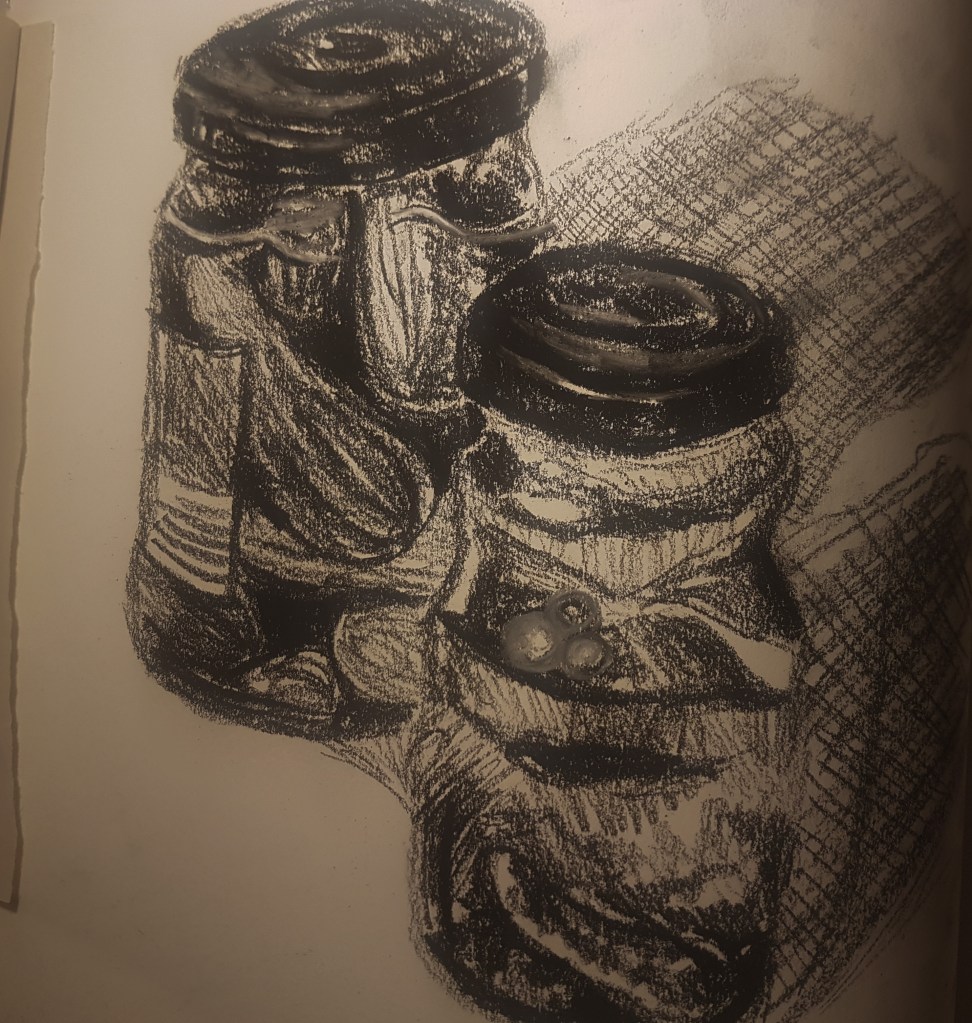
For attempts 6 and 7 I changed the composition to something more challenging and with a lot more varied areas of tone; two pickle jars, one full and one empty. I started with the basic shapes, and then began to fill in the darkest areas first such as the lids and space between the pickles, I then used lines and shading to fill in other areas of tone and to add a bit of texture to the pickles. On the second jar, I used an eraser to create lighter areas which had been covered by dark shadows, in order to create the resemblance of water filling the jar. On drawing [6] I smudged the shadow created by the jars to show the translucency of the jar filled with water. For drawing [7] I just used simple cross hatching in order to keep the focus on the jars. I think Drawing [6] was the best one I produced from this exercise, as it contains a lot of detail from the areas of tone I created, and hold more texture due to my use of lines.

I found this exercise useful for helping me to grasp tone and how to portray it by simplifying it into basic block shapes of light and dark. In my next few exercises I would like to branch out from using lead and charcoal and be more experimental with my use of media and what affects they can create compared to more textured mediums like charcoal and lead. I would like to try something smoother like ink perhaps and see what kind of images I can create in my drawings.

Groups of Objects- Experimenting with composition

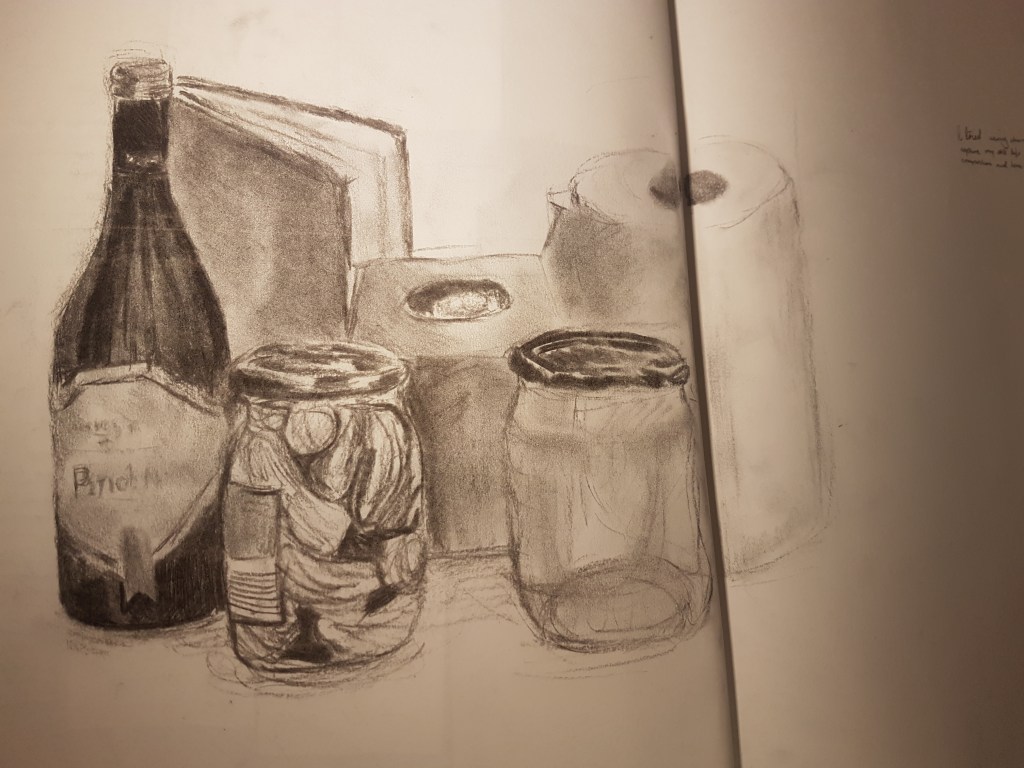
I began by collecting a group of objects to draw, sticking to cylinder and rectangle shapes as a guideline. I ended up with jars, bottles, a roll of tissue and a book and a box of tissues. I arranged them in a way I thought was interesting compositionally and began my first sketch in charcoal.

Charcoal Sketch

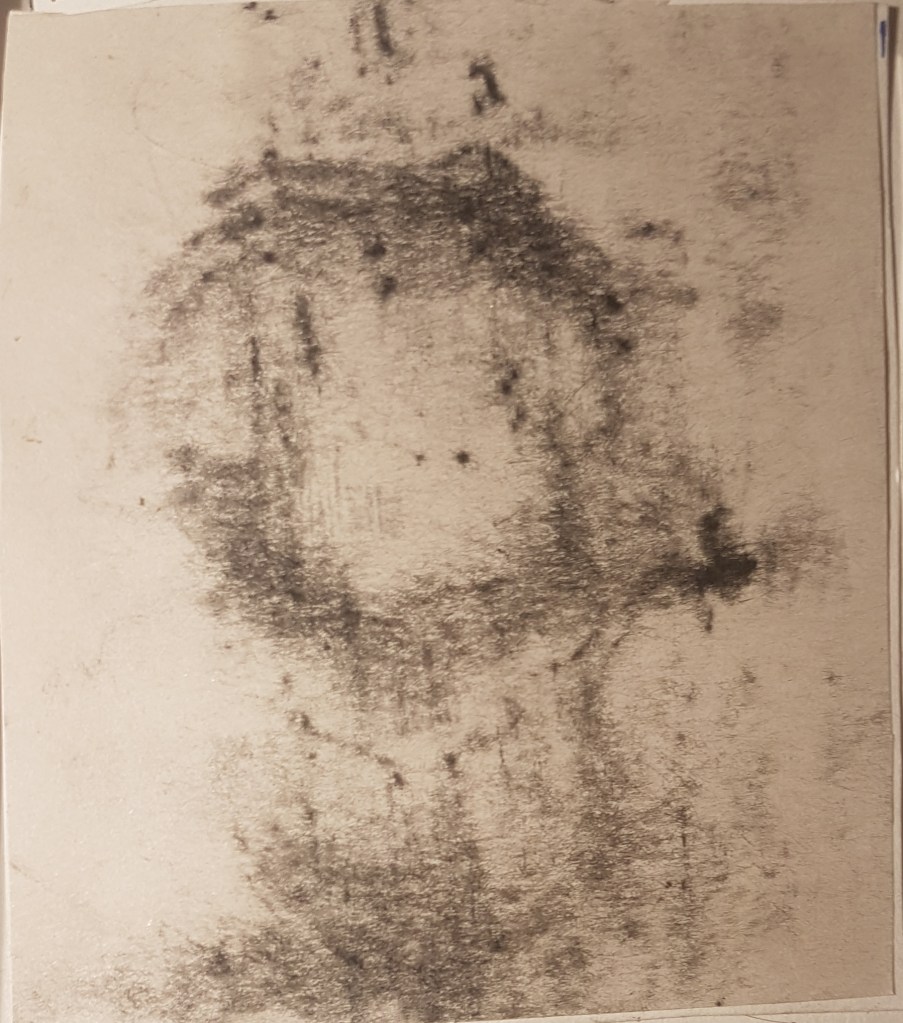
I tried working in some tone but kept my focus on getting the composition and scaling of the objects accurate. I was happy with the original outcome, however as time went on the image has been smudged, losing some of the detail. Going on I must carefully preserve drawings that smudge so easily, and think about that as I choose my medium.

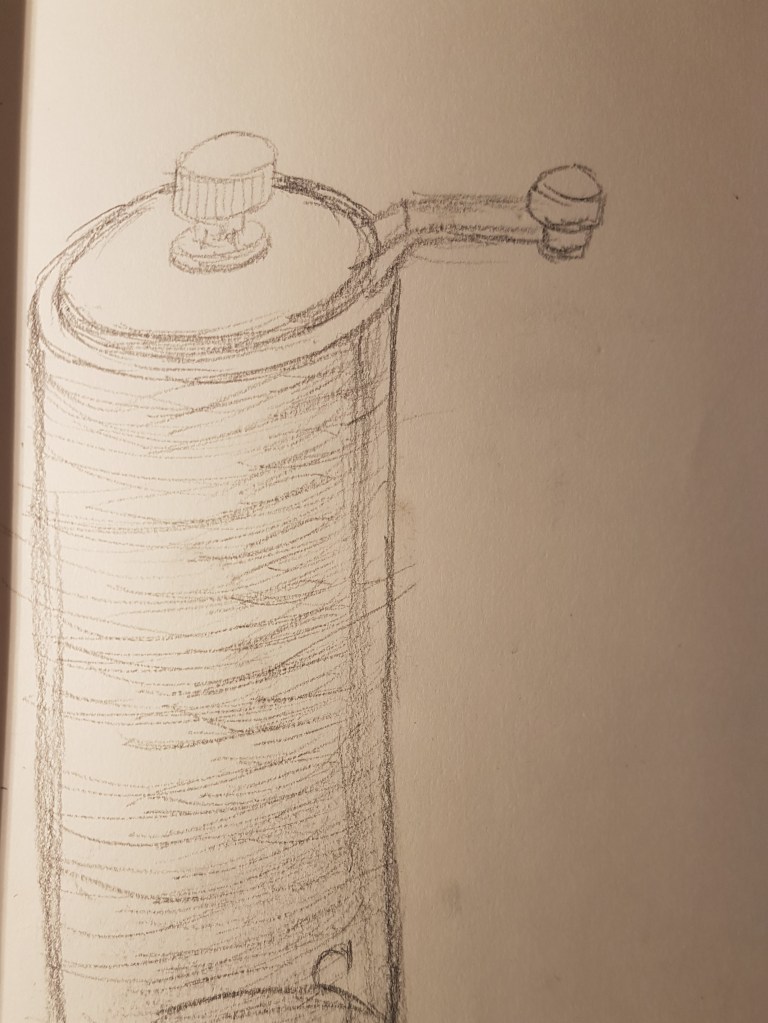
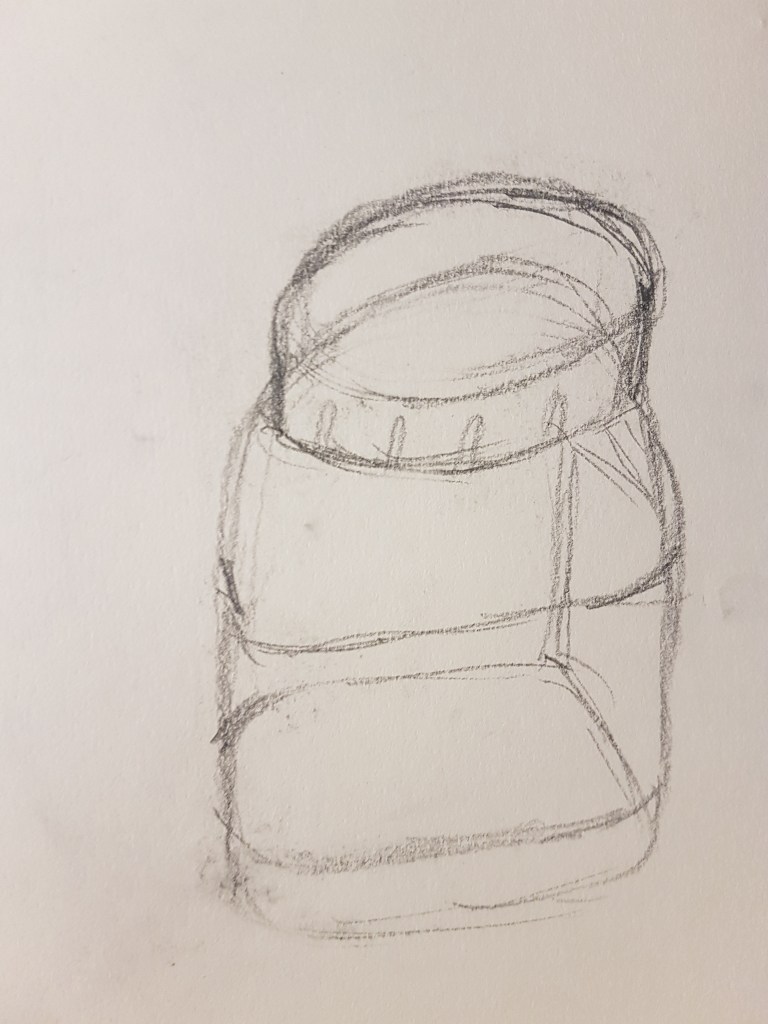
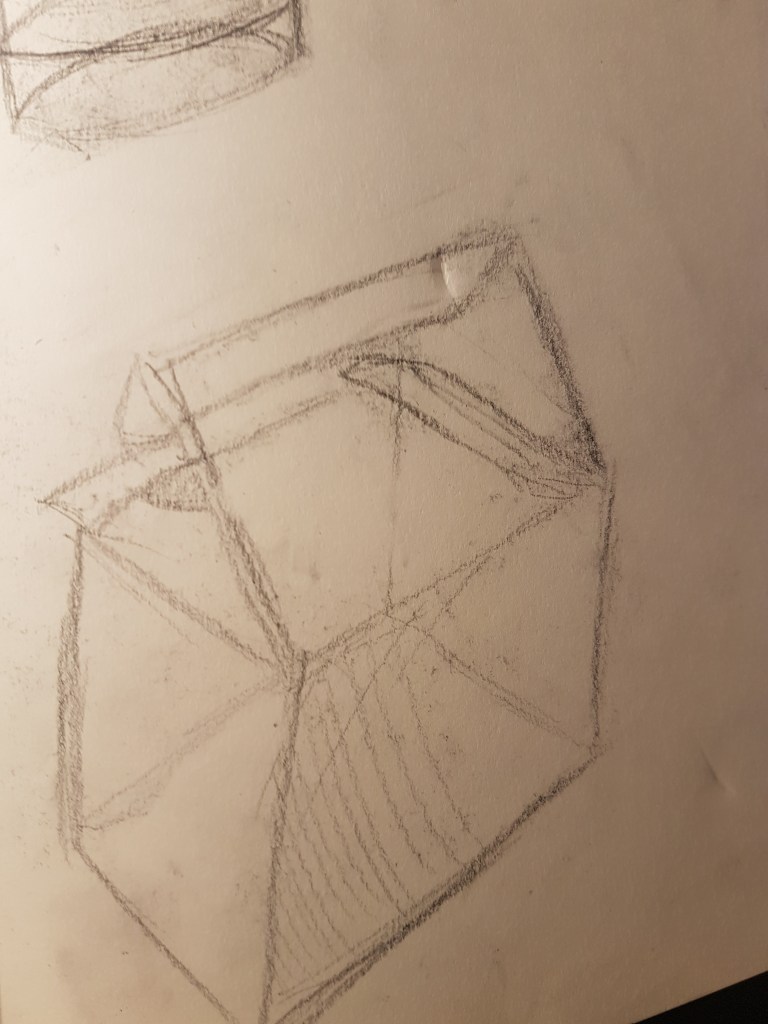
I tried another group of objects, sketching them individually before trying another group sketch. I tried imagining the space inside to better understand laying out my composition. It was nice to take some time to look and understand the space within objects before trying to draw them together, so I could fully understand being able to put together a dynamic composition.

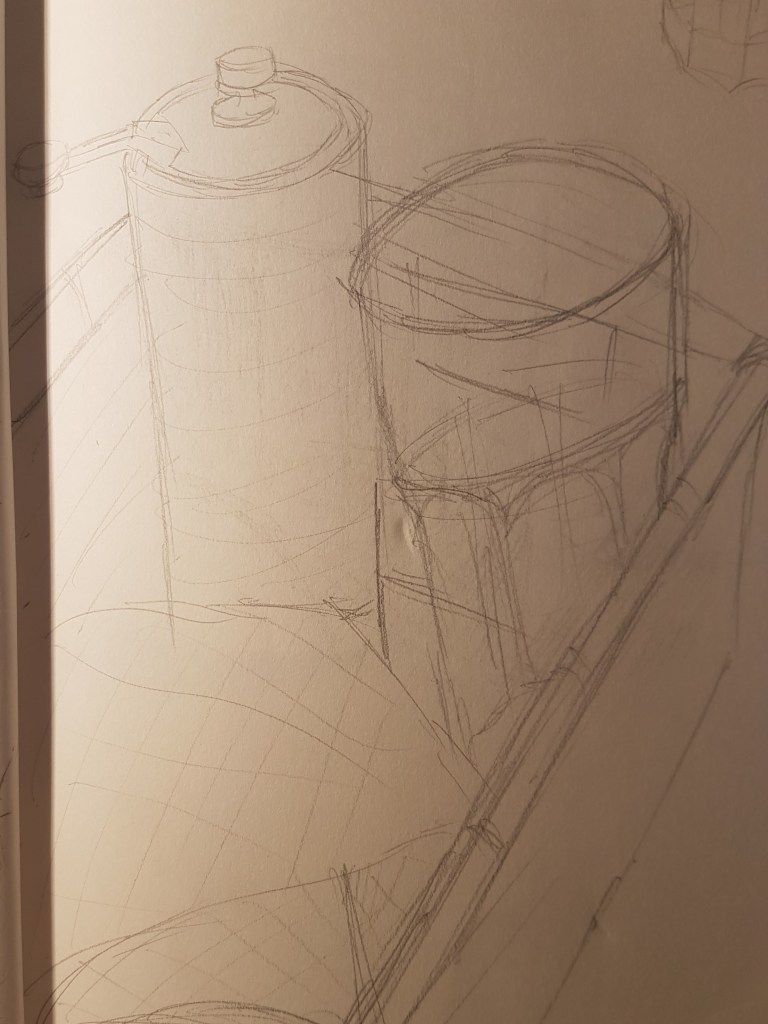
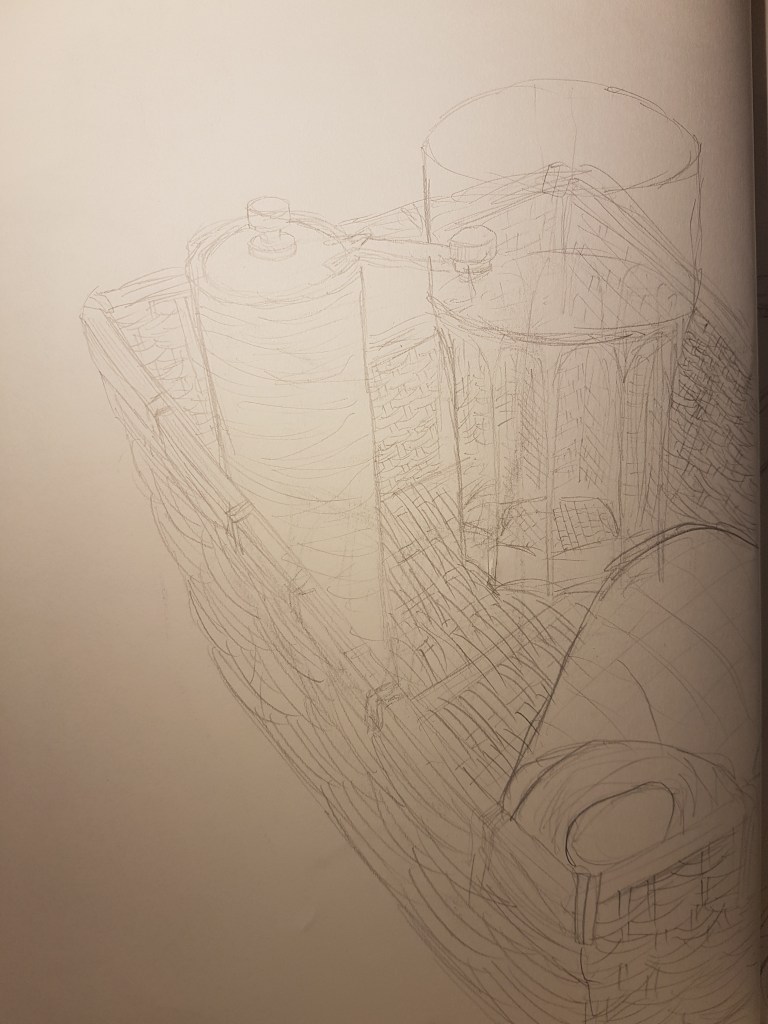
I went and tried the task again this time with four items including, a box, salt grinder, a glass and a roll of toilet paper. I packed the numerous items into the box in order to create a layered and interesting composition. I began with sketch [1] just creating the basic outlines to grasp how to fill the space and the basic layout of my objects. The glass is slightly at an incorrect angle with the rest of the objects, due to the desk I used, its not that big and doesn’t give me room to look at my paper properly at the wrong angle, I took this into consideration when it came to my next drawing [2]. I made sure to seat myself in a way where I can view my paper properly. This time I changed the angle of which I viewed the objects from and added in the outline of some textures. It was interesting drawing the wicker texture of the basket through the glass, as it magnifies and stretches the pattern.

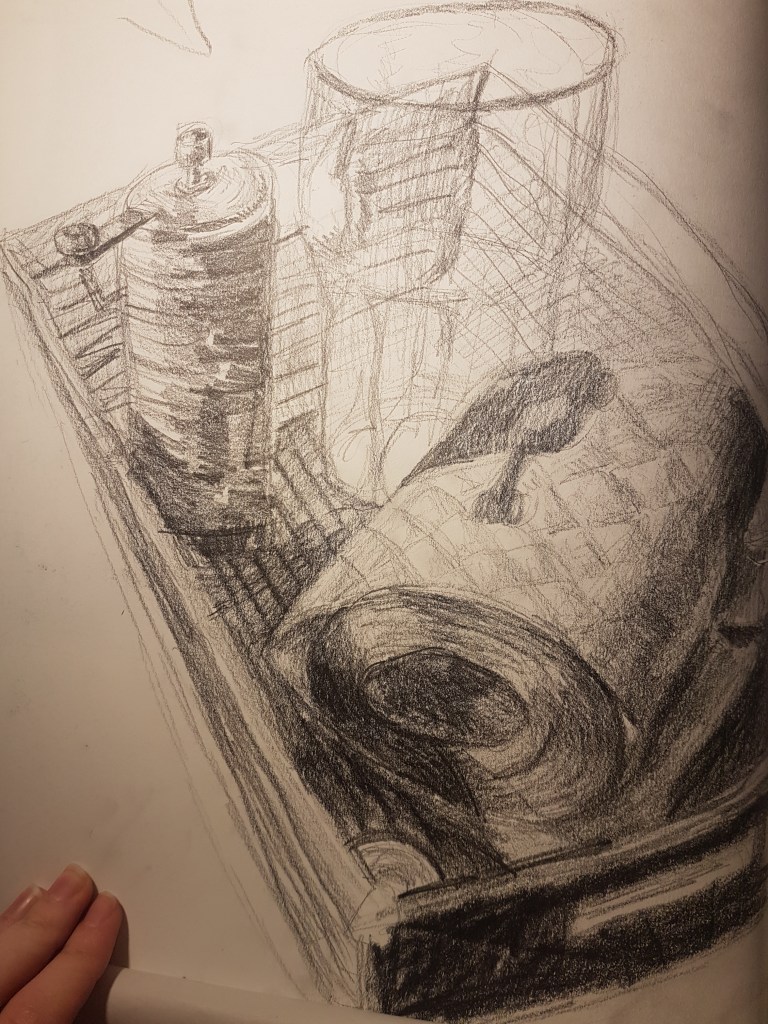
I attempted my previous sketch again, this time incorporating tone and texture, in order to give some weight and sense of reality to my objects. I shaded the shadows cast from other objects and did my best to create light reflections on the metal and glass materials. I enjoyed creating the wooden texture of the salt shaker and creating areas of light and dark. I think I did good at capturing shadows and portraying the direction of where the light source is coming from.

I rather liked the outcome, and I think I showed how the light hits all of the objects, and how a group of objects affects the outcome, with the texture and the shadows and reflections that occur. I found this exercise useful in preparing me for drawing more than one object within a drawing and how I plan my space and composition to make a space that works well with each object, in order to make an interesting and unique drawing.

Experimenting with texture

Depicting texture

I gathered a range of items, varying in texture, to begin my study of depicting texture. I thought it would be good to begin with a variety of different textures to see where my strength lies and where I need to improve.

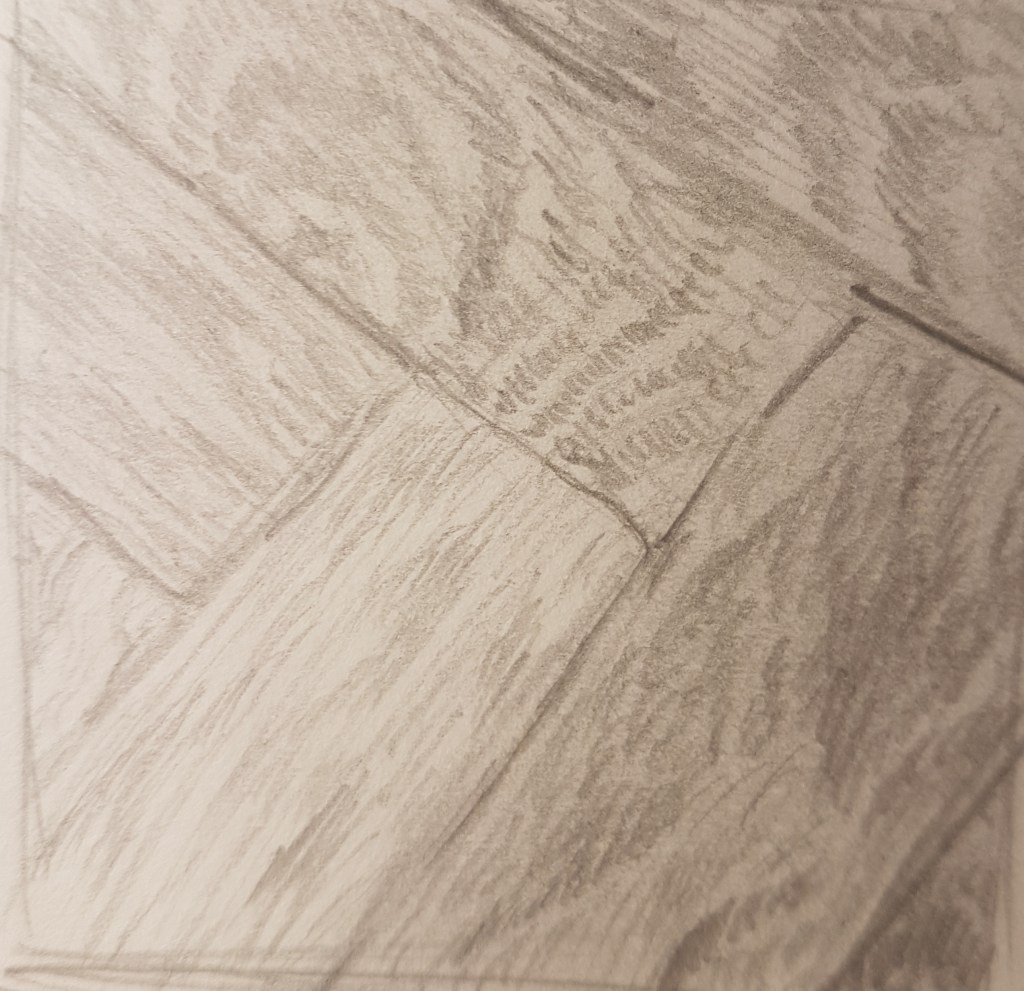
My first attempt [1] the wooden flooring I used pencil. I wanted to capture the tonal qualities of the wood and used smudging to create that tone and darker areas. I tried to use my markings to capture how the wood patterns move in one direction on each plank, using pressure to incorporate the random patterns and rings within the wood.
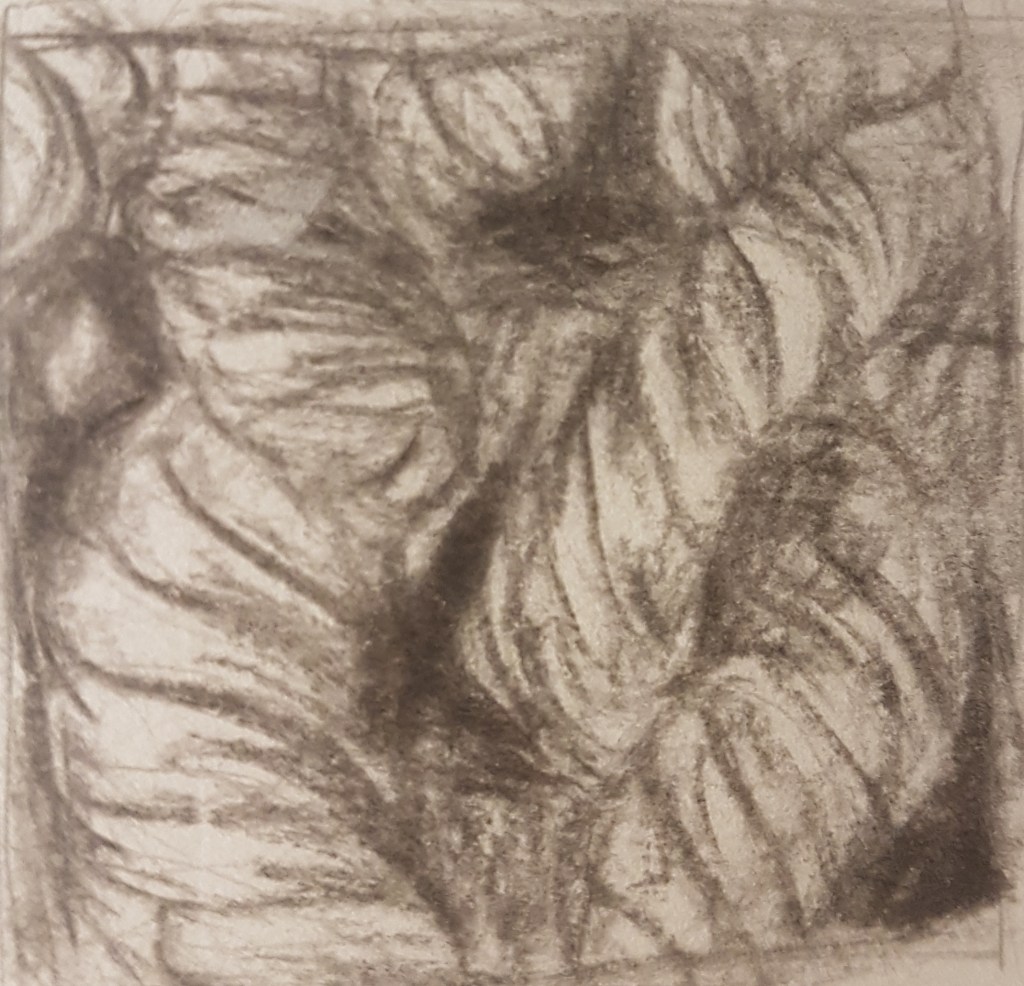
For my second attempt [2], I tried studying a pine cone up close and capturing the shadows and texture it creates, again trying to create areas of light and dark to capture the texture of the pinecone. I think I was most happy with my third attempt [3], where I changed my medium to charcoal to try and better capture the fuzzy quality of the knitted material. I think looking up close and seeing how the texture is created, the technique used to form the material, is key in order to accurately depict it. I again used lines to show the formation of the knit and how all the threads make up strands that ties the clothing material together. I liked using charcoal, although it is a messy material it worked well to capture the soft feeling texture. I liked how this went so I tried again with a different jumper knit [4] and using charcoal again as it worked well with capturing the materials softness and thickness. I used pressure to effectively make tone, making for a more realistic feel. I then decided to start experimenting with frottage as a way of capturing texture, and see what I can learn from the technique.

Experimenting with frottage- oil pastel

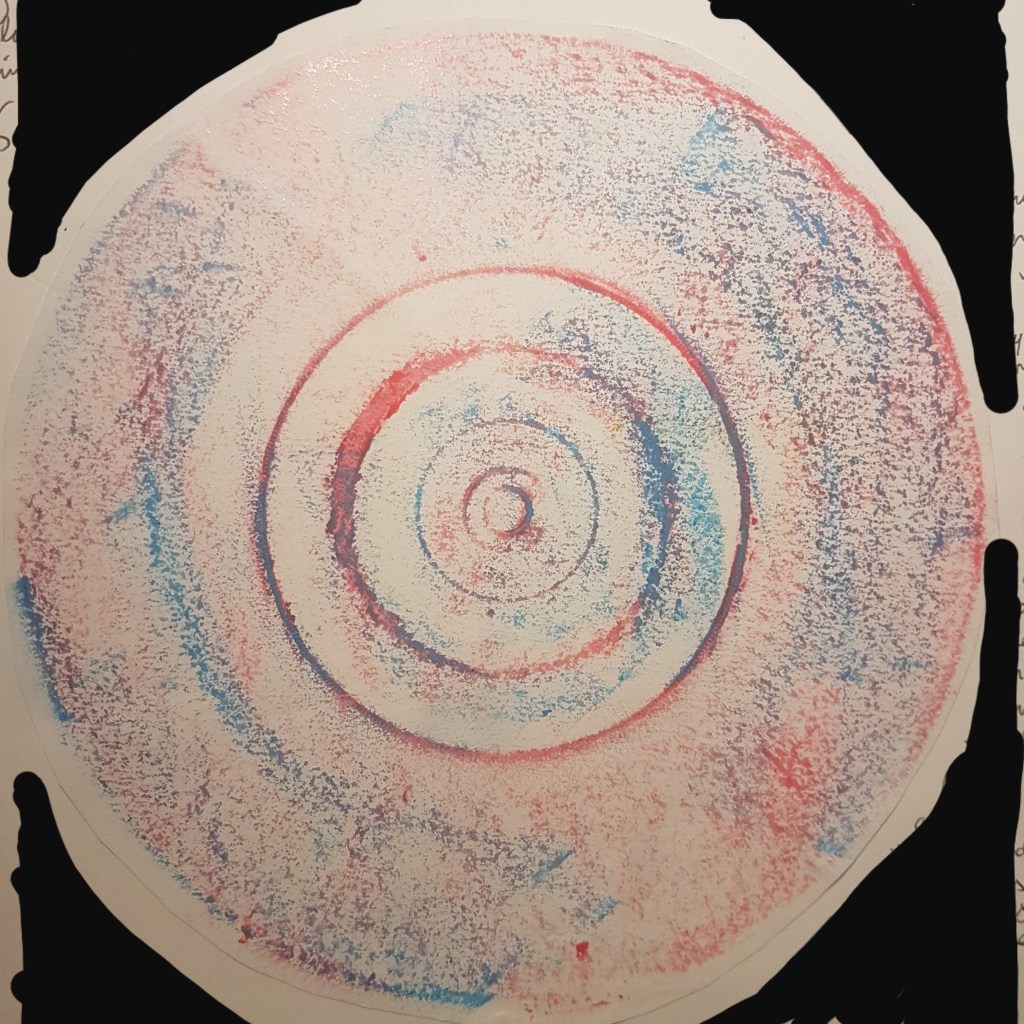
For my first experiment I started with a vinyl record as they have lots of interesting grooves and shapes which could be picked up by frottage. I decided to try some experimentation with the colours I use, with my first attempt [1] I tried to create a gradient opting for a rainbow to test out all of the different colour pastels with the frottage. I found that the main ring shapes showed up, however the many little grooves did not. I might have needed thinner paper for them to show up. I decided to build on this idea of using different colours, so I tried two different colours from various angles. I decided on contrasting colours, red and blue, and after using the first colour, I tried the frottage from a different angle. I liked the result a lot and how the piece came out tonally different from my first attempt. Again the finer details and markings didn’t show up, but I did capture the main shapes. I think these attempts were successful, even though finer details didn’t show up, you can still tell what the object is meant to be. I decided on trying out one more experiment before trying out a new texture, I wanted to try and create patterns and see what would happen with the texture if I layered the record over itself.

[3] Layered frottage/rubbings of a record

I tried layering the records over each other here and I do rather like the end result. Again I tried contrasting the colours over each other in a line to see the difference it makes. I think that the shapes are still noticeable as records but also look like a stereo lined up against one another with the rings. I like the effect and am most happy with my second attempt [2].

Experimenting with frottage- Lead

I continued my experiment with frottage and taking what I learned from my previous attempts, I used thinner paper to see if that would work better at capturing the finer details and grooves of different textures. I also wanted to try out a range of different media for capturing impressions.

In rubbings 1-3, I used lead, applying different pressure and coming from different angles in order to capture to capture the wood knot in the flooring of my house. However I think the actual texture of my flooring may have been too smooth to effectively capture the texture, as the basic round shape was only captured. I quite like my second and third attempt, as the way I shaded and applied pressure made the wood knot look much more like a crater on the moon, although it wasn’t an accurate looking wood knot, I quite liked the weird tonal effect it presented.
In my fourth drawing [4] I tried to do a rubbing of a wicker basket. It picked up a lot of the wooden, woven texture and I think it is clearly visible what this texture is . Again I think this technique was useful in trying to understand texture of certain objects.

Experimenting with frottage- Charcoal

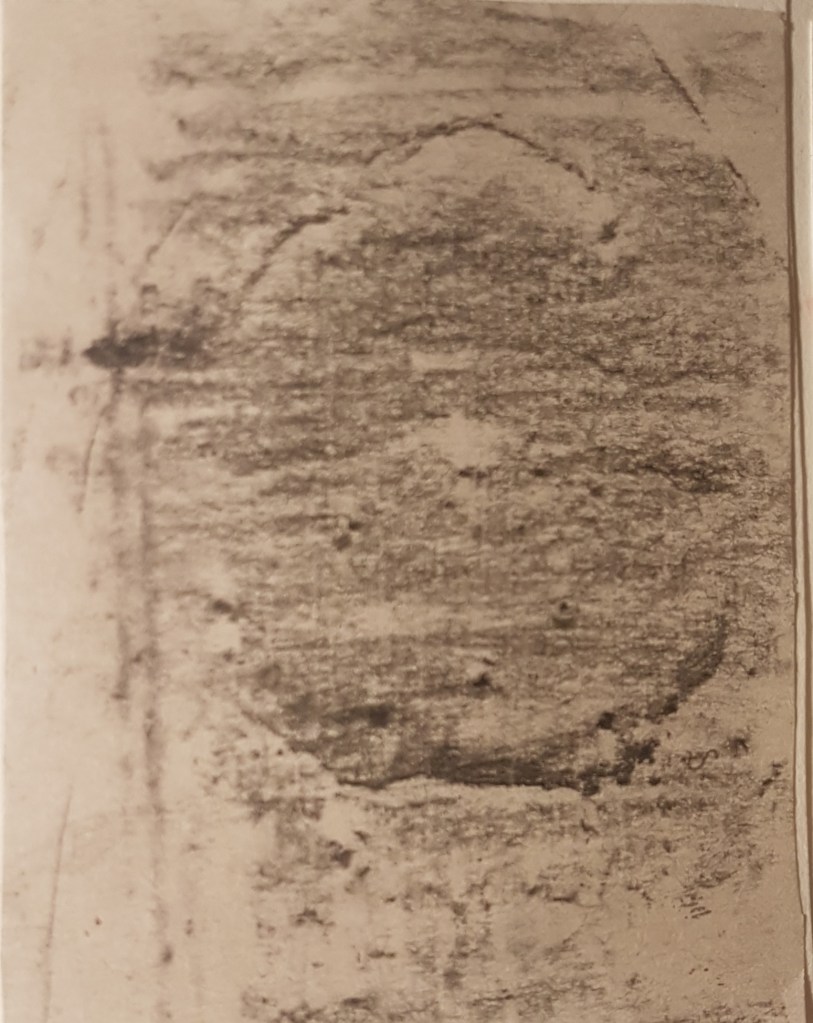
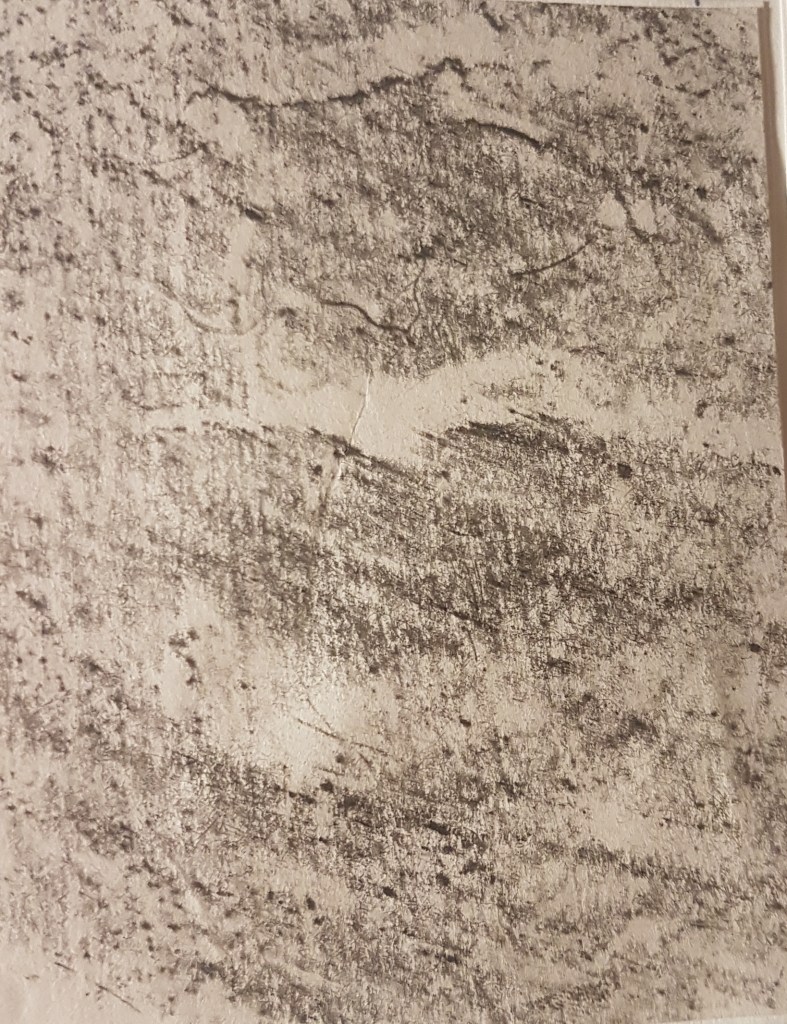
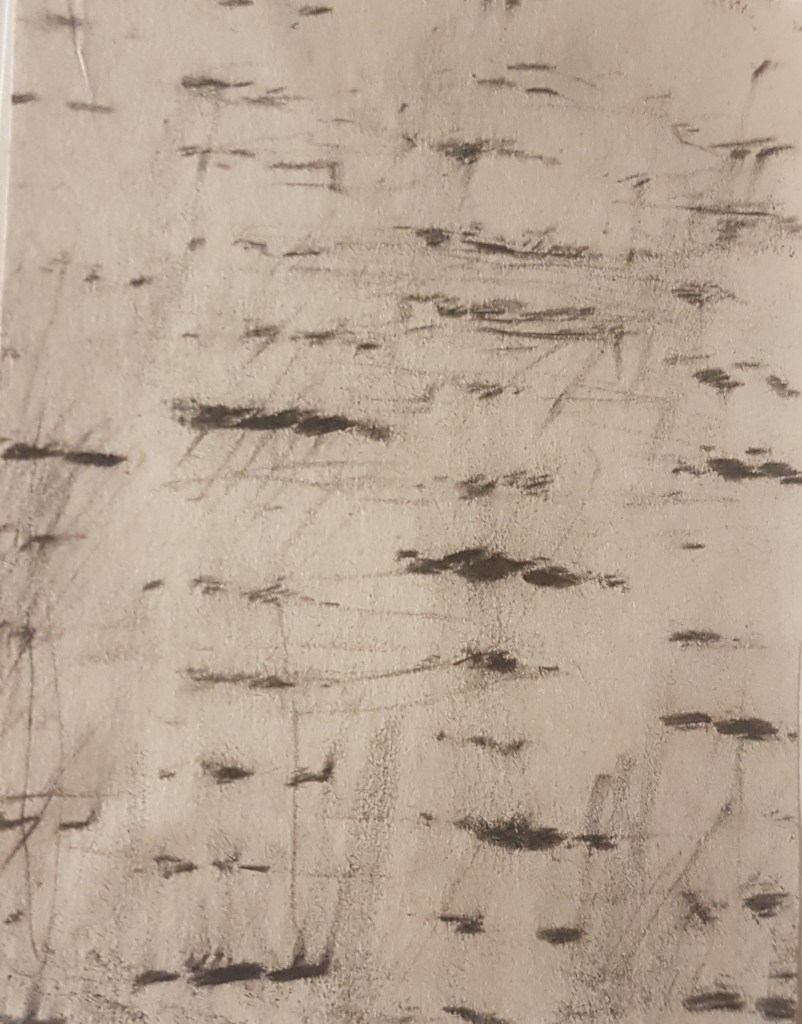
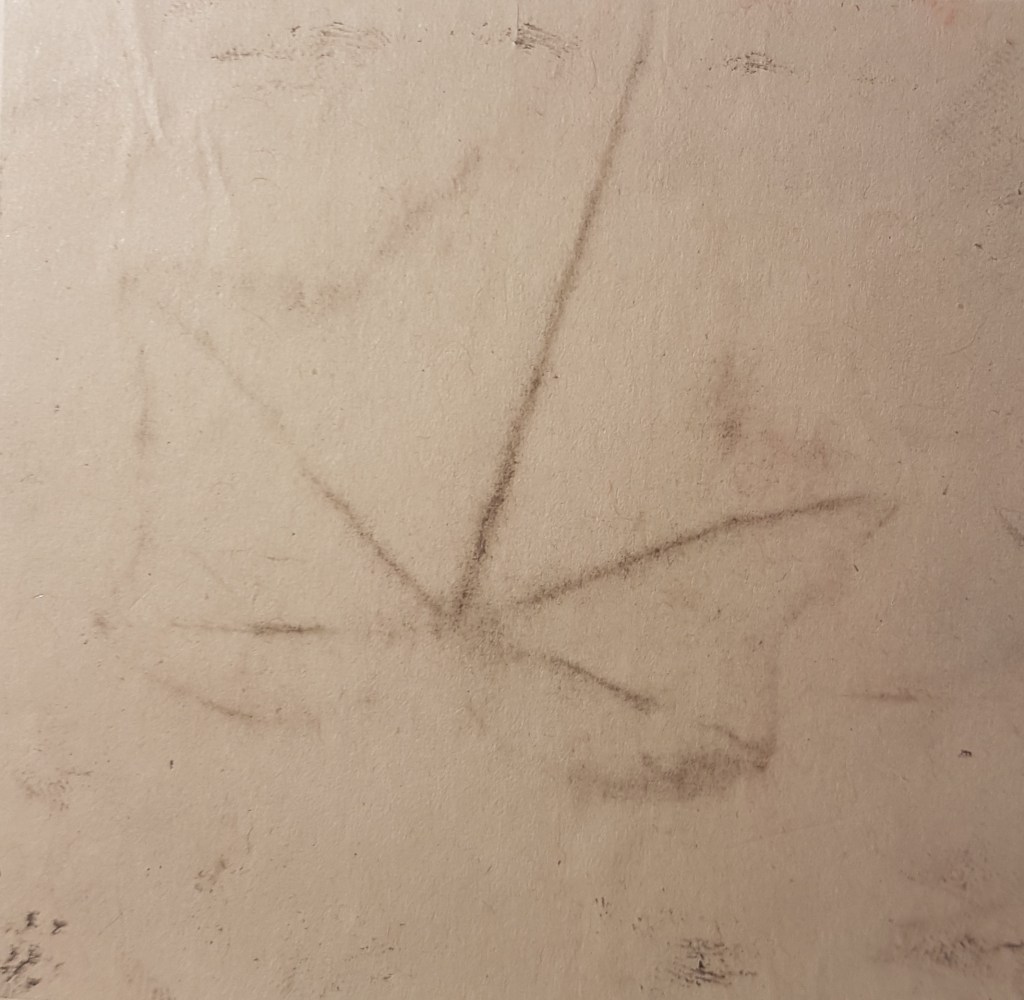
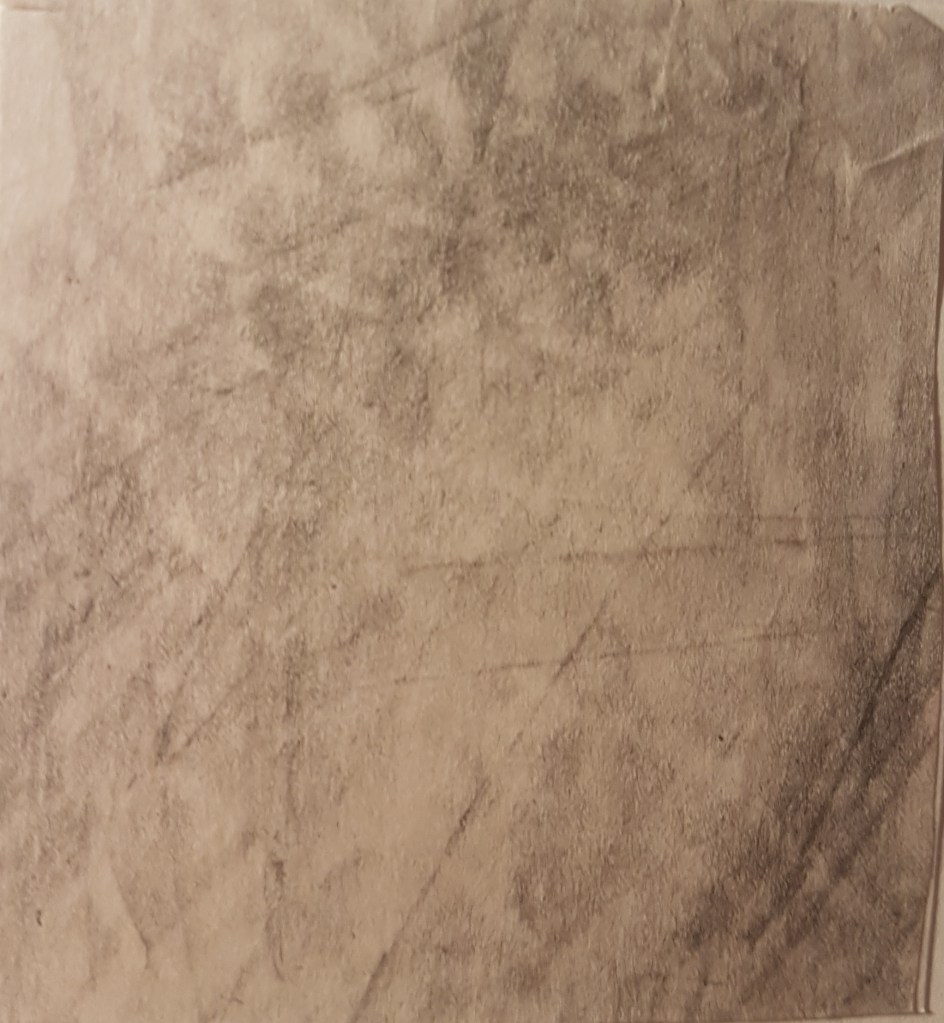
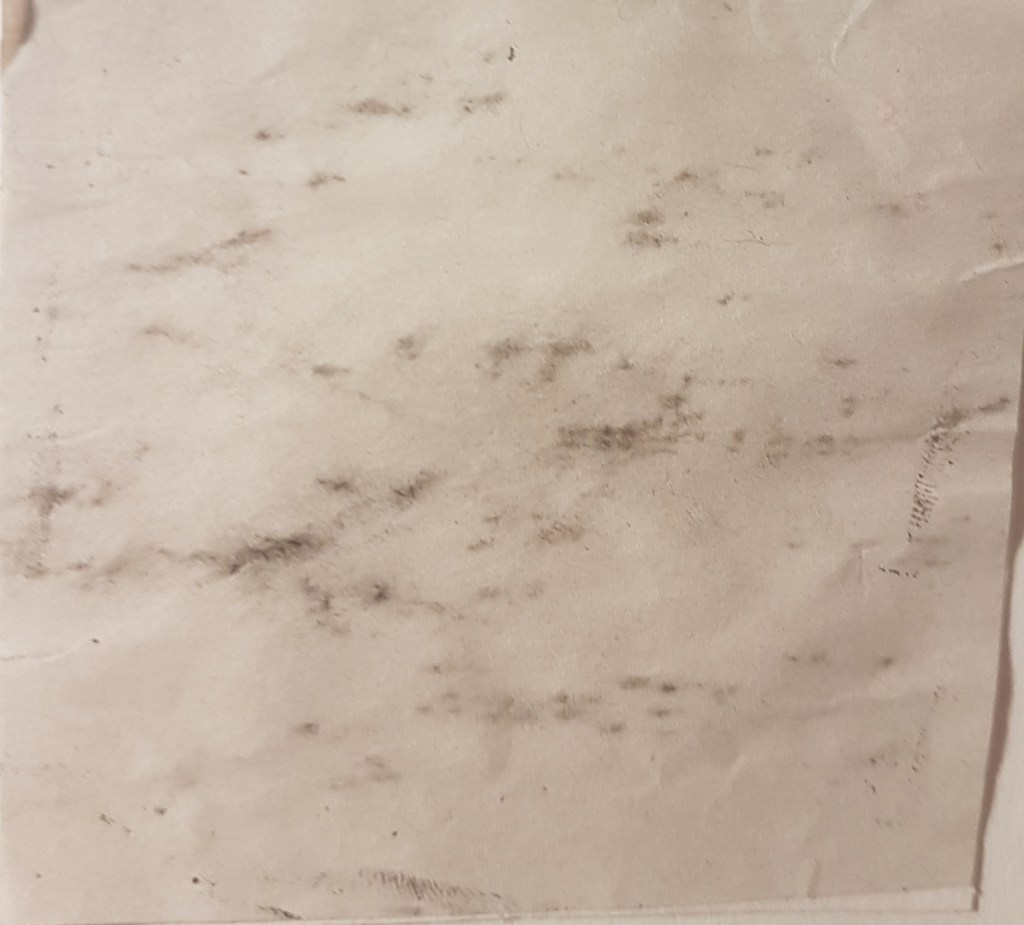
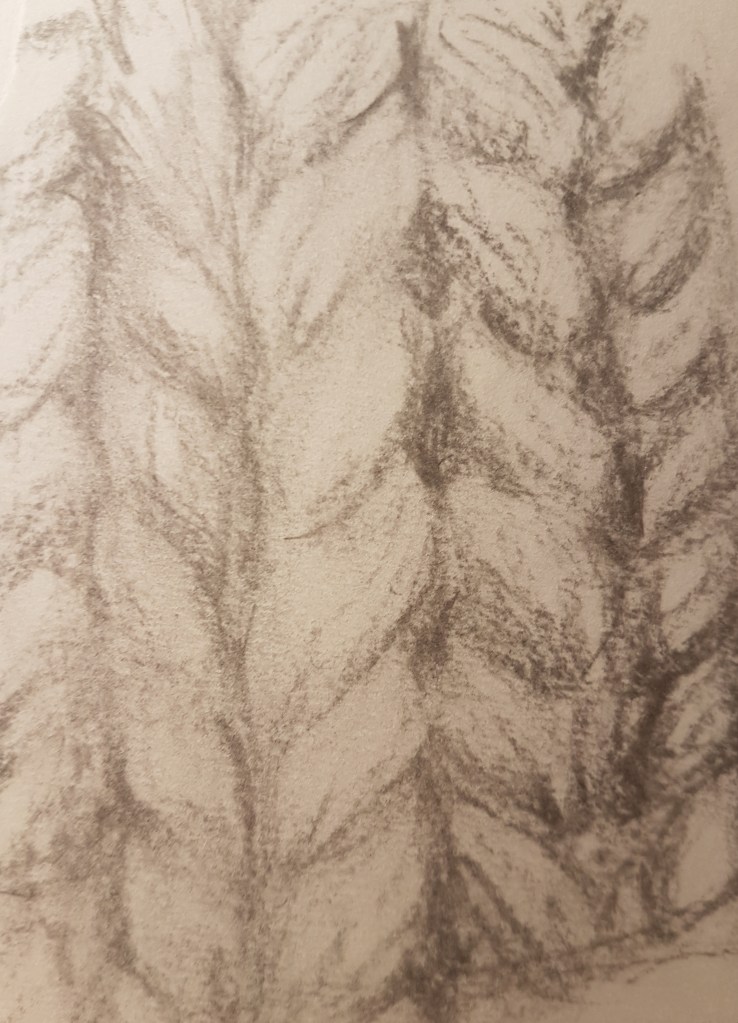
I decided to try rubbing in charcoal, since its a softer/looser substance I expected softer rubbings. [1] came out rather faint, this may be due to the soft charcoal I used or not applying enough texture, regardless the main leaf structure and outline is there. In my second attempt on a leather bag [2] I think I really captured the texture and pattern of the bag material, a faux snake skin leather, which again is useful for looing the capture texture within a drawing without using rubbings. Seeing how the area of light and dark create the pattern will help me to recreate it in drawings. Finally, [3] was not the best rubbing, You can tell that the wood is a bit rough, but its hard to tell what the texture is in my opinion. I didn’t pick the best texture to get a rubbing from.

Experimenting with frottage- Soft Pastels

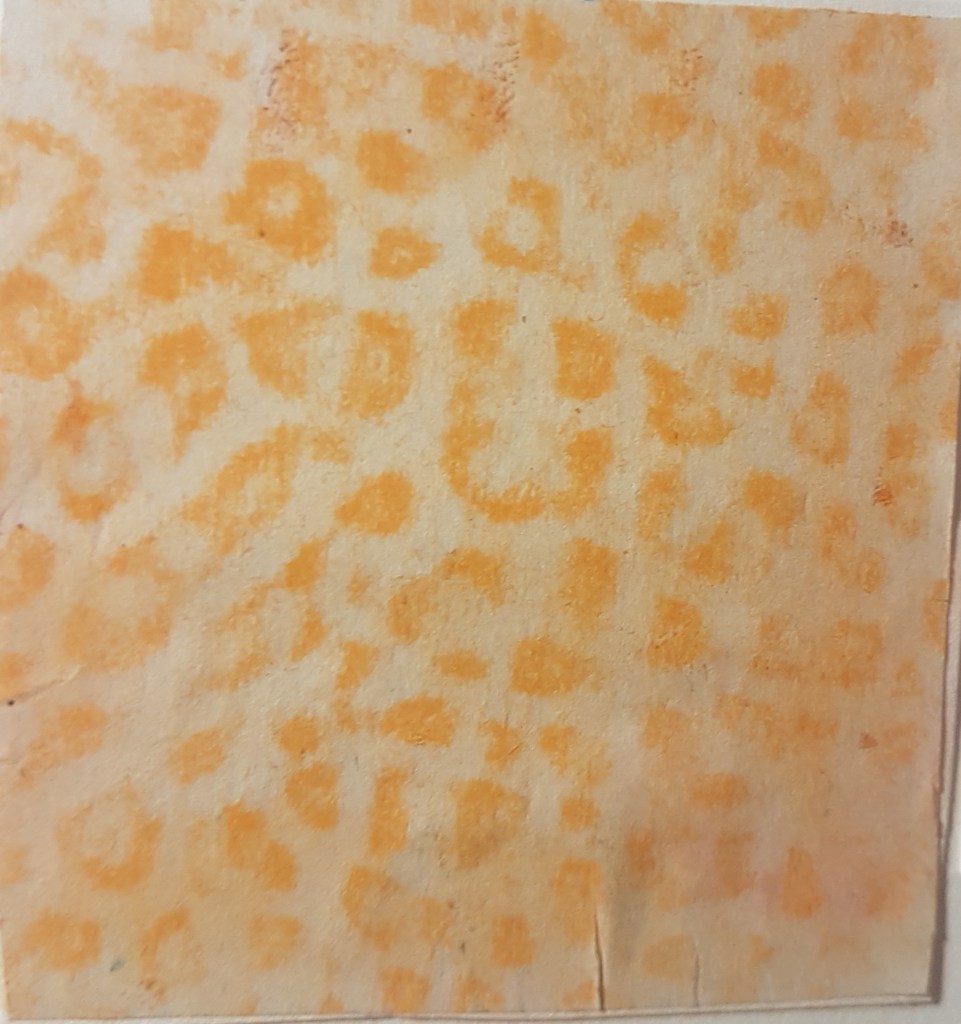
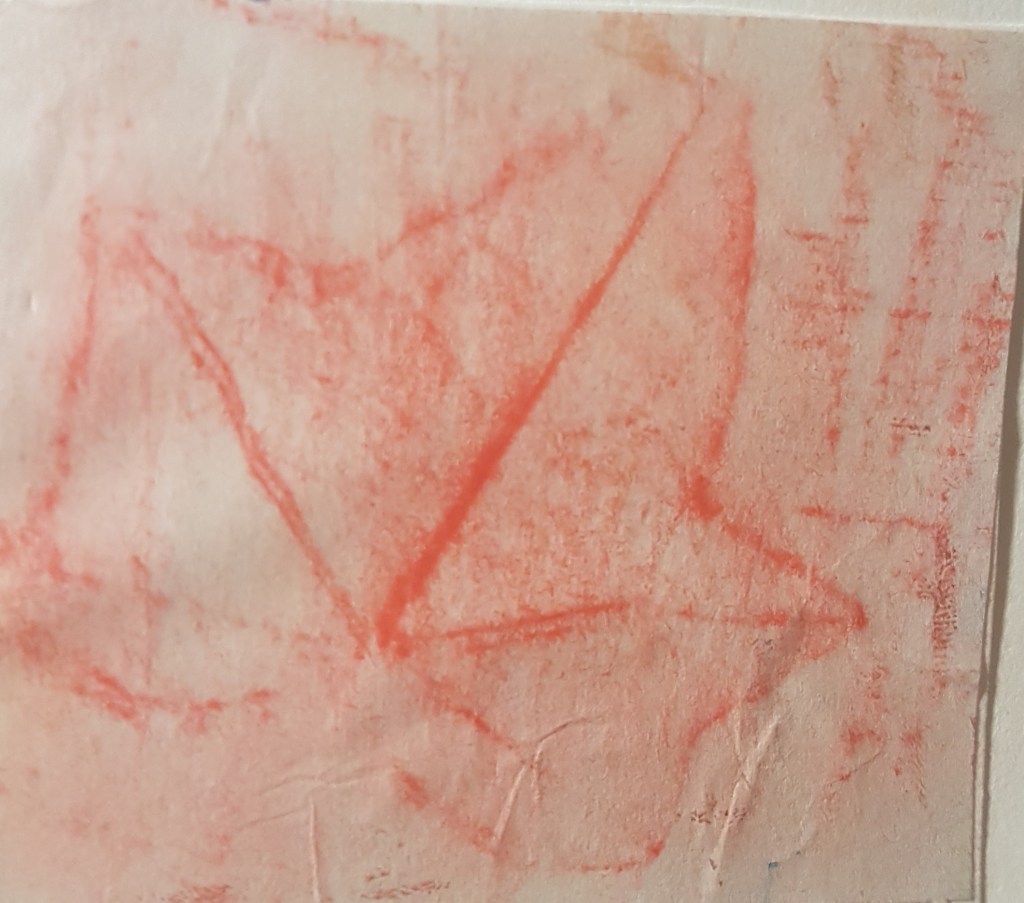
I decided to switch it up and used a similar medium to charcoal, soft pastels, but used a variety of colours to experiment. Firstly I tried a bright red on a wooden carving, I think it’s clear that these are good at capturing detail. The main shape of the carving was captured quite well. I like the effect of using a colour rather than black charcoal in [2] as with the texture of the leather, its quite like an animal print you’d find on clothing. I think my attempt at a leaf rubbing [3] came out a lot better than my previous attempt with charcoal, the shape is a lot clearer and the outlines are bold.

Final thoughts

I thought that these exercises were really useful in helping me to understand texture, and how to go about recreating it in a drawing. Using frottage and rubbings and seeing how texture comes out and the shapes and tone it creates helps me to think about how I would recreate certain textures for my drawings.

I am [X]

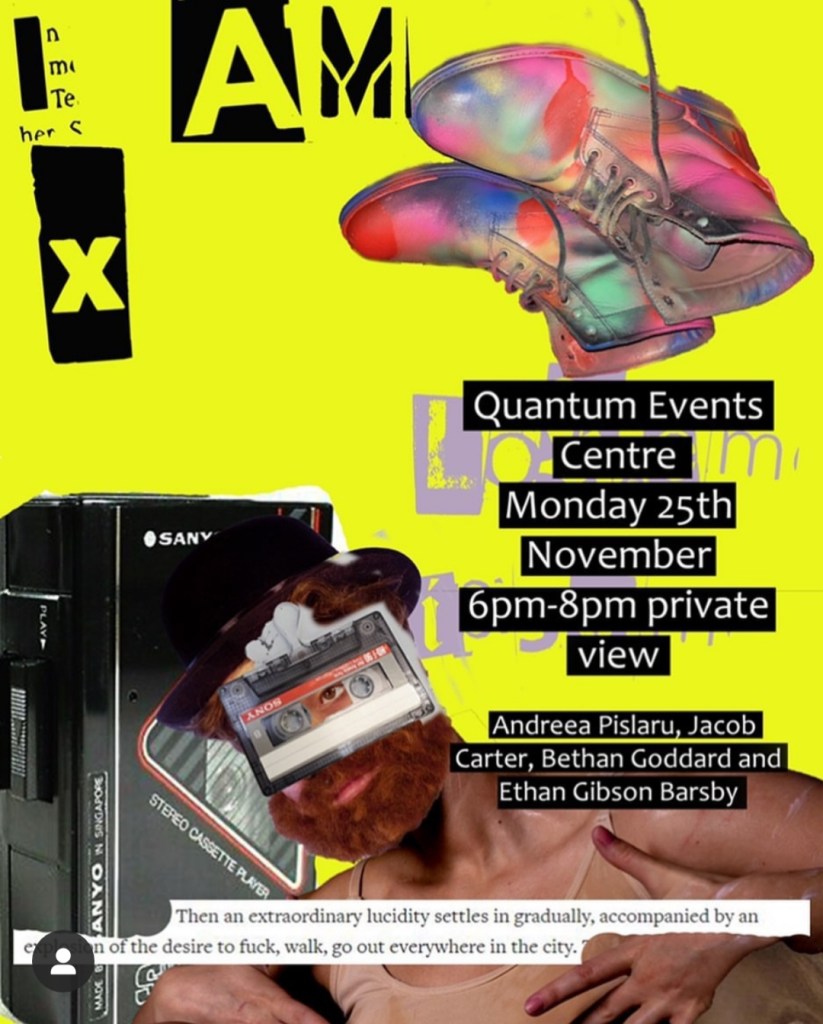
Exhibition by Andreea Pislaru, Jacob Carter, Bethan Goddard and Ethan Gibson-Barsby.

An exhibition in response to Paul Preciado’s ‘Testo Junkie’

Cover of the publication

I recently visited an exhibition created by second year students at BCU. It was created in response to a piece of writing done by Paul Preciado called ‘Testo Junkie’ which discussed addiction to ‘Testogel’ and its effect on his body. Today I will be looking more in depth into Andreea Pislaru’s and Jacob Carter’s work, as it interests me and relates to my current work. As the work is a response to ‘Testo Junkie’ there is a huge focus on sex and the body, and perhaps the capitalism of sex.
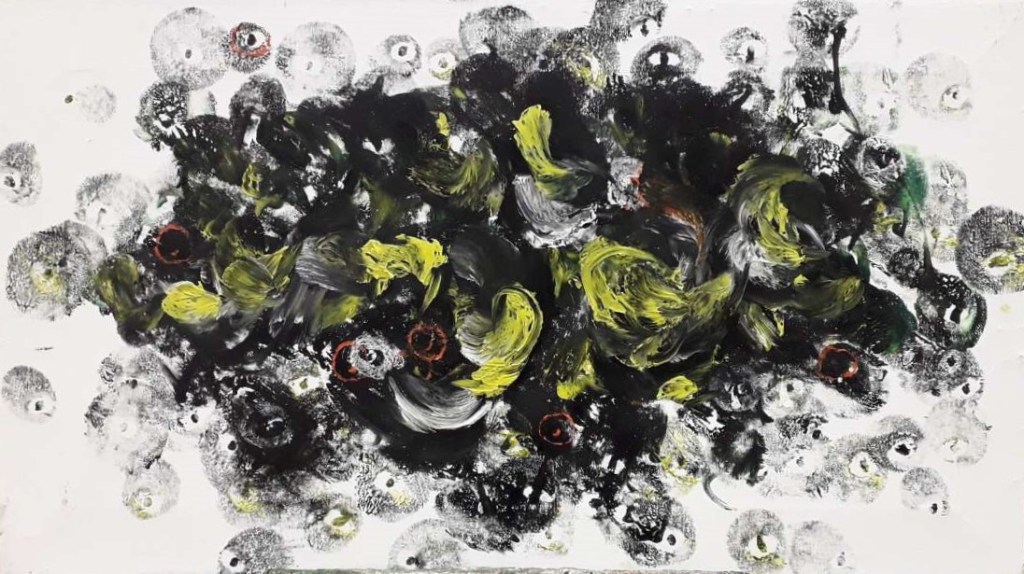
‘Unexpected’- Andreea Pislaru

Andreea Pislaru- Unexpected, 2019 (oil on canvas)

For this piece the artist took inspiration from Yves Kline 1962 performance ‘Anthropometries of the Blue Period’ where he painted women in his famous blue shade and had their bodies be the brush that leaves markings of the page. Andreea Pislaru, inspired by this bold stunt, decided to do her own twist on this concept in her piece. Where instead of relying on the bodies of others, she uses her own, creating unique and personal creations. Her brush was her breasts, which she painted and then pressed against the canvas in variety of ways, creating a collection of prints of her nipple. Some remain simple prints, whereas towards the centre of the canvas you can see that she increased the amount of paint she used and pushed it around with her breast, which I feel helps bring the piece together providing places to look and see how she explored her body as a painting tool. I love how the markings build up and create layers towards the centre of the canvas, providing a clear focal point within the composition, that boldly expands out into nothing. I think her choice of colour is interesting and provides a unique and much more personal experience in contrast to Kline who sticks to his ‘International Kline blue’. I feel the dark colours provides a sense of personality when combined with the way the work was created, it adds a personal touch which deeply contrasts against the way Kline produced his similar performance, where nothing was necessarily created by him other than the idea and the blue shade. The dark and messy colour palette make the piece feel incredibly personal, which juxtaposes the non personal aspect of Kline’s work. This piece is completely personal to Pislaru and her identity.

In terms of looking at my recent body of work and making my marks, I feel I should experiment with making much more personal markings in a way like this. I think the idea of using an intimate part of your body in order to create intimate markings, can be a beautiful way of communicating your emotions and feelings with the audience while exploring a unique and experimental way of drawing.

‘Desire to fuck’- Jacob Carter

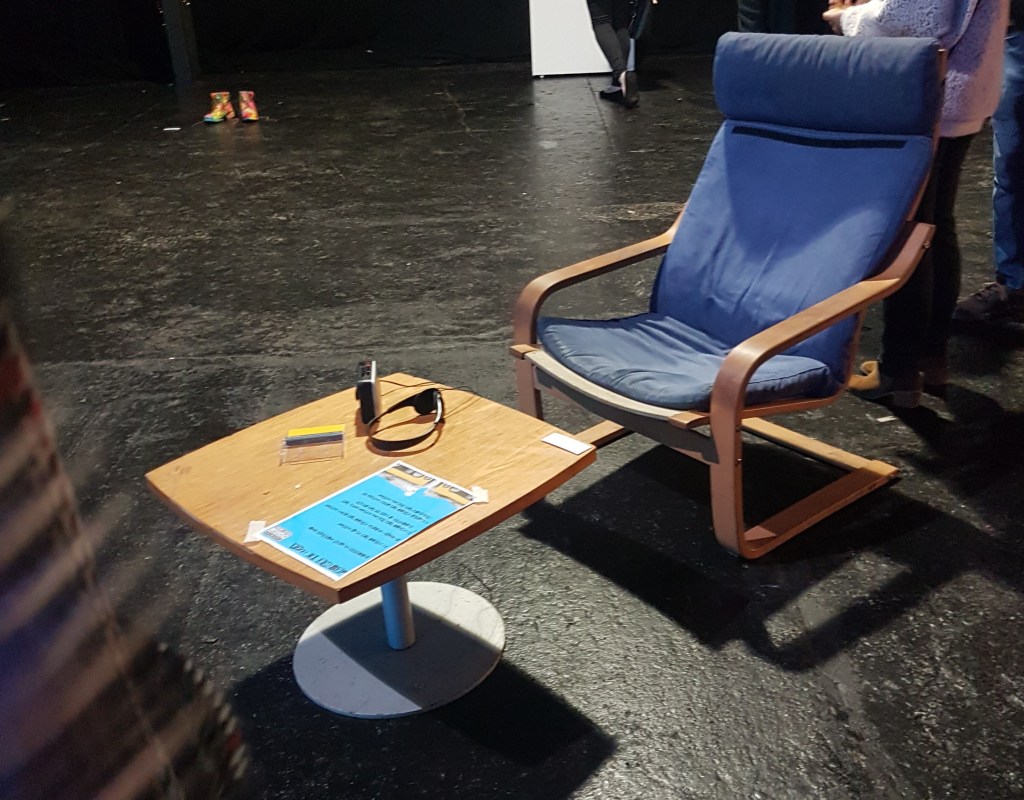
Jacob Carter- Desire to Fuck, 2019 (cassette tape and player)

Jacob Carters practice focus is based on sound art and the idea of exploring the ways that sound can be disrupted in different ways. In this piece ‘Desire to Fuck’ Jacob takes a piece of the text from ‘Testo Junkie’ and responds to it with layered sounds of pornography and extracts of the related text being spoken by a generated voice. I found it really interesting to listen to, as it is not a common art practice, it was like a breath of fresh air to not focus on looking with my eyes, but to sit back and listen, and hear what the artist is trying to say. I found the piece humorous and awkward to listen to, as you’re sat in a gallery full of people listening to sound bites of porn, but only you can hear it through the headphones. I believe that is what the artist wanted to achieve. To create an awkward experience of listening to what should be a private act, but you’re sat in a room full of people, some watching you in anticipation of your reaction, if they listened to it before. Therefore, essentially, you yourself become an art piece as the people around you, including the artist himself, watch you for a reaction. The sound piece itself was expertly put together, the layered porn audio was effectively done, creating a beat out of the orgasms, constructing a familiar piece of audio which is almost like a song out of the familiar audio of pornography. The way that the noises and ‘song beat’ work together as something familiar but new keeps most listeners transfixed, unless its too embarrassing as it was for some.

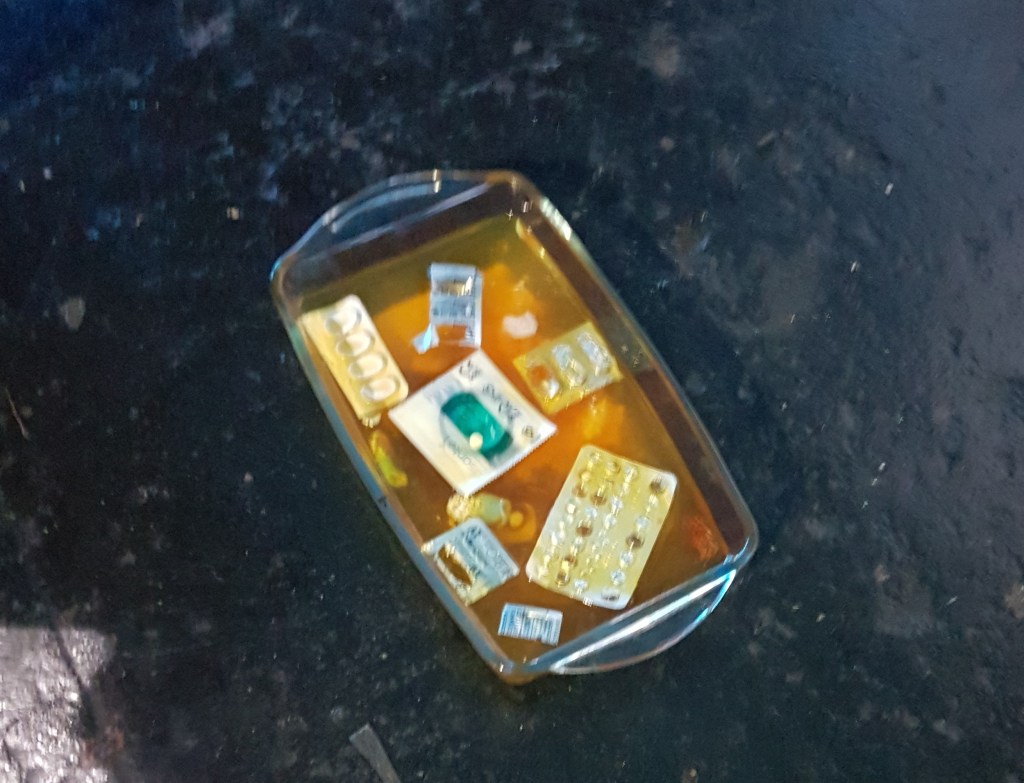
‘Jelly on a plate, jelly on a plate, wibble wobble, wibble wobble, jelly on a plate’ and ‘Punk Capitalism’- Jacob Carter

I also looked into his other two pieces which had me intrigued. Firstly [1] had a very long childish poetic title which tends to stick with you. It is a dish filled with jelly with various, what could be considered dirty items, inside. Condoms and drugs. It clearly links to the text by Preciado. For me, when I saw the items set, it felt like a moment in time. It could be commenting on how when one is addicted to such things time blends into one, it feels like there is no sense of time, the mind is stuck on these issues. There were various bright coloured jellies used but I feel this orange one worked well, as it can be seen as quite a sickly colour, depicting addiction as an illness. Its not a pleasant piece to look at, which I feel is intentional, taking a dessert and filling it with pharmaceuticals and condoms only adds to the sickly feel, juxtaposing the sweet jelly dessert. Its quite adult which again creates contrast within the childish jingle for a title. I should think about meaning within my own work and try creative ways to create imagery which juxtaposes certain qualities or elements within the piece.
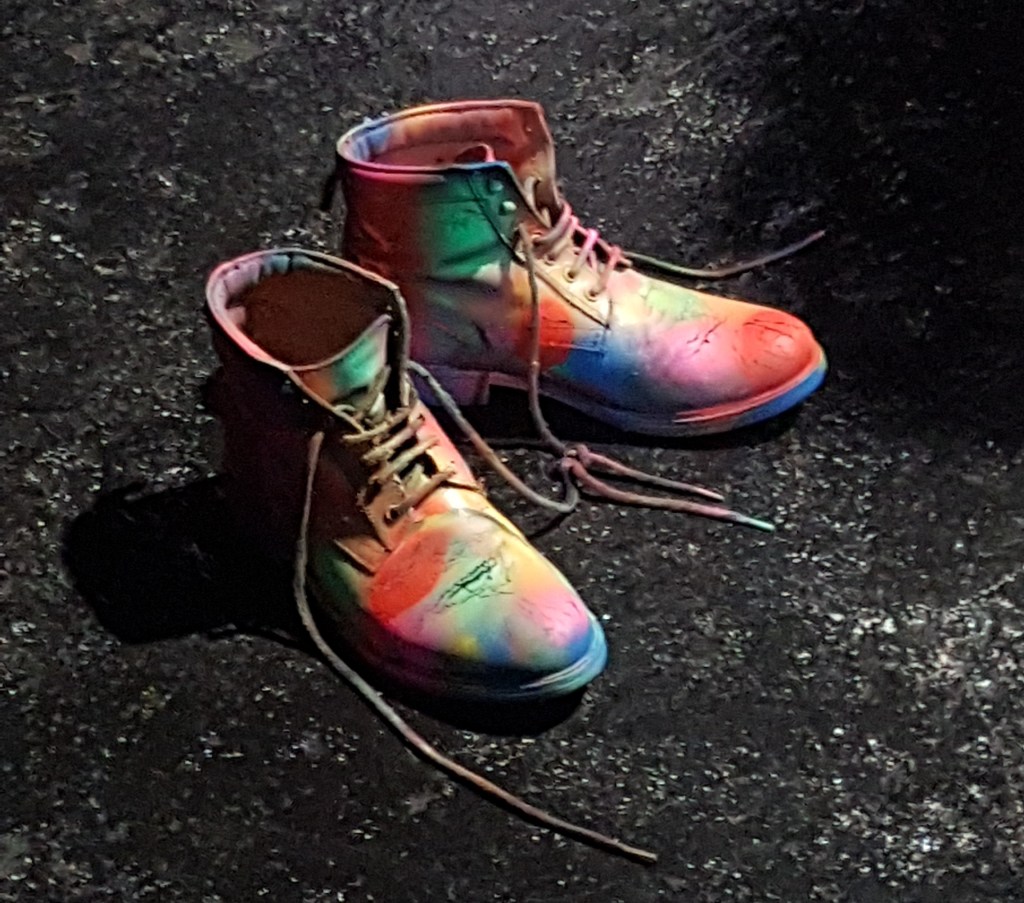
For [2] he went for a louder approach in terms of his use of colour and literally with his use of sound. Although bright colours were used with the jellies ,the colours used here are extremely vibrant with a punk feel to them. An audio piece can be heard coming from the boots throughout the night, perplexing many of the people attending. Inspired by a piece by John Wiggley where he had whistling audio coming from a hat, he created a similar sense of someone being present through the object but also simultaneously absent as people were left searching for the source of the sound. I found the interaction it created between guests intriguing and amusing.

To gain a better understanding of some of the pieces on display by Jacob Carter that night I pulled him aside for an interview to discuss his work further and see where his mind was at with the pieces of work.
Interview with Jacob Carter

Me- How did you come up with the names for your pieces?

Jacob- Well the names, quite a lot of the names were influenced from the text… so exploring the ‘Testo Junkie’ and different sampled sections from there. So the ‘Desire to fuck’ was like one of the texts in that piece, so we used that for one of the names. And also the classic song for the jelly, we thought that was quite humorous.

Me- So lets talk about the shoes, what gave you the idea for the colours you chose?

Jacob- The colours I chose were kinda influenced by the punk movement, trying to get some like bright neon colours in there, just to make it look completely separate from a normal pair of shoes. I like how I cracked the paint afterwards so it has revealed some of the black underneath.

Me- Did you walk around in them to do that?

Jacob- I didn’t walk around, I just sort of cracked them with my hands, like bent them around. I should have walked in them, I might try that actually, might give a new feel to them.

Me- And the sound piece inside the shoes, could you talk a little about that?

Jacob- Well um, one of the lecturers at Birmingham City University, John Wiggley, is a very good artist in his own right. He creates sculptures and one of his pieces, a whistling hat, was quite a influence. So I wanted to create sound coming out of an object like shoes, and I thought those kind of punk boots went quite well with incorporating punk music, as it was a very good theme within the text. So I sampled quite a few [songs] , all of the punk songs as well are discussing the use of drugs and things, which matches with that theme of abuse, well drug abuse. And over the top [of the songs] its got definitions of different, like, sexualities and ideas and all of these kinds of things over the top of text samples about drug abuse and animal testing for pharmaceuticals as well.

Me- And what about the jellies, I imagine that’s to do with drug abuse as well?

Jacob- Well yeah, the jellies sort of looks at that idea of sexual desire and drug abuse and jelly is the consumerist item and it also relates to the idea about the gel, the testosterone gel, which is applied to the skin for transitioning. So like it was quit a good option, and also a lot cheaper than purchasing resin to set some things in, as that was an initial idea, but I think the jelly works a lot better, especially with the bright colours.

Me- Your final piece, the porn, tell me a bit more about that

Jacob- Well I feel that I had to incorporate pornography with the idea it can be used as a material to actually produce art with. Seeming it seems like a taboo and something which wouldn’t be presented in a gallery, I thought it would be fun to push those boundaries, get artwork like that in there, seeing as the text explored the idea of how pornography is used in a capitalist society. How they monetise sex and different products around it, so its kind of critiquing that, at the same time transitioning the music as well, with the overall theme of transitioning. So its interesting how its got male voices and female voices where you can’t really tell them apart, so it kind of blurs the boundary lines.

Final thoughts

I found myself inspired by the end of the night. I was eager to try something similar to Andreea’s work, creating intimate markings that spark conversations about the way in which we create our marks as an artist and what weight they hold for us and for the audience. I was also left thinking on how I could produce work which effectively and effortlessly interacts with the audience, and makes them think about the piece, the way it was constructed and why it was constructed that way. It was also a brilliant experience to speak with some of the artists about their work in order to gain a deeper level of understanding of the thought process which has gone on behind the scenes, rather than playing a guessing game of what I think is trying to be said. It was nice to come up with my own ideas and compare with the artists, and have our ideas bounce off each other. I left with the thought of identity and what it means to me as an artist. Is there a definitive identity for anyone, or do we all in a way identify as nothing and everything as the title suggests; I am [x].

Experimenting with expressive lines and marks

As I begin Project 1 I start with experimenting with expressive lines and marks, which is useful to show yourself how emotions can make their way into your work in the most subtle ways. How feeling happy, sad or angry can effect the pressure and movement of your strokes and thus your drawing begins to express these emotions in your work. This experiment can open your eyes as to how you can create a piece much more personal to you and can help the viewer of your work to feel what you are emoting in a much more touching way than just the content of your piece.
Exploring the emotion of Anger

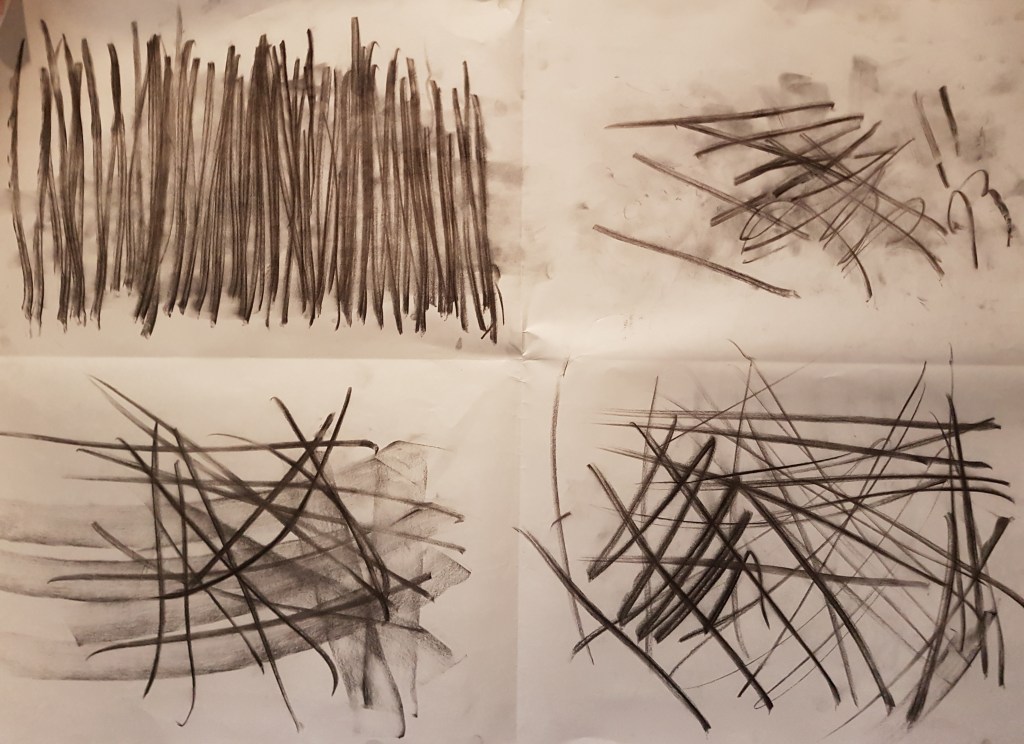
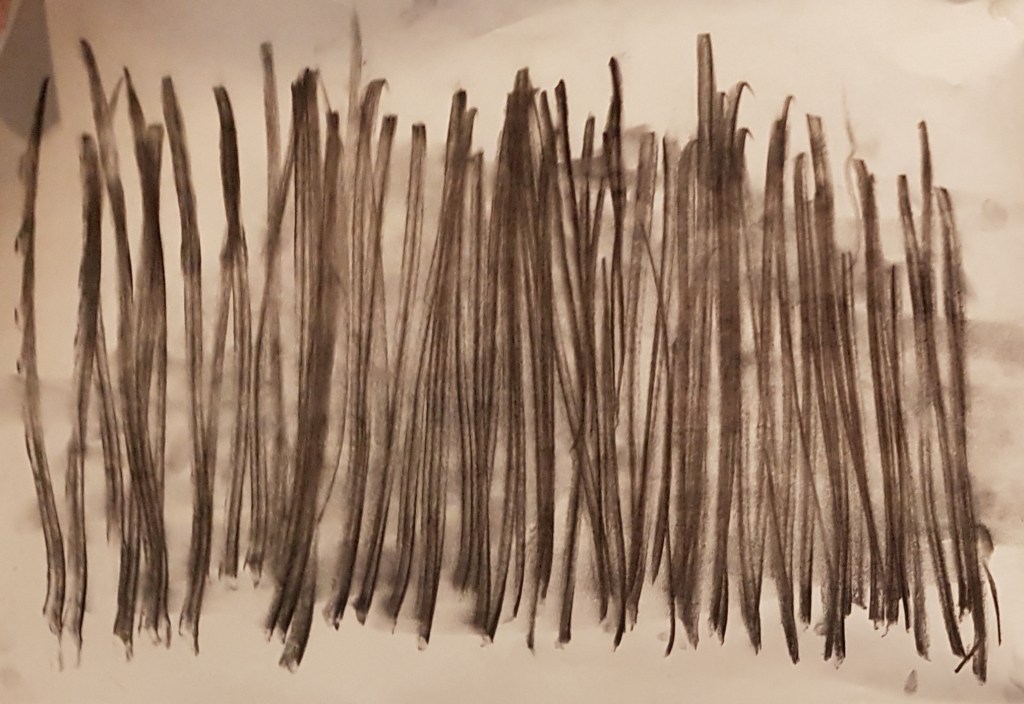
The collection of my markings from Anger.

For my first set of four images, I tried to emote anger in my markings. To get into the mindset of anger, I looked to the recent memories of losing a friend that are still fresh. This fuelled the emotion in my work, and found that it encouraged me to create harsh, bold strokes.

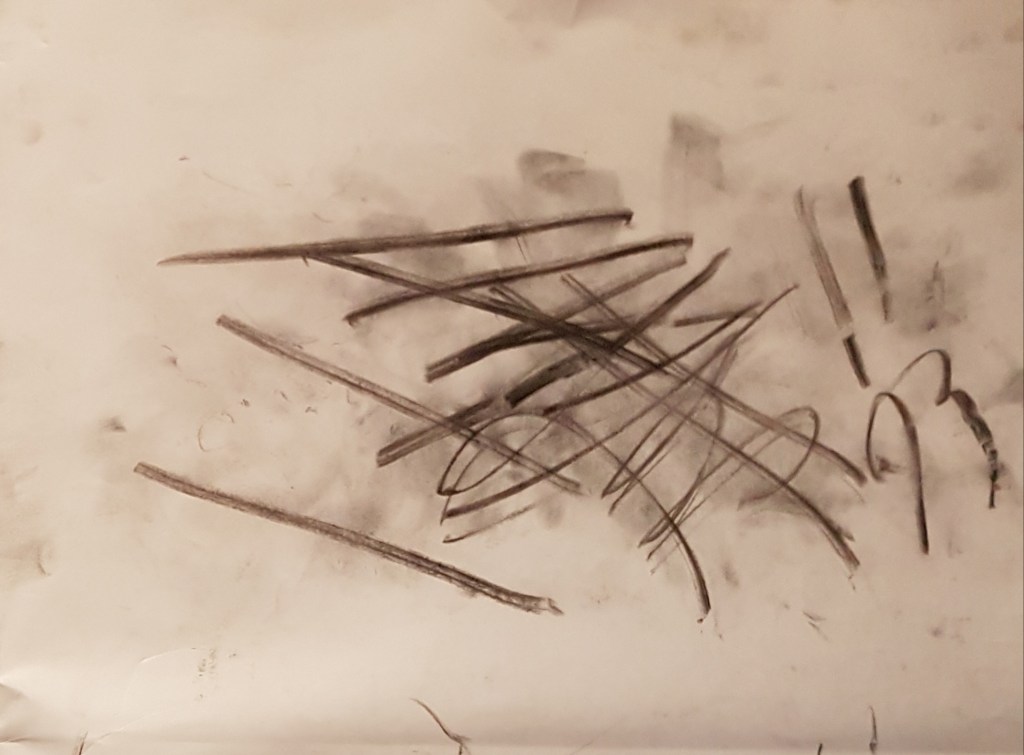
Attempt One

In this first attempt I kept to creating quick strokes. I went with quite an aggressive approach, creating bold straight lines which were almost attacking the page. I used a lot of force but kept my charcoal stick intact. As seen a bit left from the middle, I tried to switch up the way I did my strokes by trying aggressive squiggles.

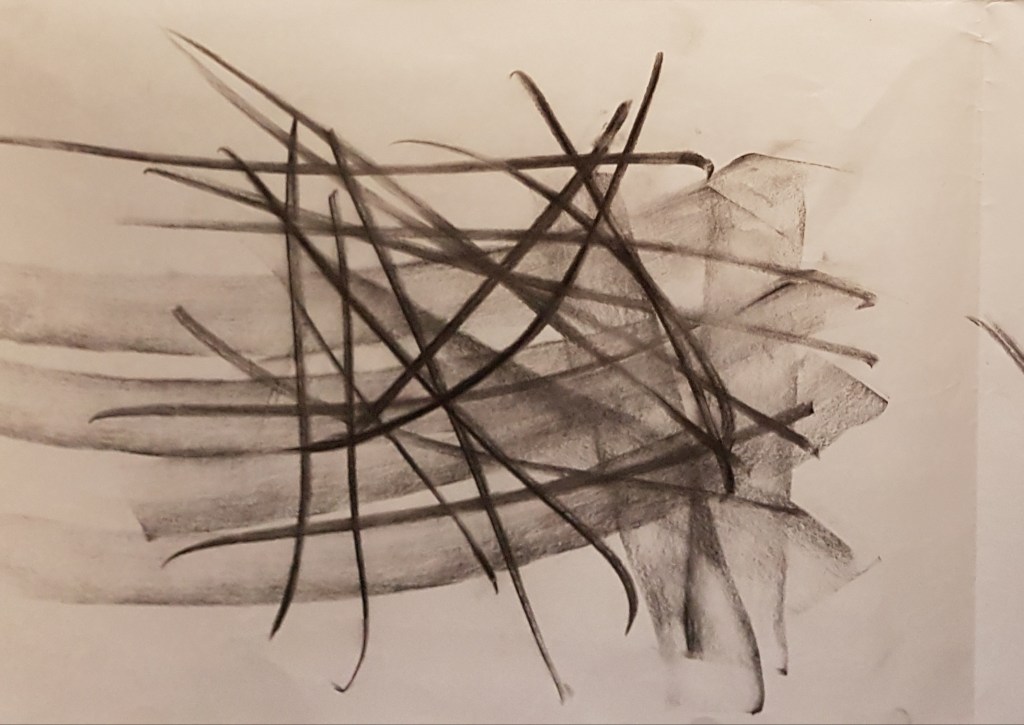
Second attempt

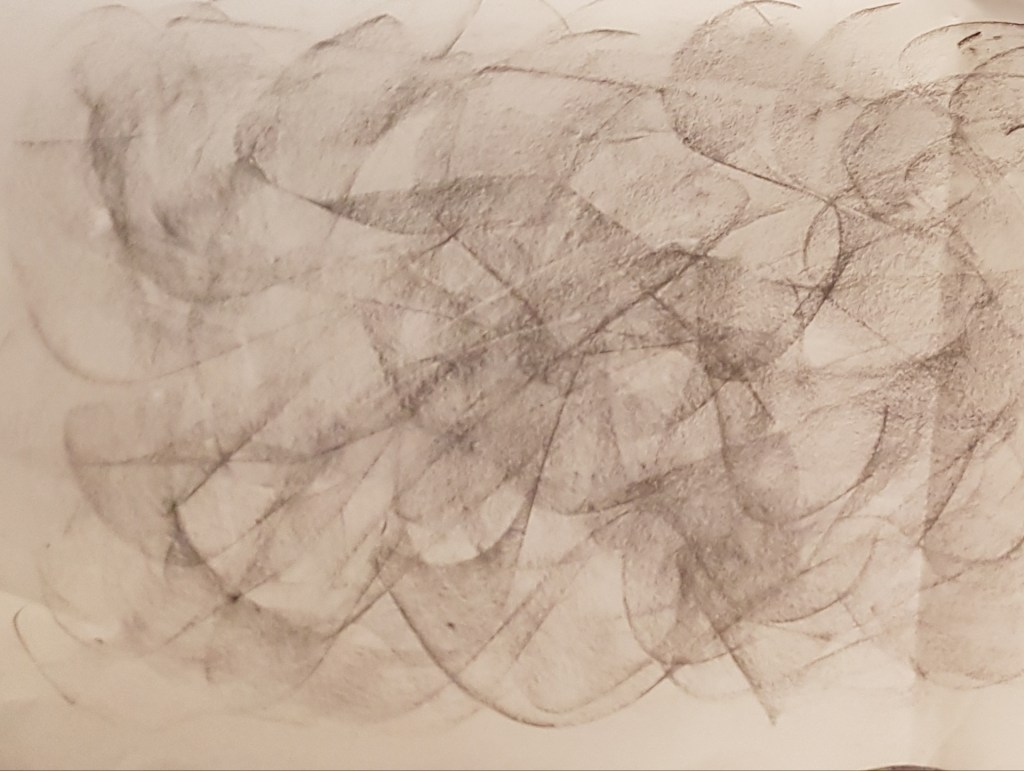
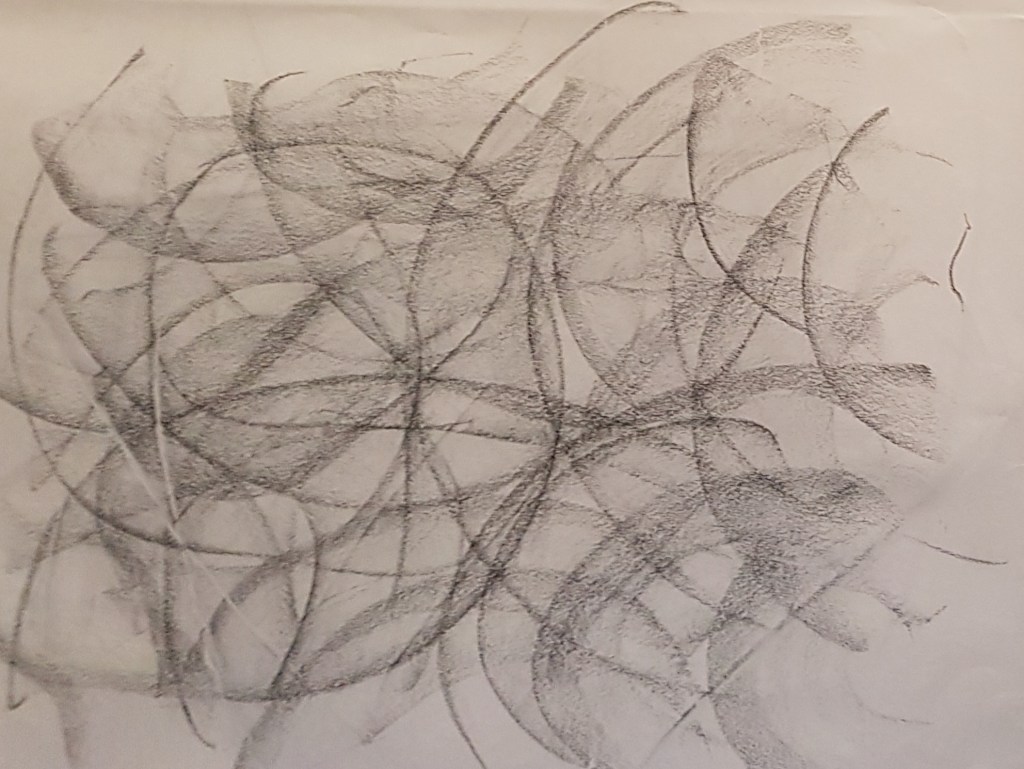
In my second attempt, I utilised the straight strokes again, however I tried curving some of them which changed up piece from my previous attempt. I also tried turning my charcoal stick on its side to experiment with how I can create angry markings that way. I like how my markings look when I turn the charcoal stick on its side, I think the soft sweep across the page adds body to my marks in a way.

Third attempt

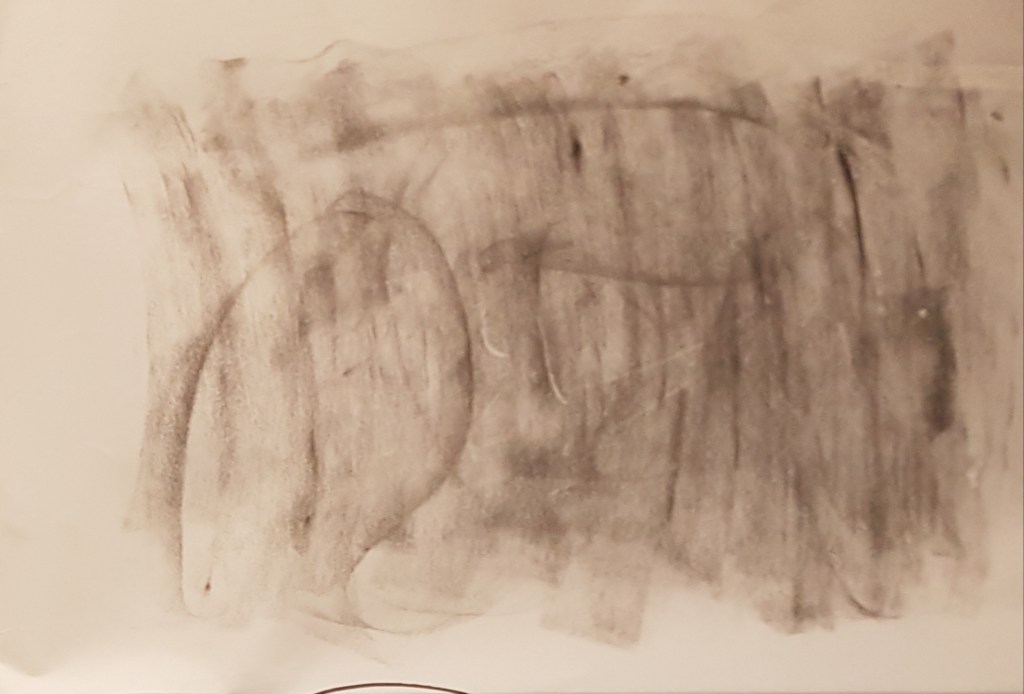
In this attempt I found my anger came out best in fast straight lines. I pressed harder in an act of expressing anger, and ending up crumbling the charcoal as I drew, leaving charcoal fallout all over the page. As I rubbed it off in a brash manner I found it worked effectively to make an aggressive atmosphere and worked well at showing frustration within and around the markings.

Final attempt

In this attempt I took what I learned from my previous attempt and applied it here. I kept to straight, hard strokes, which created fallout, and brushed them off harshly when I finished to create an angry overall feeling to this attempt. I found throughout this part of the exercise how applying hard pressure, and fast abrupt movements to my strokes can help effectively create an angry feel to my piece. This can be applied to how I draw to help subtly tell the audience what I’m feeling or what I would like for them to take away from a piece in terms of emotion.

Exploring the emotion of joy

A collection of markings from joy.

For these four attempts at creating joyful, happy markings, I took inspiration from looking at photos of times where I felt happiest. This helped ease my mind from being influenced from my previous attempt and got me into the right frame of mind to create something that represents joy. I found that in a more positive state of mind I liked my markings to be long and loose, and that I like to incorporate curves.

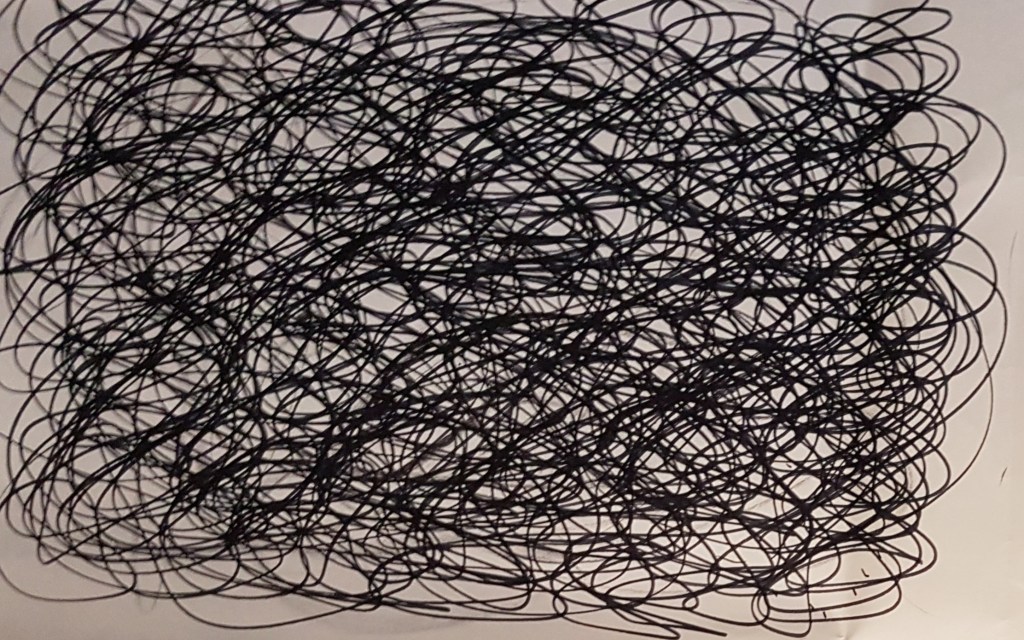
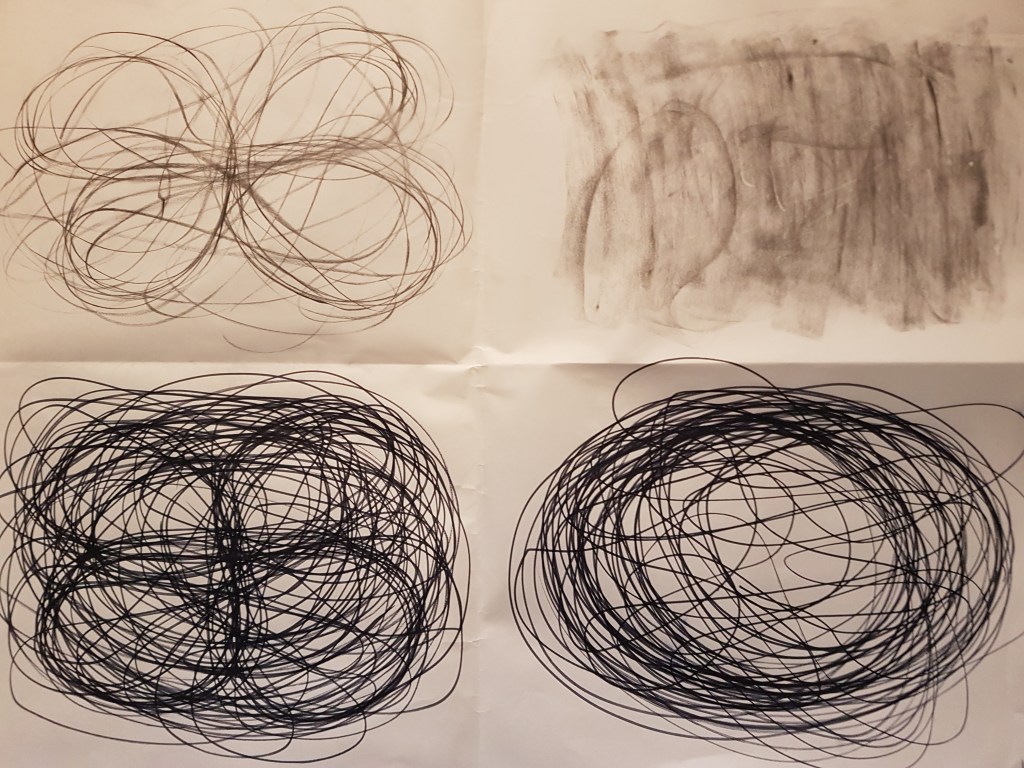
For my first two attempts I changed up my medium to a black marker. Its very bold and contrast hugely with my white paper. The issue with using a black marker is, unlike charcoal, varied pressure doesn’t so easily show up. However the marker is loose and slips along the surface which matches the movement I opted for in expressing myself. I kept to a movement of a ‘figure of eight’ , loosely curving my pen around the page. I think the end result juxtaposes my feelings in some ways, as its quite messy could allude to frustration or anxiety, especially without the variation of pressure being visible in my markings. However I think that the messy result could also resemble the excitement one feels when happy, like butterflies in a stomach. To improve, I thought I would try again with my charcoal stick.

For these two I used charcoal with similar movements to my previous two attempts. I think my third attempt really captures joy with the swift and loose movement combined with the tone created by the varied pressure being visible as I move around the page. I think it really embodies the excitement that comes with happiness/joy. I stopped earlier in my tracks this time as well, which doesn’t make this piece feel clustered and overwhelming, which I feel my previous two attempts did. For the fourth piece I turned my charcoal stick on its side and tried to curve it around the page. It created much softer and more delicate markings than my previous attempt, which I rather liked, as it depicts how happiness is fleeting and doesn’t always last long. What I have taken away from this is that being softer in my strokes can help create a more delicate and joyous feel to my work.

Exploring the emotion of calm

A collection of markings from feeling the emotion of calm

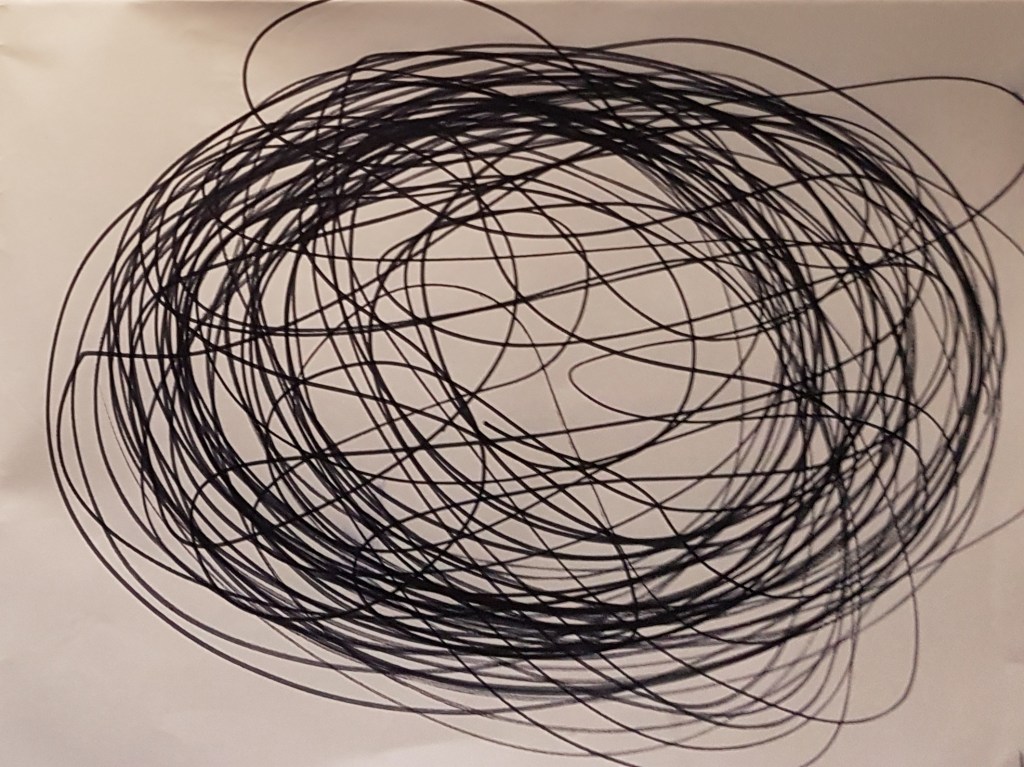
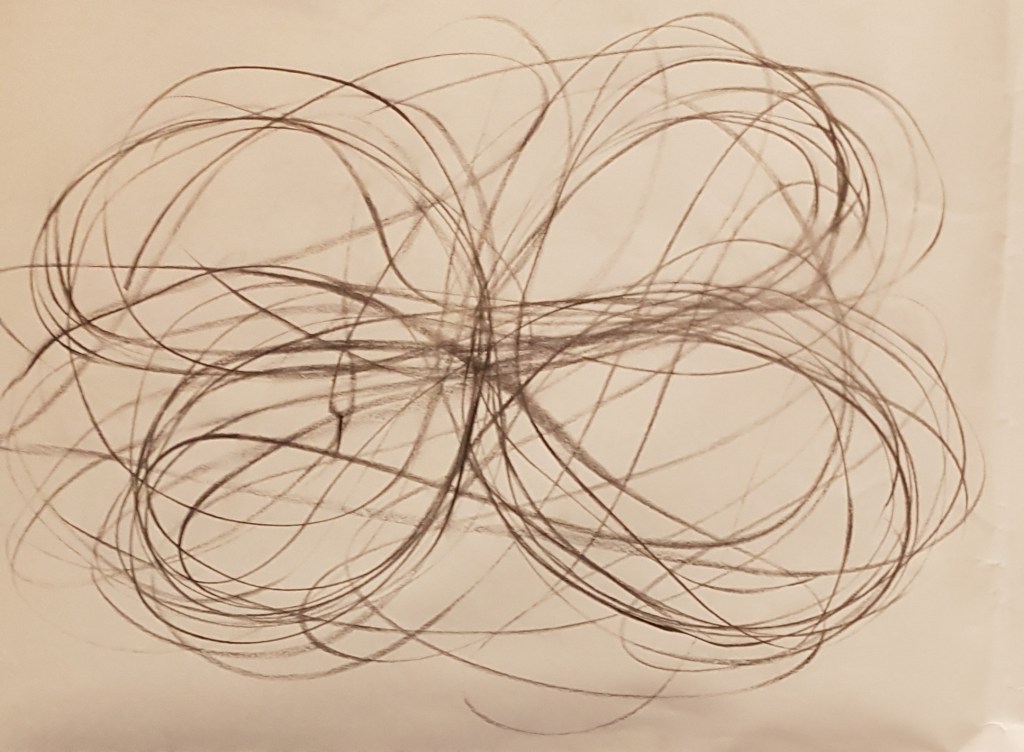
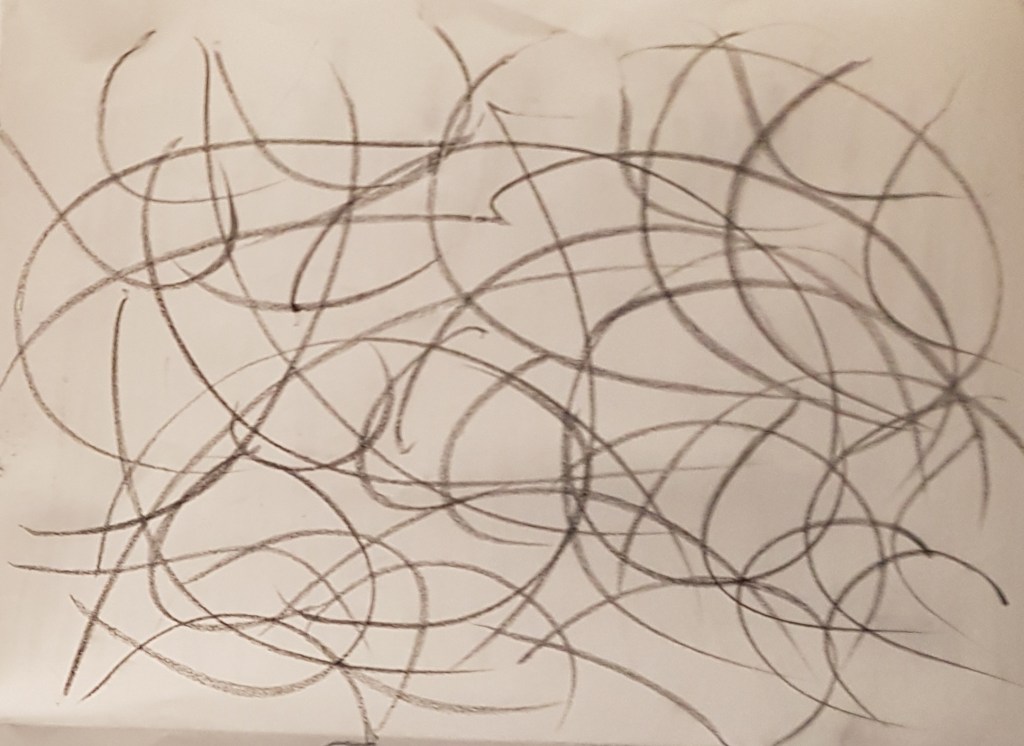
I found when exploring this emotion, my movements being loose and wide. After exploring the previous emotion of joy, I felt I was in a good place to start exploring calmness. I sat and closed my eyes and moved my arm around the page in repeated, smooth motions. I stuck to a movement in a figure of eight, or circular motions.

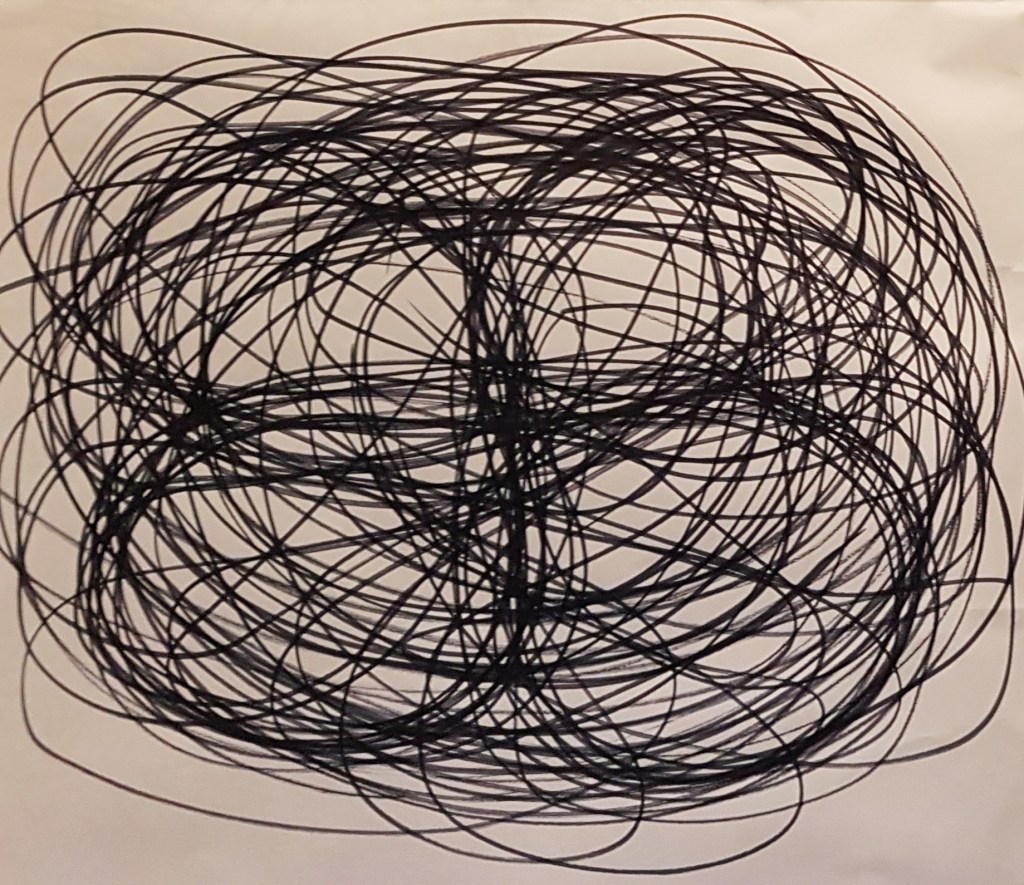
I tried using a marker pen again to get bold clear lines, I wanted the path my pen took to be clearly seen. In my first attempt I went around the page in a figure of eight motion, sometimes doing it on a smaller scale, and building it up bigger to fill out the page. I find repeating movements over and over is very calming, and helps maintain that calm feeling when making my marks. Using the marker was intentional to see the journey of my movement so for my next to attempts, I wanted to go back to charcoal to experiment with the pressure side of my markings.

With my third attempt I kept to the figure of eight motion like my previous attempt however this time, due to my change in medium, you can see the soft pressure I use, especially when it comes to the curves. For my fourth attempt I switched it up a little more and turned my charcoal stick on its side to get a soft gradient, and created long straight lines. I then rubbed my fingers through it to create streaks. I focused more on the aspects of creating a calming experience while creating my marks. For me expressing my marks with a calmness to them is creating and maintaining a calm feeling when drawing.

Exploring the emotion of confusion

A collection of markings influenced by the emotion of confusion

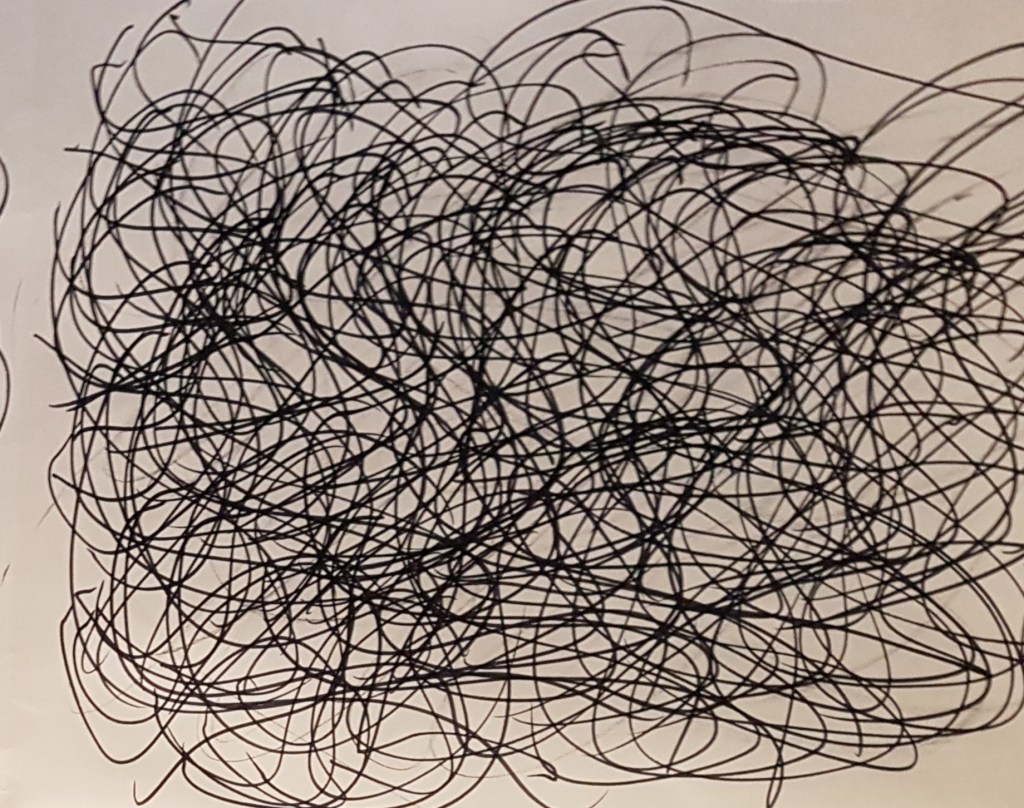
In order to prepare for this emotion I revisited some past memories which have left me still wondering what happened, or what went wrong. My markings, I feel, ended up a bit on the unpredictable side which I think worked well to express the emotion.

First attempt

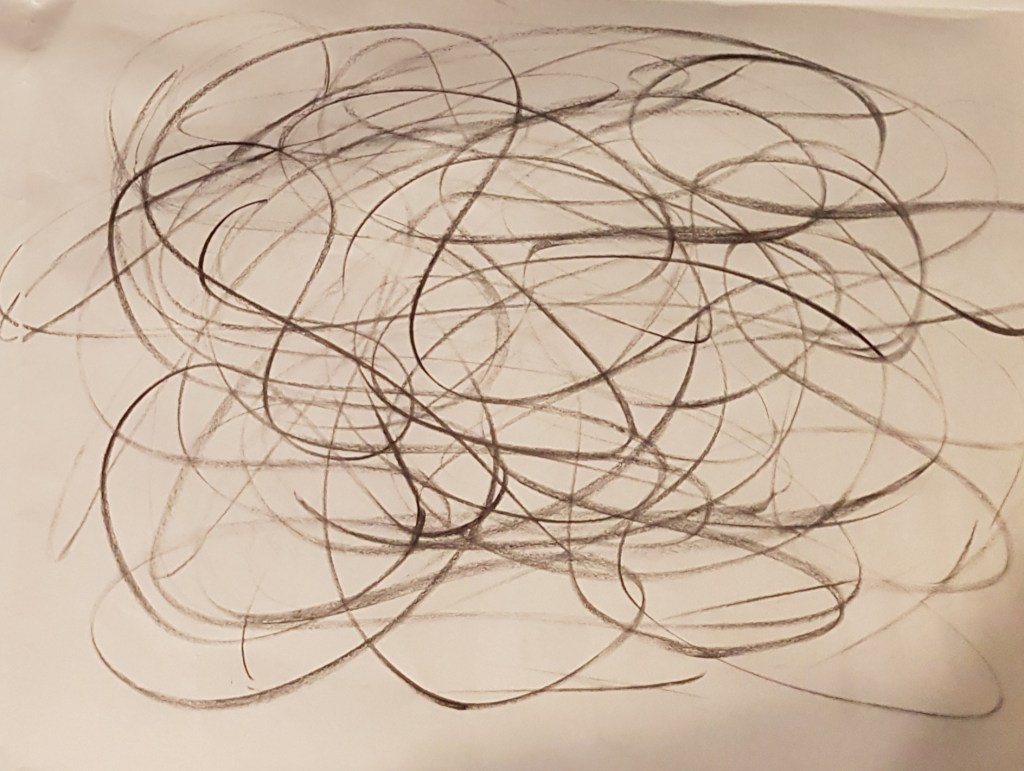
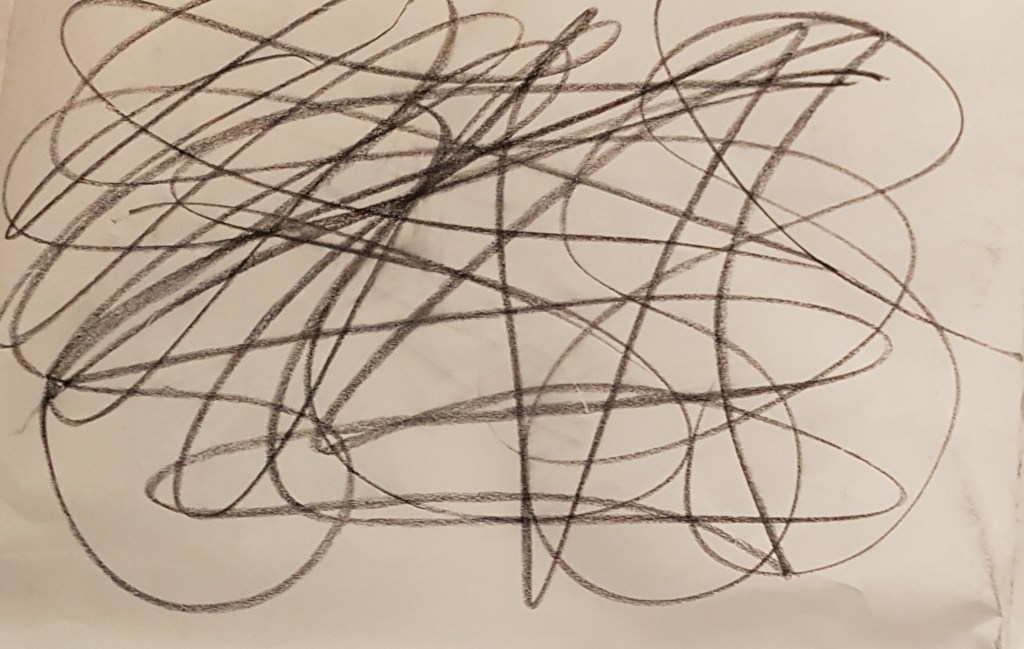
In this first attempt, I had my hand move in random, unpredictable movements, creating this long line of many twists and turns. I like how there is one line straight in the middle, which draws the eye in to the centre. You can also see how my pressure varies with my use of charcoal, though it tends to remain firmer than my markings based on joy.

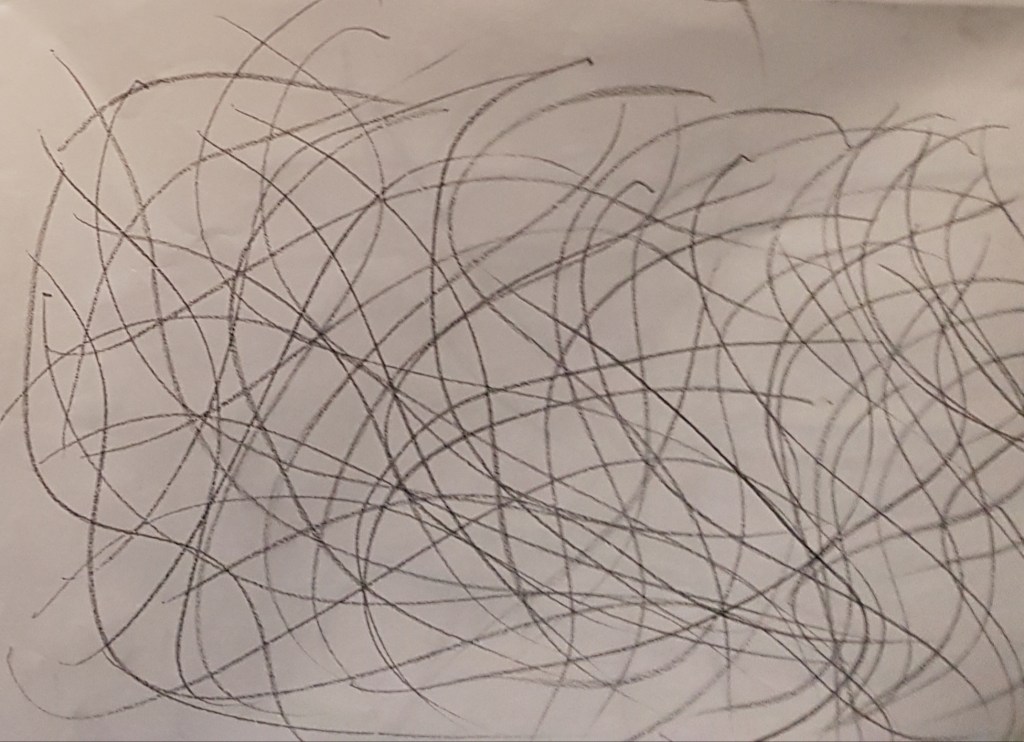
In these two attempts at making markings with confusion, I tried a curved stroke in a ‘c’ shape and repeating it. I quite liked how they turned out, both are similar in terms of the composition of the lines, however I prefer the third attempt where I turned the charcoal stick on its side again. I think it works well to add body to the piece. I think both work well to display the feeling of confusion.

Fourth attempt

I took what I did previously and expanded on it, this time building up a composition of ‘s’ shaped lines and some ‘c’ shaped lines. I think I filled the page the right amount to make it feel full, but not overwhelming or too little. However I think my third attempt from this emotion works best to display feelings of confusion.

Final Thoughts

I found this exercise very useful in demonstrating the importance of our markings and how they purvey so much more than just a line. Harder pressure can help the viewer to perceive an angry stroke, and therefore affect what the take away from a drawing all together. Where as a lighter, more delicate use of pressure can help create the effect of something sadder or happier within the emotion the markings can give off or with how delicate they feel. Having the right media to create these emotional markings is also crucial. Something like a pen or ink may struggle to give you the variation in tone to show the pressure within the markings being created. Other media like charcoal or pencils can give you that. Your choice of media and your attitude when drawing can have drastic effects on the outcome.

Temporary Drawing

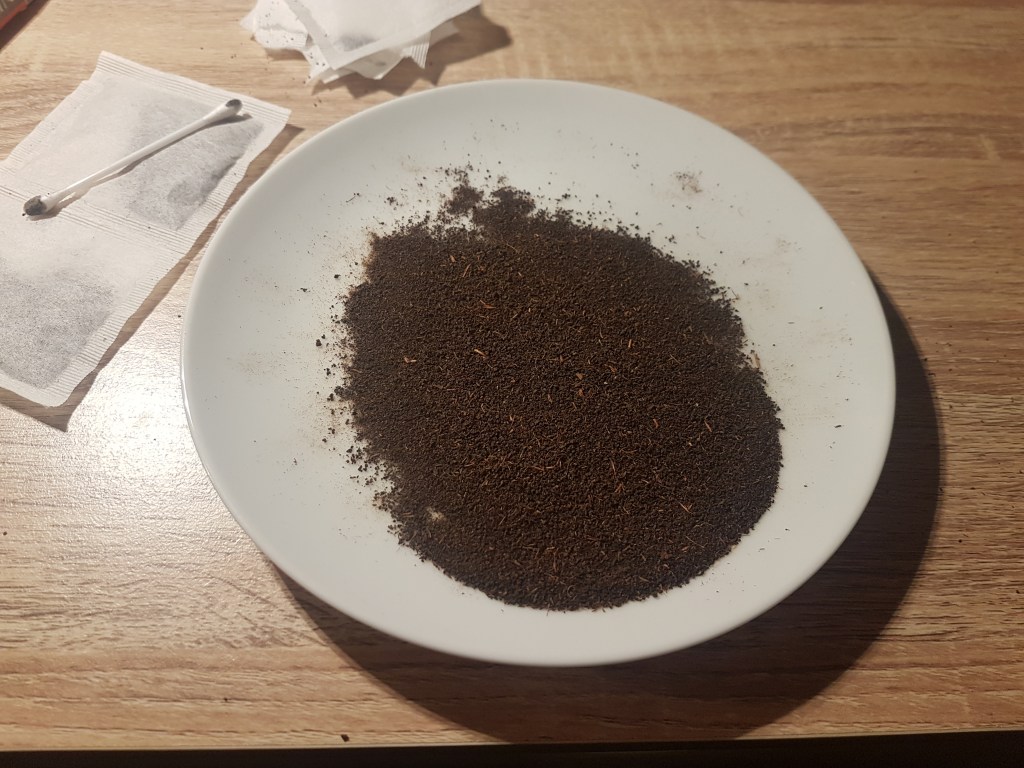
My set up

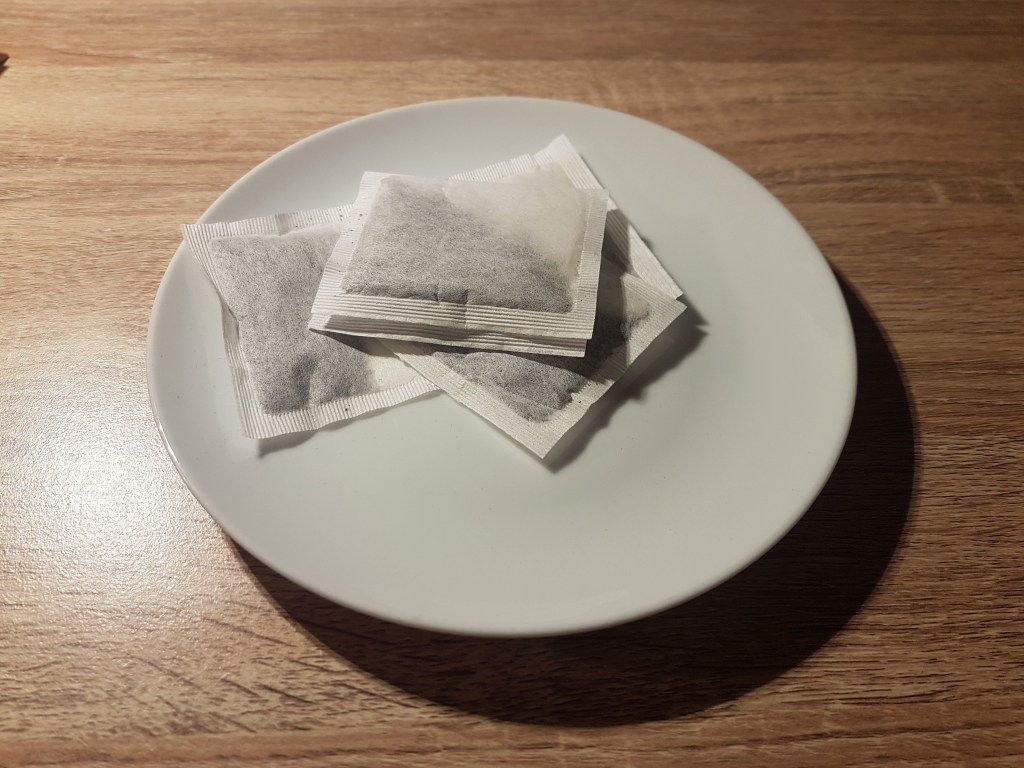
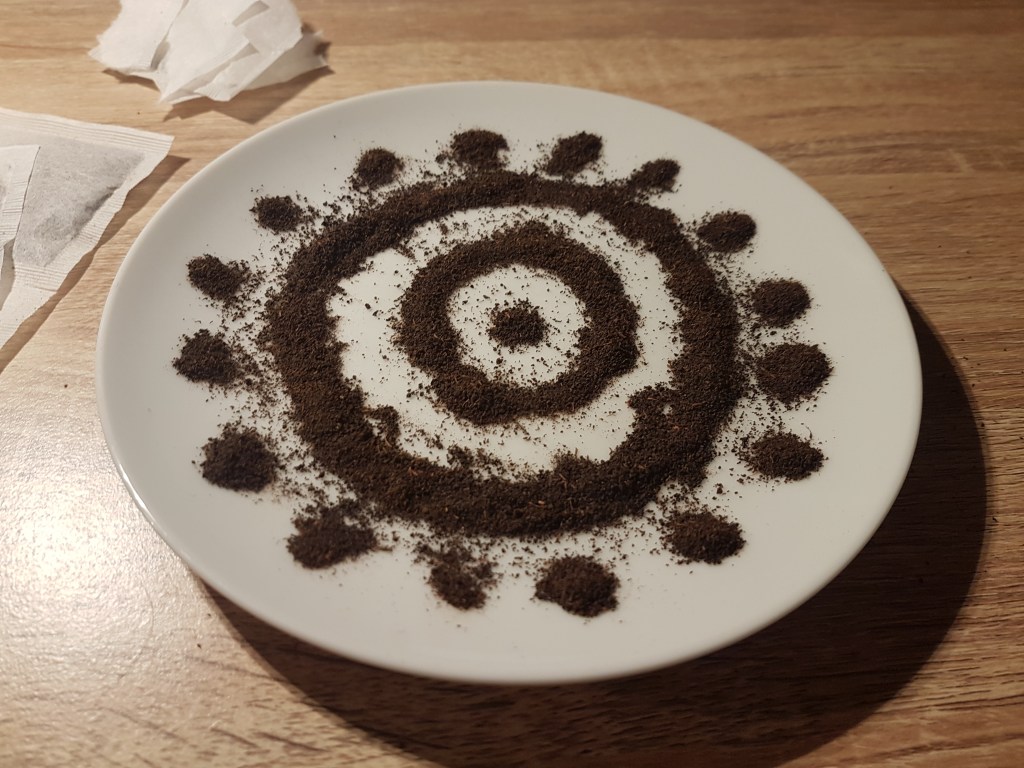
For my temporary drawing exercise I decided to use tea leaves. I ripped the top of the bag and poured them out onto the plate to draw with. I found that depending how I held the teabag I could create a variety of soft looking marks/strokes on the plate. I found the process calming and in turn that could have effected how my marks came out. I liked making nice smooth curves with my material, however as I moved around the plate I found it hard to keep the thickness of the strokes even, so I went back in with a cotton bud to smooth the lines back up.

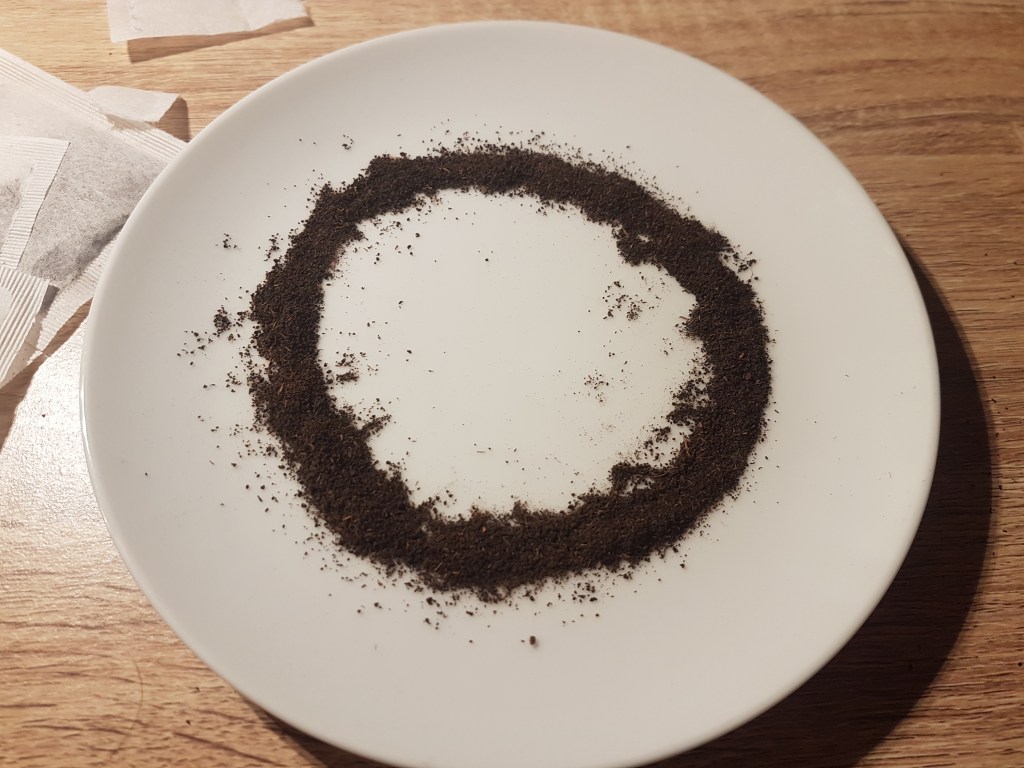
I started out my first drawing by adding rings, which ended up creating a target shape. I decided to build up on my drawing by adding some dots around the outer ring, to create a much more intricate composition. Since the plate curves on that area of the plate, it created a dusty gradient, which added some unexpected tone, which I feel helped bring the piece together.

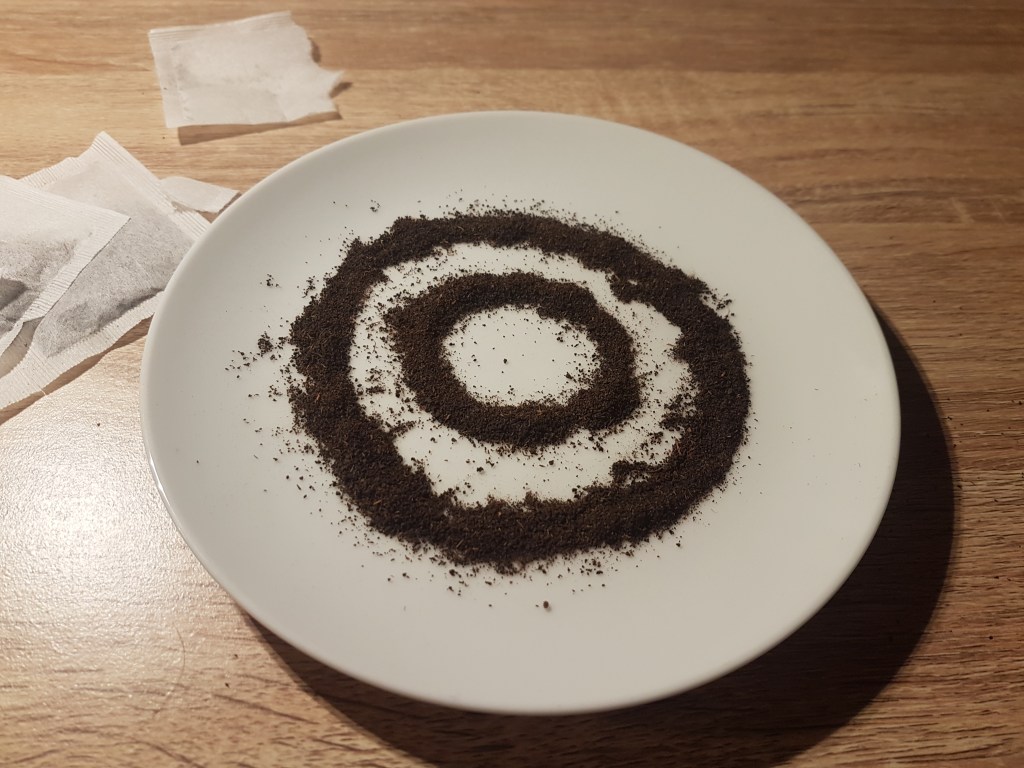
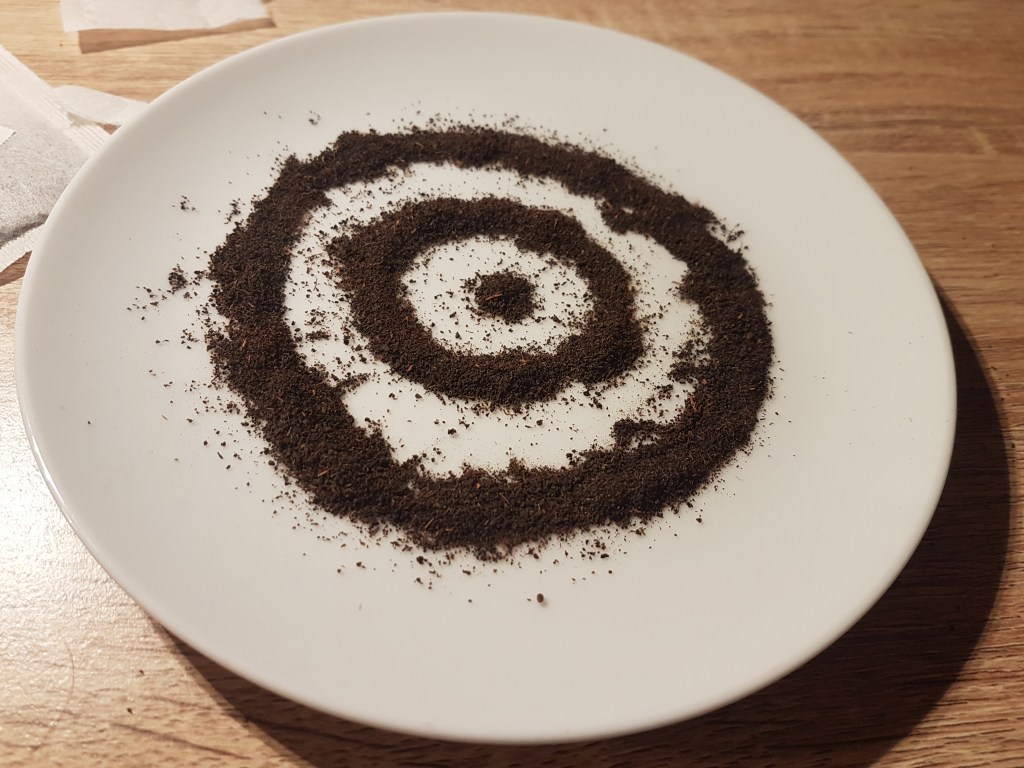
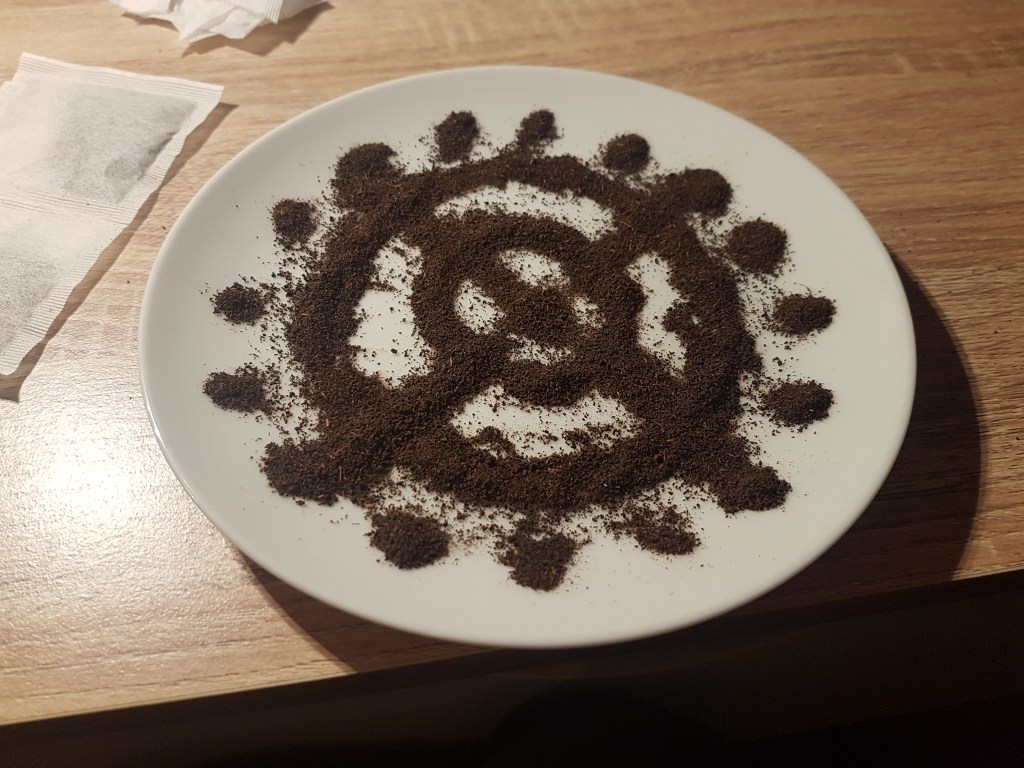
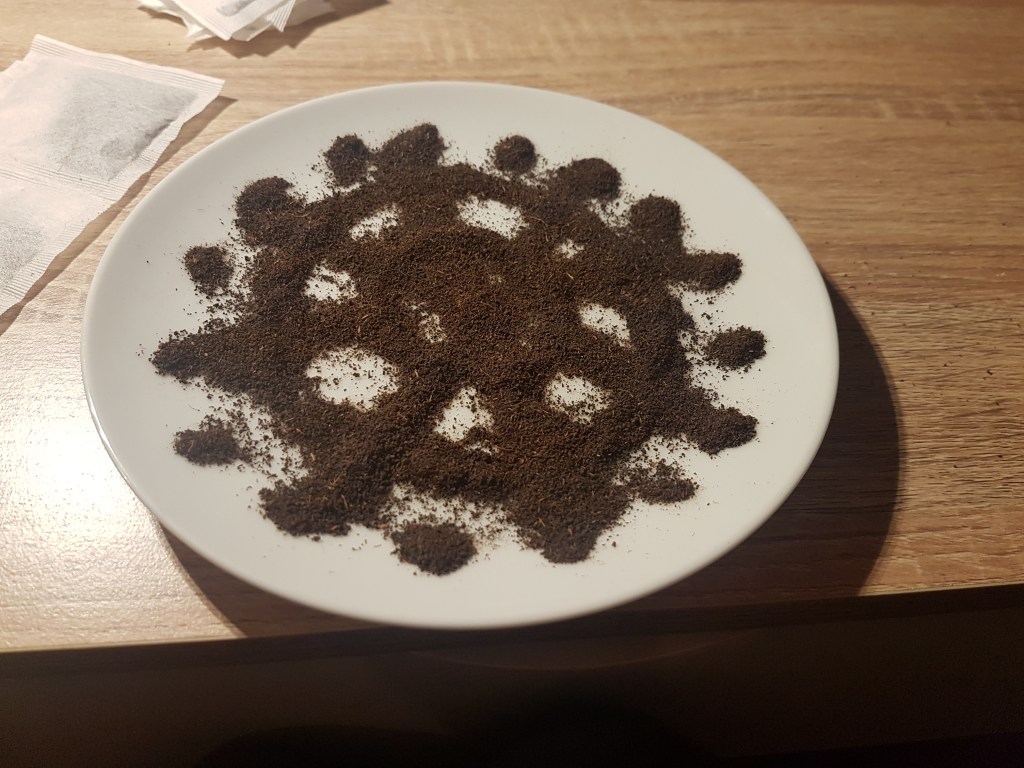
I then went further, adding lines to the drawing. I think these went too far and made the drawing appear too busy, I think I preferred it with a much more minimalistic feel. In the first image where I added two straight lines, I think this made the drawing pull away from calmer imagery, as it looked like a gun aim sight. When I added another two lines, it made the drawing look more like a ship wheel. However, with the tea leaves and how the material builds up when it gets layered, it created thicker strokes and made the piece look too busy. This helped me to understand that sometimes less is more with my lines when creating a drawing, and that I should be careful not to overdo things when it comes to my composition. With this technique of temporary drawing, doing too much can be compromising as there isn’t always a way to undo your strokes. For me and my choice of medium, I cant rub out the lines I don’t like, once I add too much to the plate, I’ll have to brush them off and start over, as moving the lines around with a cotton bud can only do so much.

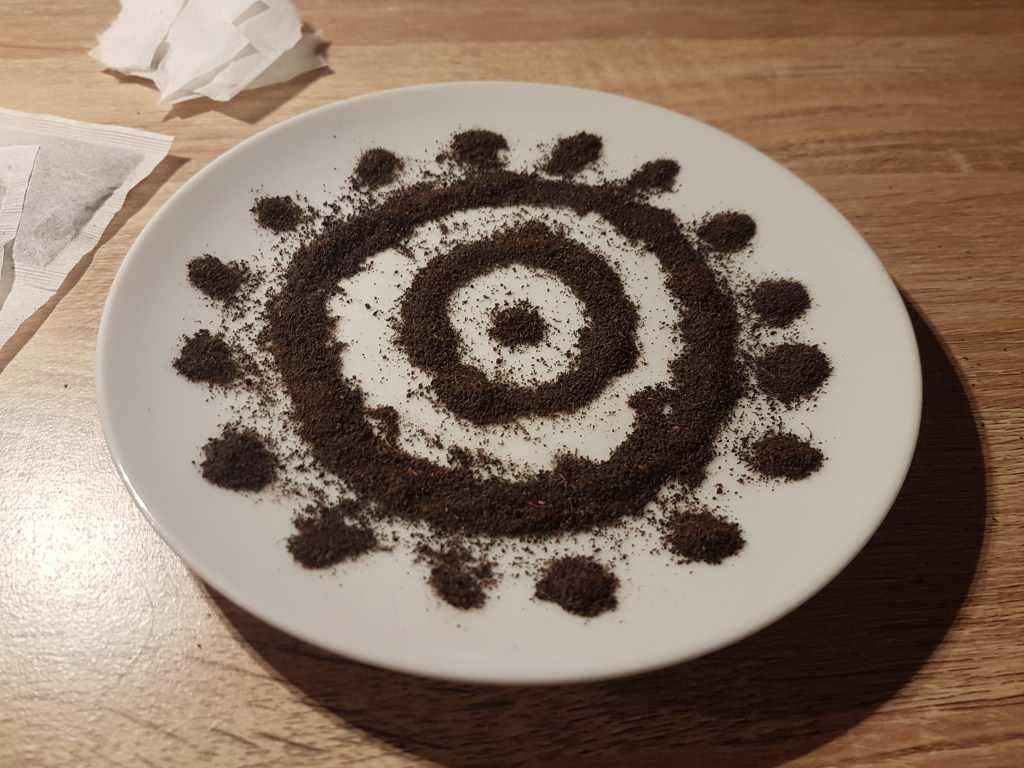
The piece I liked the most from this experimentation.

I think out of my first experiment with temporary drawing, this part of the process with my drawing is the piece I’m most happy with. With it’s simplicity it looks like it could be an ancient symbol of sorts and can be quite versatile as there are many ways to interpret what it could be and what it means. I think it hold a lot of looseness in it and warmth, in ways I feel it looks a lot like the sun, but with childish qualities in relation to the execution and simplicity of the design. I think that because of the thickness of the lines, by doing too much, can take away rather than add to the piece. I could go in and create finer lines by taking a cotton bud to the lines, but that takes away from natural aspect of drawing a line. To spend more time to create intricate lines to me takes away from the stroke created and its purpose of making a mark, and the purpose of the exercise.

Temporary Drawing-Experimentation 2

Starting fresh.

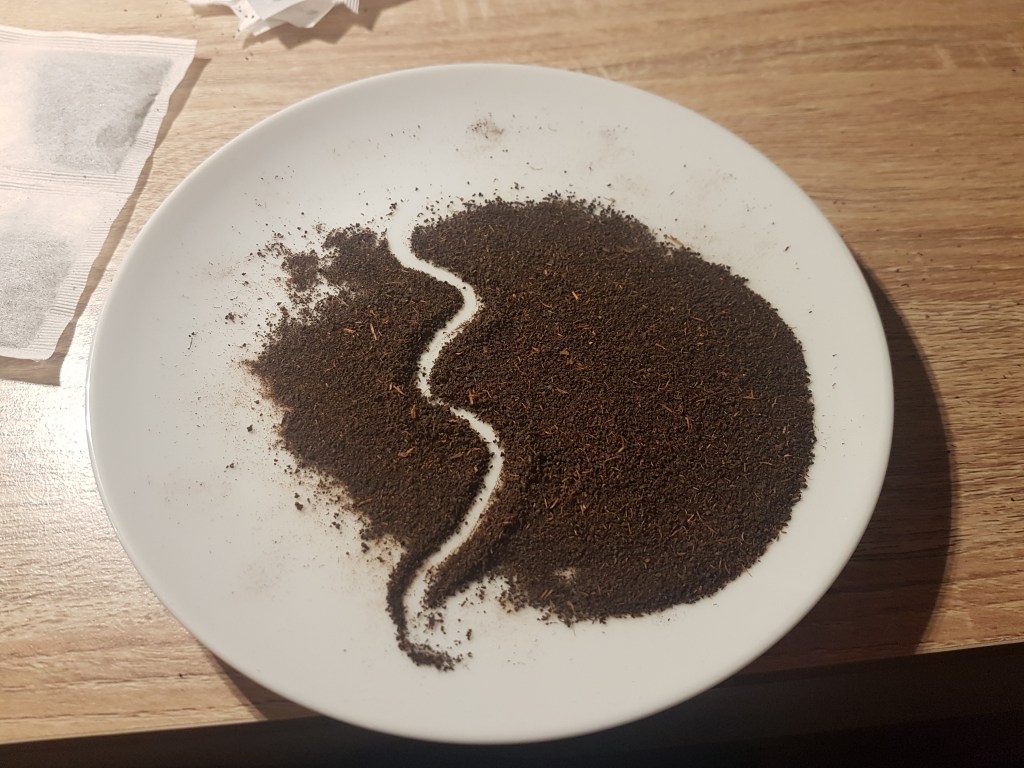
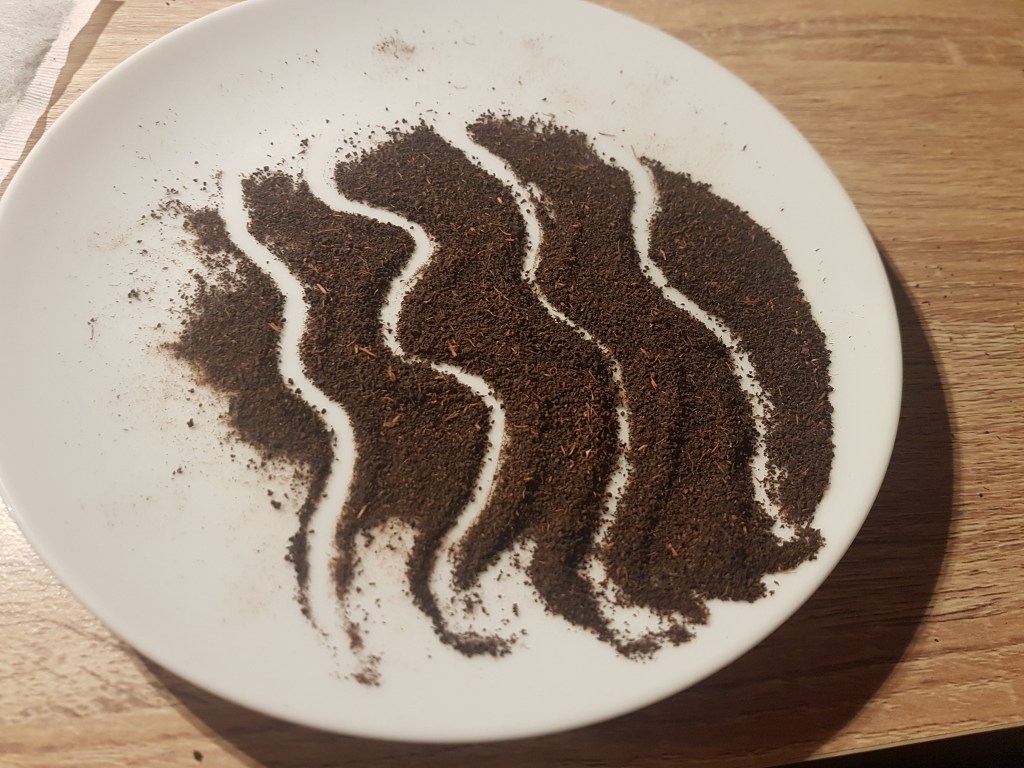
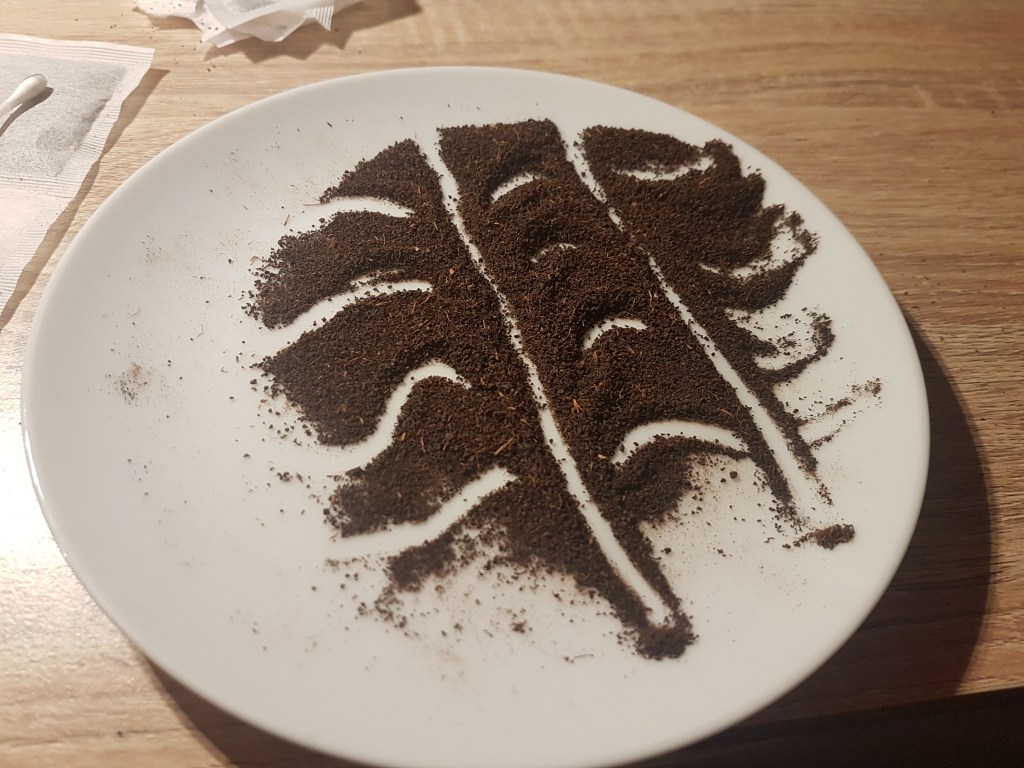
I decided to have another go, but switch it up in terms of how I execute the marks. This time, instead of making marks with the tea leaves, I’d be making the marks in them, with a cotton bud. I kept my drawing style loose and didn’t intend to make a recognisable image, but rather use lines to create patterns.

Making lines in the tea wasn’t as easy as I thought it would be, I’d have to go over some lines a few times to get them clean and clear. So as the amount tea increased the harder it became to draw clean lines. I went for loose lines again as it works with the loose quality of the tea. I tried to then create contrast within the composition by adding harsher, straight lines, which I think add interest to the piece. I think, overall, this is a difficult material to draw with

Drawing like this can be useful, as knowing your marks are not going to be permanent can be freeing and allow you to move accordingly. It takes off the pressure of making a mark that will be somewhat permanent, and thus allows you to draw more freely than before. However it does not allow you to easily create fine lines, they often tend to be thick and bold, which may not be useful for drawing realistically, but can be effective for impressionist or abstract marks/ pieces. Furthermore, after a temporary drawing is made, time is of the essence as it wont last, so will it gather an audience and does a photo really capture the emotion behind the markings left behind? In my opinion no. A photograph doesn’t always captures the full depth and intricacy of drawing marks unlike the experience of seeing them in person. Temporary drawing is not a practice I would use for my work, as it does not necessarily give you means to create an intricate, detailed drawing, which is what I like to produce as an artist. It is however a good way of getting to know your marks as an artist and new ways of making your marks, while giving you freedom without the restraints of a permanent mark.
Design a site like this with WordPress.com
Get started