The underlying structure of the body is so interesting, historically it combined science and art to create some beautiful drawings, and can make for some interesting artwork within the contemporary art scene.
Leonardo Da Vinci
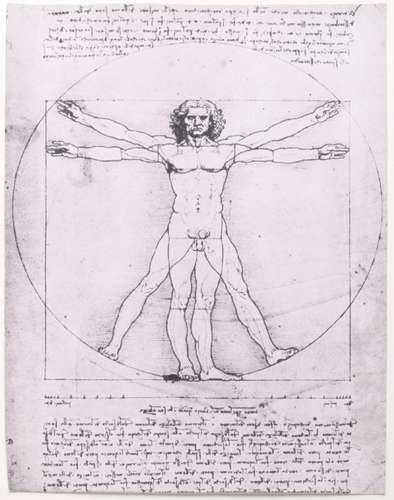
This piece by Leonardo Da Vinci is one of the first drawings to come to mind when thinking of a historical artist with a focus on the structure of the body. His work is crucial and iconic, as he found a deep interest in the body and spent many hours looking at and dissecting dead bodies. He looked at measurements and proportions of the body, which can be seen in his many studies and drawings in ink.
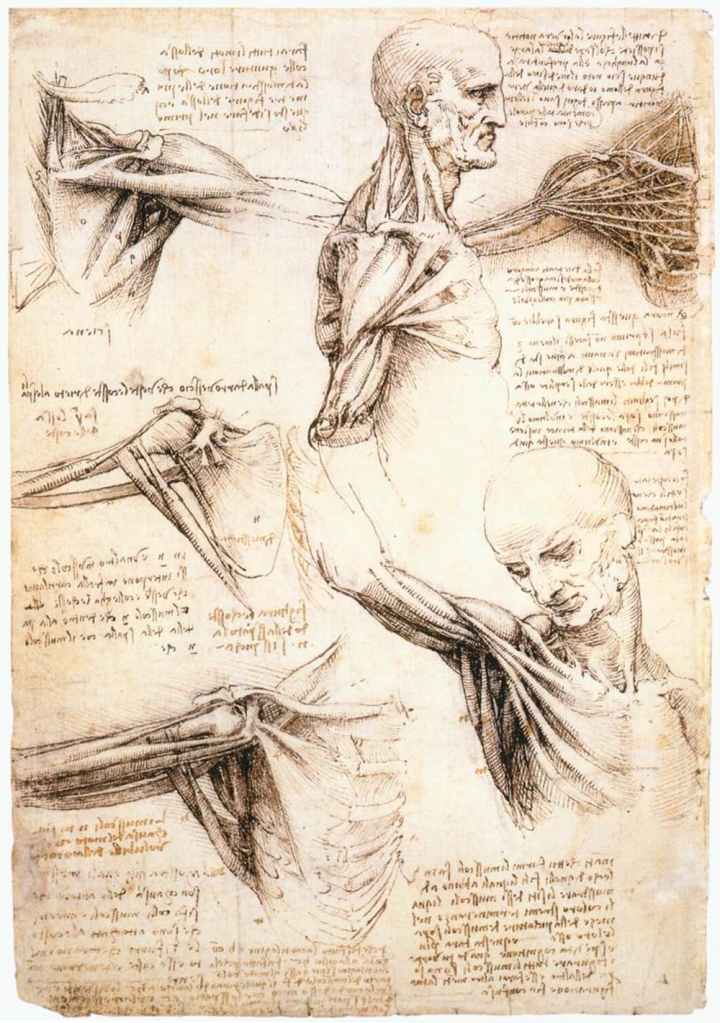
I love the use of tone in his studies, everything is accurate and has a sense of dimension to it. The cross hatching for tone is immaculate. You can see how the body works and connects, nothing feels out of place, everything is proportionate. Looking at these drawing helps you to understand the spaces inside the body and how they are taken up, this knowledge will help you to build accurate tone and body structure within your drawings.
Michael Reedy
Michael Reedy has a very interesting and unique drawing style of dissecting the bodies he looks at. It combines the beauty of the exterior body with medical imagery of the interior and an essence of a cartoon style.
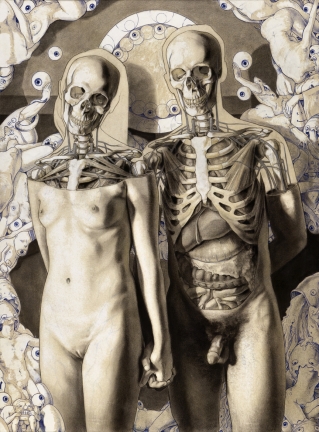
This piece is stunning with the monochromatic palette that helps to keep a focus on tone. We also get a glimpse of the exterior but also how the space within it is filled. The bodies have a weighty presence and the dissection helps add to that. We can see the close bond between the two figures as they hold each others hand but they are given anonymity from the placement of the dissection. The choice to keep the woman’s breasts on display may show a sexual relationship between the two of their bodies as their sexual organs are shown, but their faces are covered to hide who they are, so this could lead the viewer to believe this to be a secret affair or infidelity, where they must hide their faces from the world. The cartoon illustrations that linger in the background add to the focus on the body, all of the eyes may link back to the idea of a secret affair, people wanting to see the truth but unable to see who they are.
This artist shows that you can combine the traditional study of the human form with the structural approach to create interesting themes and ideas surrounding the body.
I think there is a lot to take away from looking at these two artists and how the historic practice can still be utilised in order to create interesting and unique work. Looking into the structural aspects of the body as well as looking at the previous exercise has helped me to think about the body and how the space within is occupied, how it twists and turns and all connects together, good knowledge of this visually will allow me to create a more accurate and weighted presence of the human form. I should think about what is within when looking into how tone takes shape over the skin and how limbs should look within the compositions I create with my model.
References
Image 1- Vitruvian Man – Da Vinci, L. (1490). Vitruvian Man. Available at: https://www.britannica.com/biography/Leonardo-da-Vinci/Anatomical-studies-and-drawings [Accessed 6 Jan. 2021].
Image 2- Anatomical studies of the shoulder – Da Vinci, L. (1510). Anatomical studies of the shoulder. Available at: https://theconversation.com/leonardo-da-vinci-revisited-how-a-15th-century-artist-dissected-the-human-machine-112399 [Accessed 6 Jan. 2021].
Image 3- Once removed- Reedy, M. (n.d.). “‘Once removed.’” [Drawing, mixed media, painting] Available at: https://www.medinart.eu/works/michael-reedy/ [Accessed 7 Jan. 2021].
Image 4- She knows how to use them – Reedy, M. (n.d.). “‘She knows how to use them.’” [Drawing, mixed media, painting] Available at: https://www.medinart.eu/works/michael-reedy/ [Accessed 7 Jan. 2021].
 Simona Hopewell : Drawing 1