Depicting texture
I gathered a range of items, varying in texture, to begin my study of depicting texture. I thought it would be good to begin with a variety of different textures to see where my strength lies and where I need to improve.
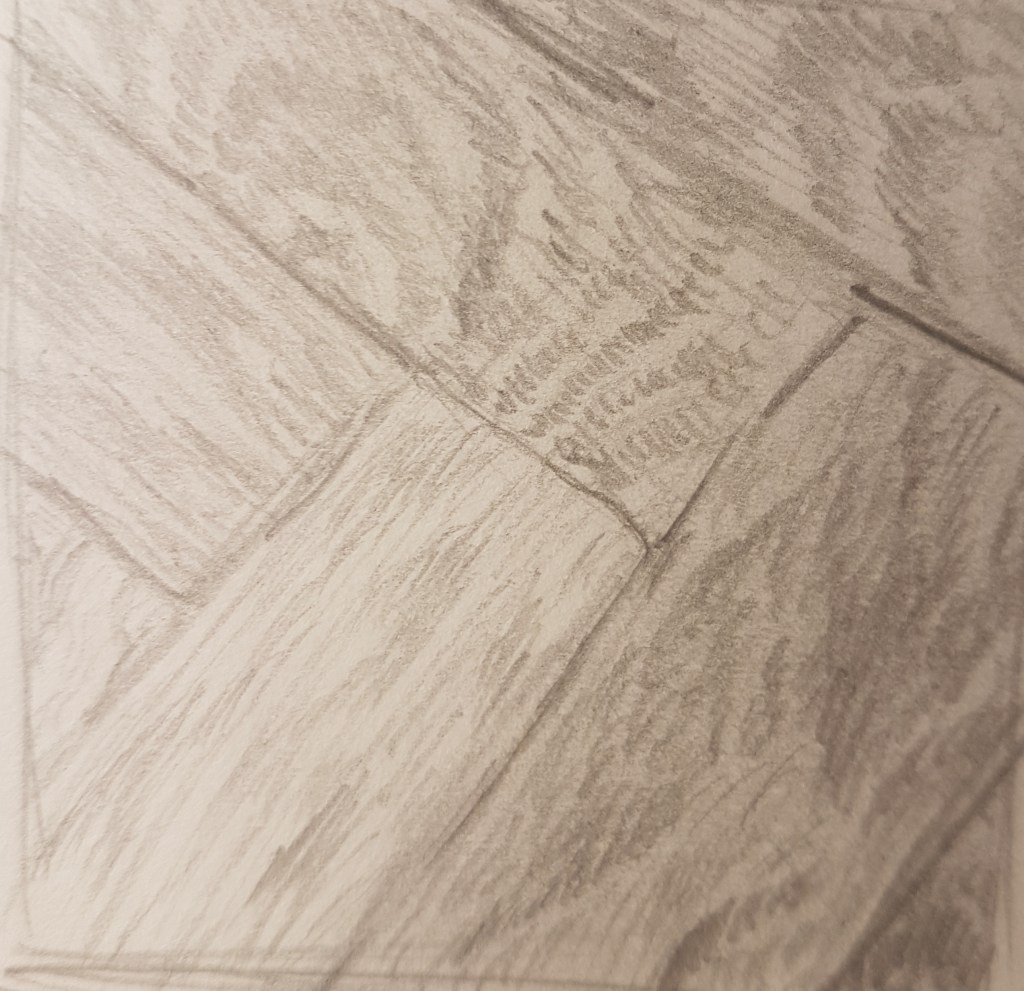
[1] Wooden floor 
[2] Pine cone up close 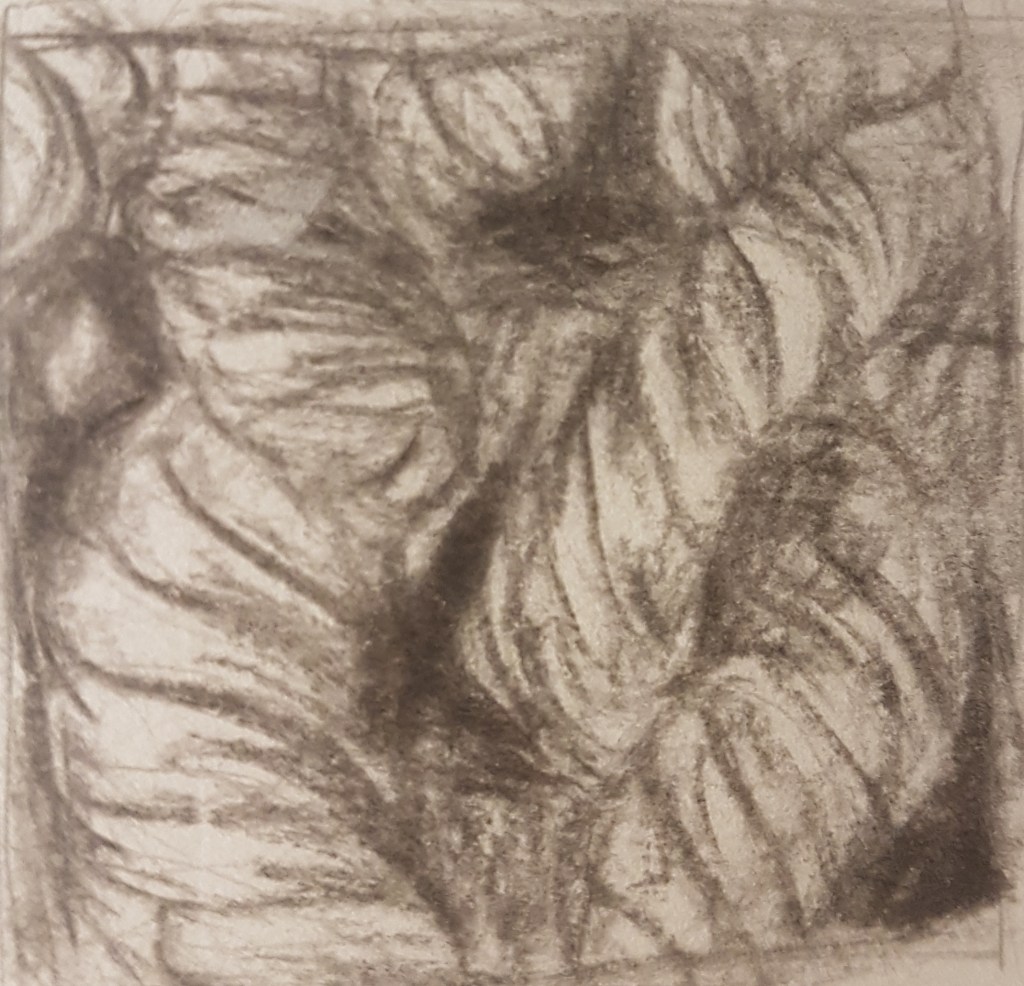
[3] knitted jumper, up close 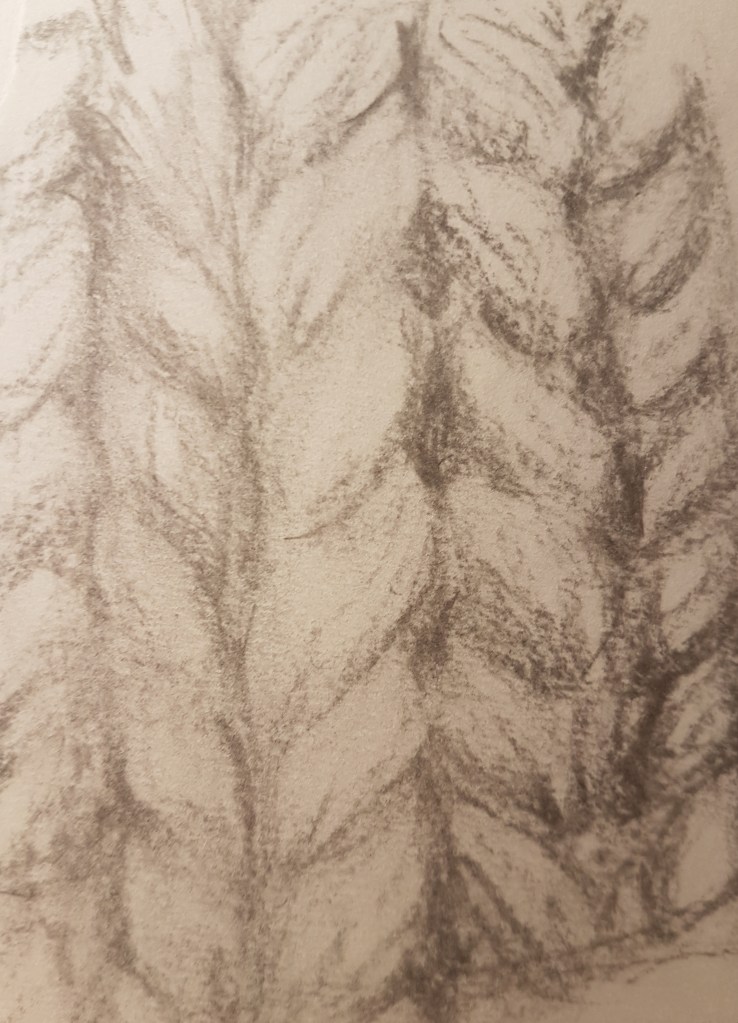
[4] Jumper sleeve
My first attempt [1] the wooden flooring I used pencil. I wanted to capture the tonal qualities of the wood and used smudging to create that tone and darker areas. I tried to use my markings to capture how the wood patterns move in one direction on each plank, using pressure to incorporate the random patterns and rings within the wood.
For my second attempt [2], I tried studying a pine cone up close and capturing the shadows and texture it creates, again trying to create areas of light and dark to capture the texture of the pinecone. I think I was most happy with my third attempt [3], where I changed my medium to charcoal to try and better capture the fuzzy quality of the knitted material. I think looking up close and seeing how the texture is created, the technique used to form the material, is key in order to accurately depict it. I again used lines to show the formation of the knit and how all the threads make up strands that ties the clothing material together. I liked using charcoal, although it is a messy material it worked well to capture the soft feeling texture. I liked how this went so I tried again with a different jumper knit [4] and using charcoal again as it worked well with capturing the materials softness and thickness. I used pressure to effectively make tone, making for a more realistic feel. I then decided to start experimenting with frottage as a way of capturing texture, and see what I can learn from the technique.
Experimenting with frottage- oil pastel

[1] 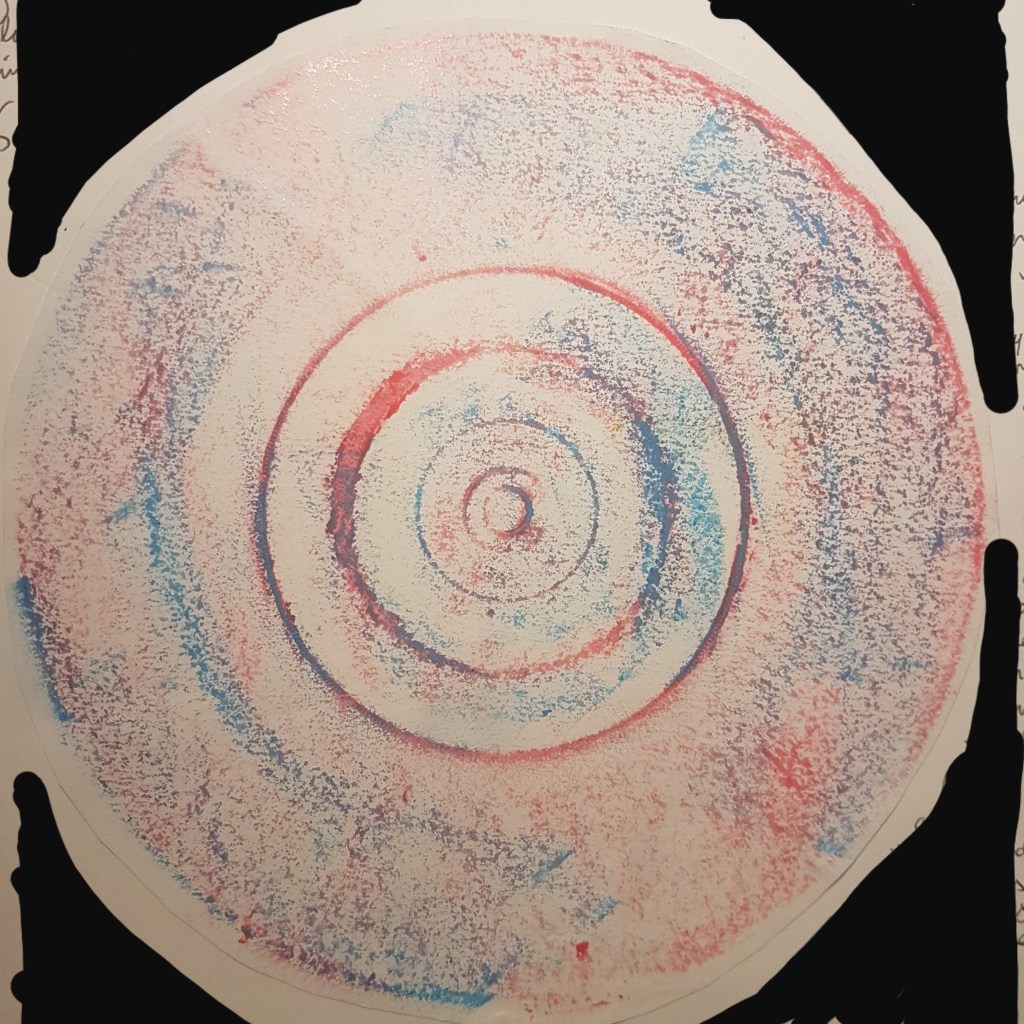
[2]
For my first experiment I started with a vinyl record as they have lots of interesting grooves and shapes which could be picked up by frottage. I decided to try some experimentation with the colours I use, with my first attempt [1] I tried to create a gradient opting for a rainbow to test out all of the different colour pastels with the frottage. I found that the main ring shapes showed up, however the many little grooves did not. I might have needed thinner paper for them to show up. I decided to build on this idea of using different colours, so I tried two different colours from various angles. I decided on contrasting colours, red and blue, and after using the first colour, I tried the frottage from a different angle. I liked the result a lot and how the piece came out tonally different from my first attempt. Again the finer details and markings didn’t show up, but I did capture the main shapes. I think these attempts were successful, even though finer details didn’t show up, you can still tell what the object is meant to be. I decided on trying out one more experiment before trying out a new texture, I wanted to try and create patterns and see what would happen with the texture if I layered the record over itself.

I tried layering the records over each other here and I do rather like the end result. Again I tried contrasting the colours over each other in a line to see the difference it makes. I think that the shapes are still noticeable as records but also look like a stereo lined up against one another with the rings. I like the effect and am most happy with my second attempt [2].
Experimenting with frottage- Lead
I continued my experiment with frottage and taking what I learned from my previous attempts, I used thinner paper to see if that would work better at capturing the finer details and grooves of different textures. I also wanted to try out a range of different media for capturing impressions.
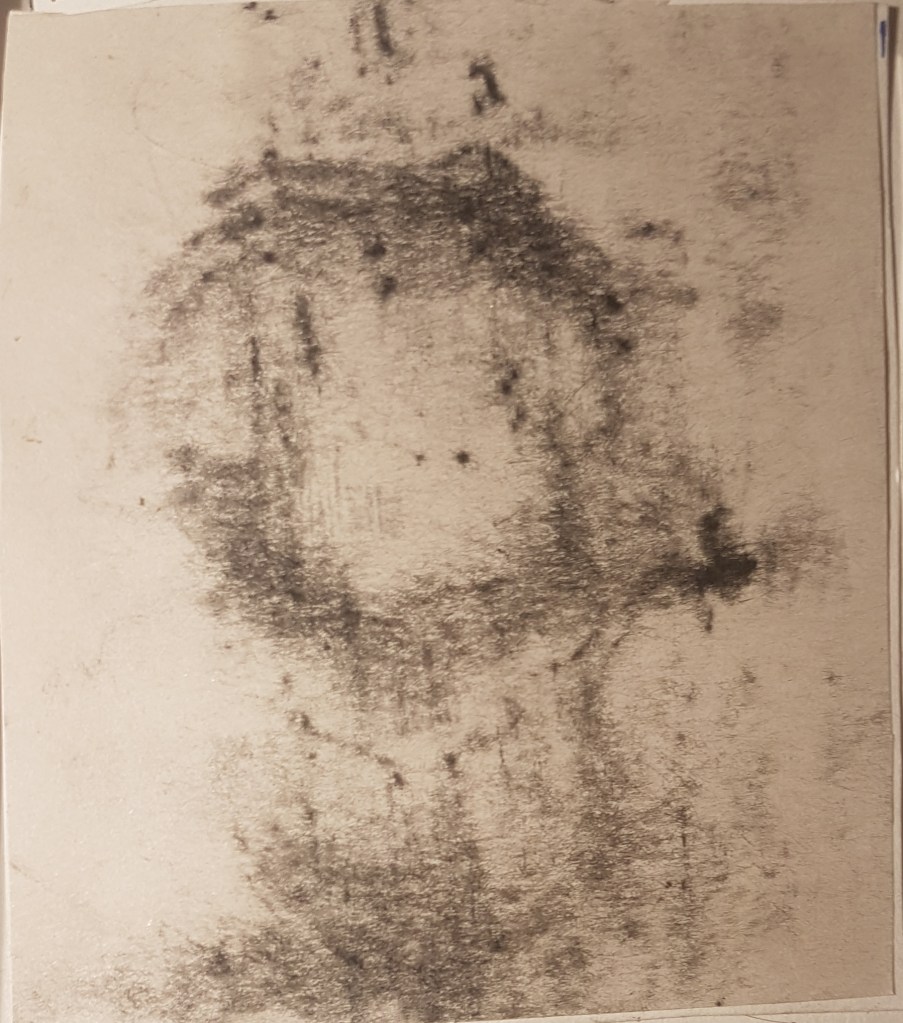
[1] 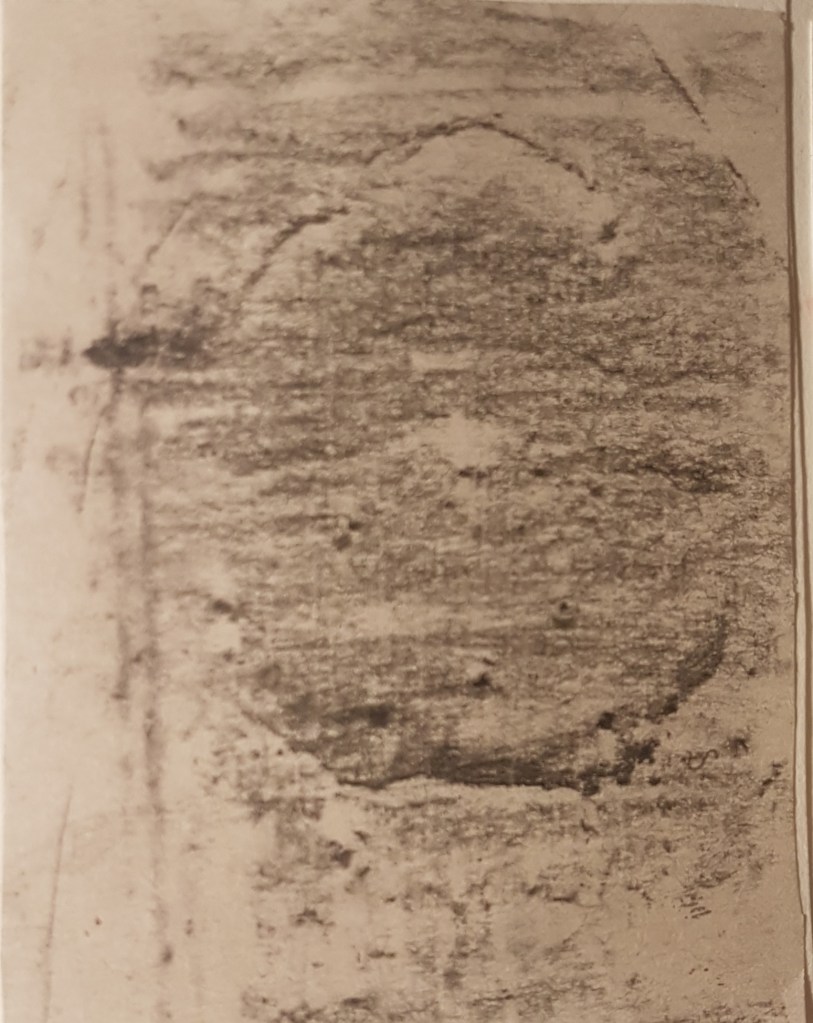
[2] 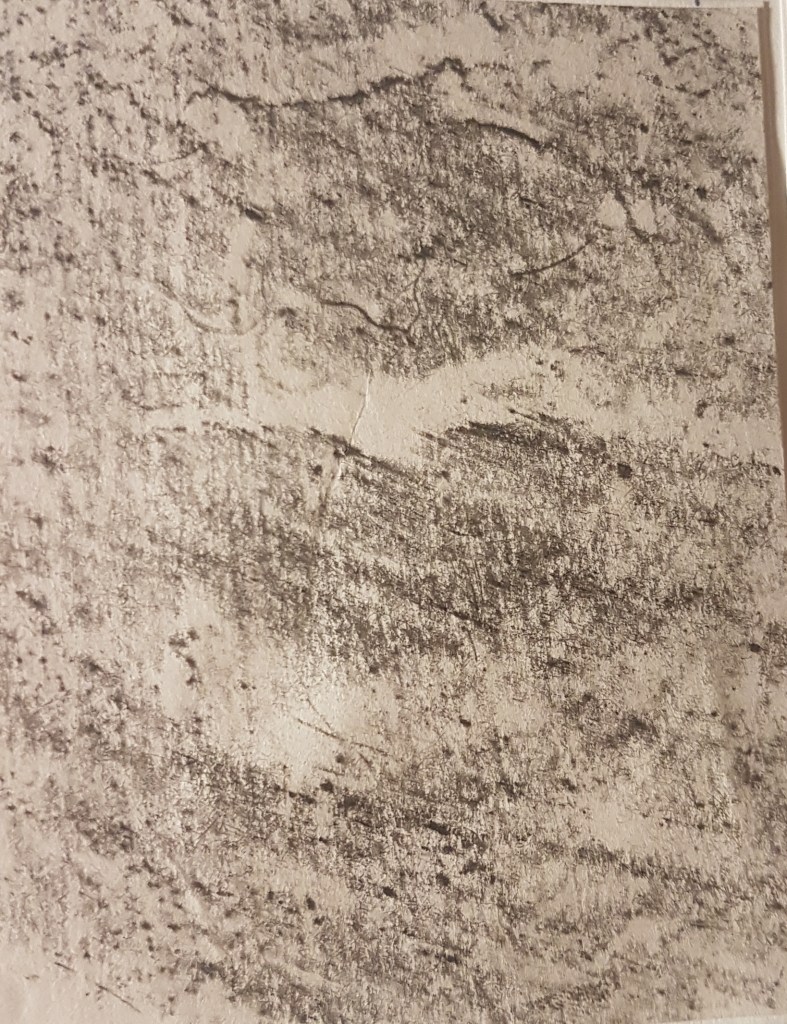
[3] 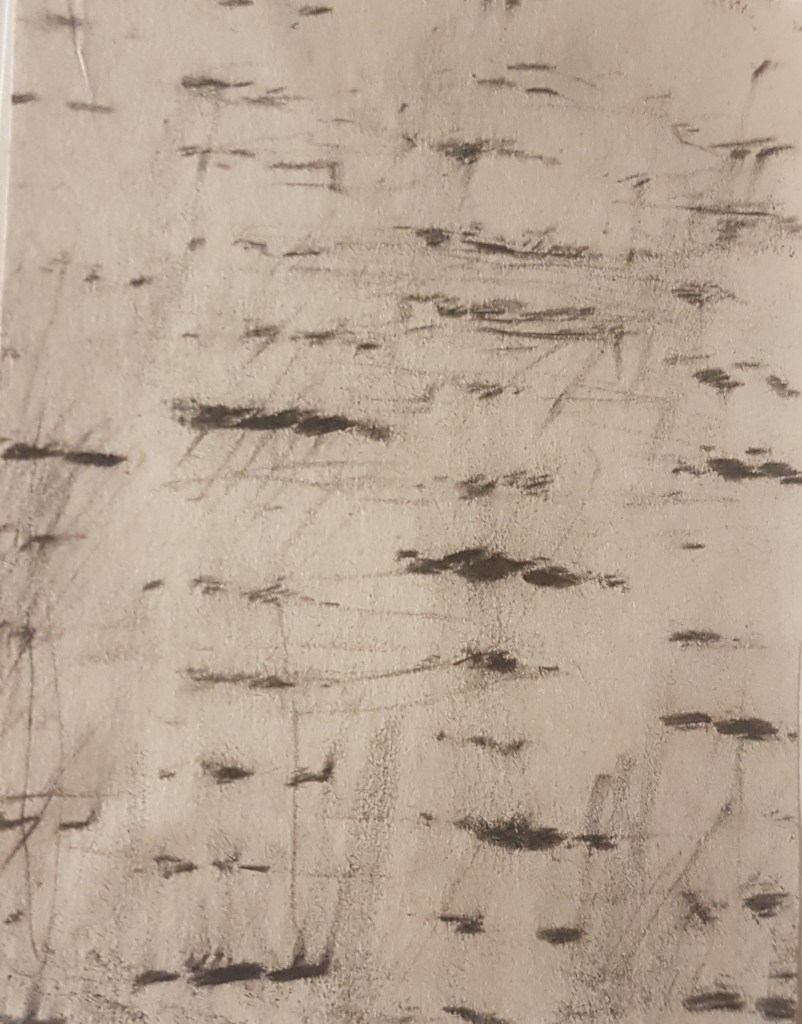
[4]
[4]- Impression of a wicker basket.
In rubbings 1-3, I used lead, applying different pressure and coming from different angles in order to capture to capture the wood knot in the flooring of my house. However I think the actual texture of my flooring may have been too smooth to effectively capture the texture, as the basic round shape was only captured. I quite like my second and third attempt, as the way I shaded and applied pressure made the wood knot look much more like a crater on the moon, although it wasn’t an accurate looking wood knot, I quite liked the weird tonal effect it presented.
In my fourth drawing [4] I tried to do a rubbing of a wicker basket. It picked up a lot of the wooden, woven texture and I think it is clearly visible what this texture is . Again I think this technique was useful in trying to understand texture of certain objects.
Experimenting with frottage- Charcoal
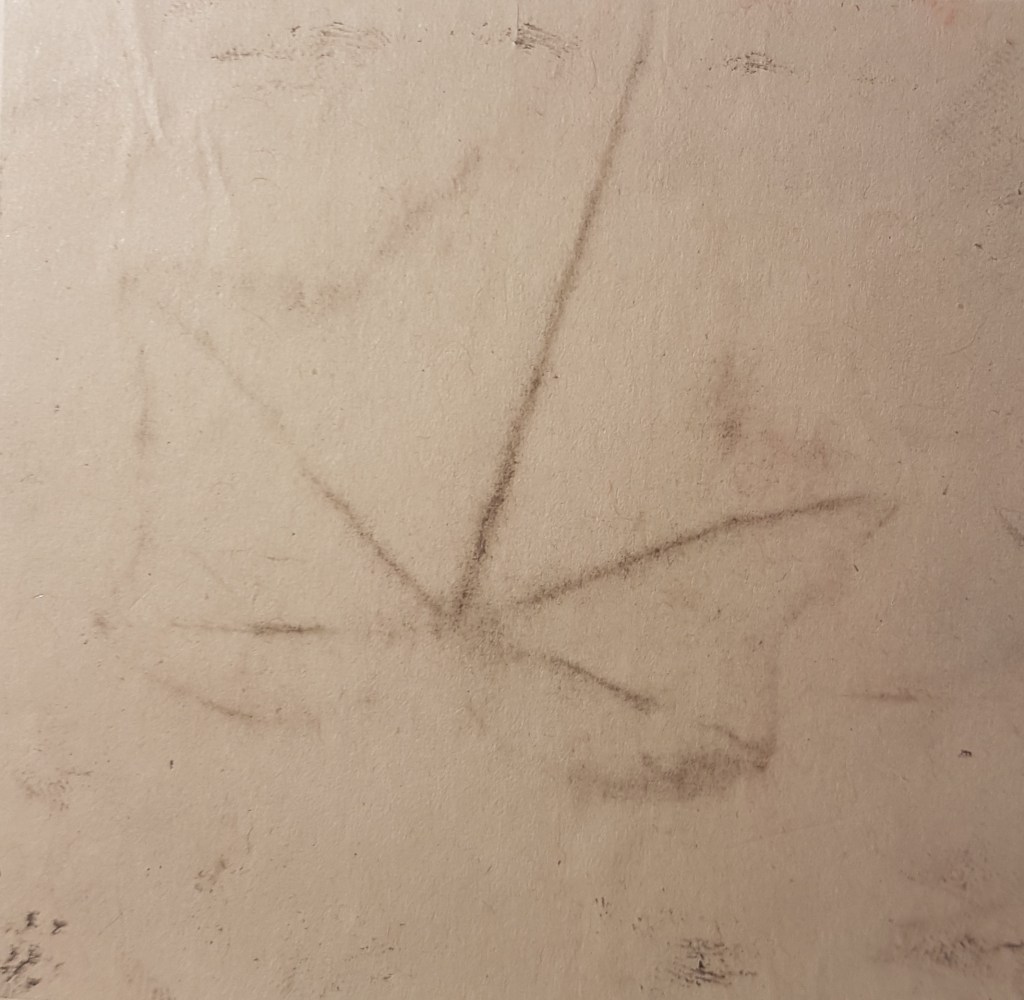
[1] Leaf 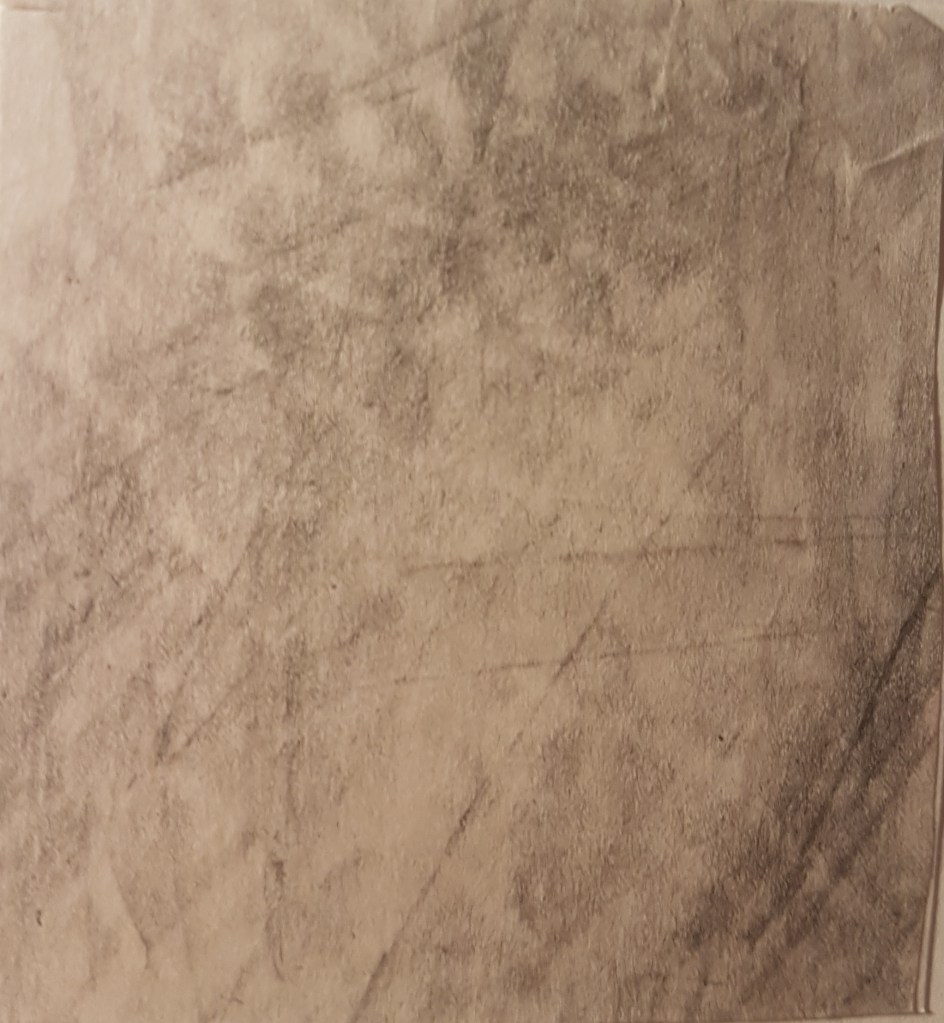
[2] Leather bag 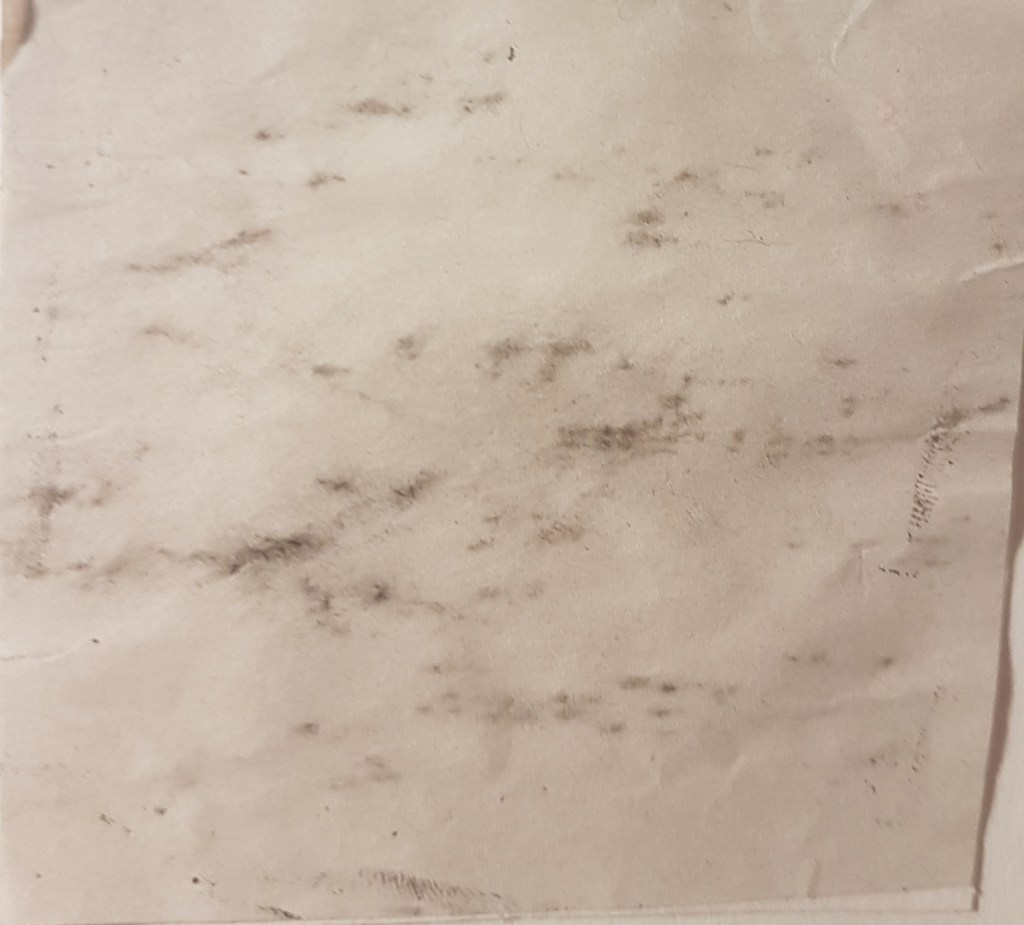
[3] Wooden furniture
I decided to try rubbing in charcoal, since its a softer/looser substance I expected softer rubbings. [1] came out rather faint, this may be due to the soft charcoal I used or not applying enough texture, regardless the main leaf structure and outline is there. In my second attempt on a leather bag [2] I think I really captured the texture and pattern of the bag material, a faux snake skin leather, which again is useful for looing the capture texture within a drawing without using rubbings. Seeing how the area of light and dark create the pattern will help me to recreate it in drawings. Finally, [3] was not the best rubbing, You can tell that the wood is a bit rough, but its hard to tell what the texture is in my opinion. I didn’t pick the best texture to get a rubbing from.
Experimenting with frottage- Soft Pastels

[1] Wooden Carving 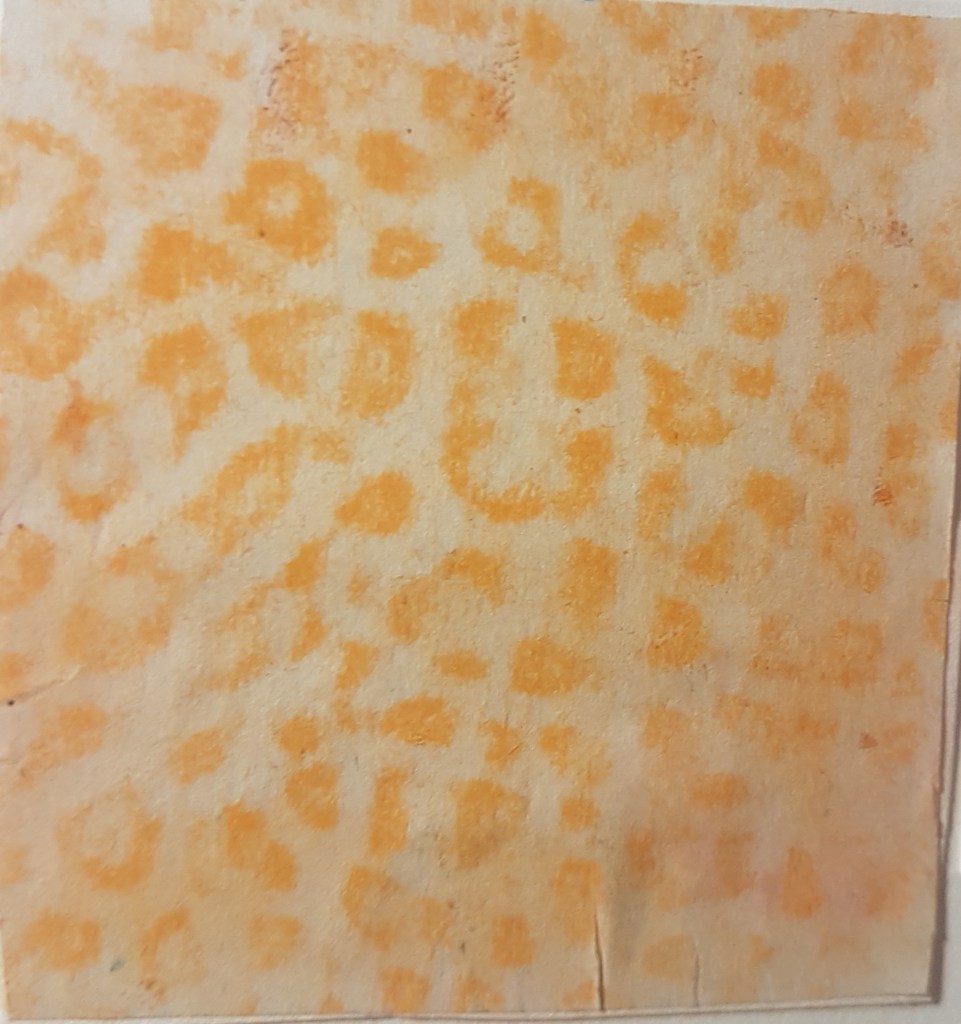
[2] Leather bag 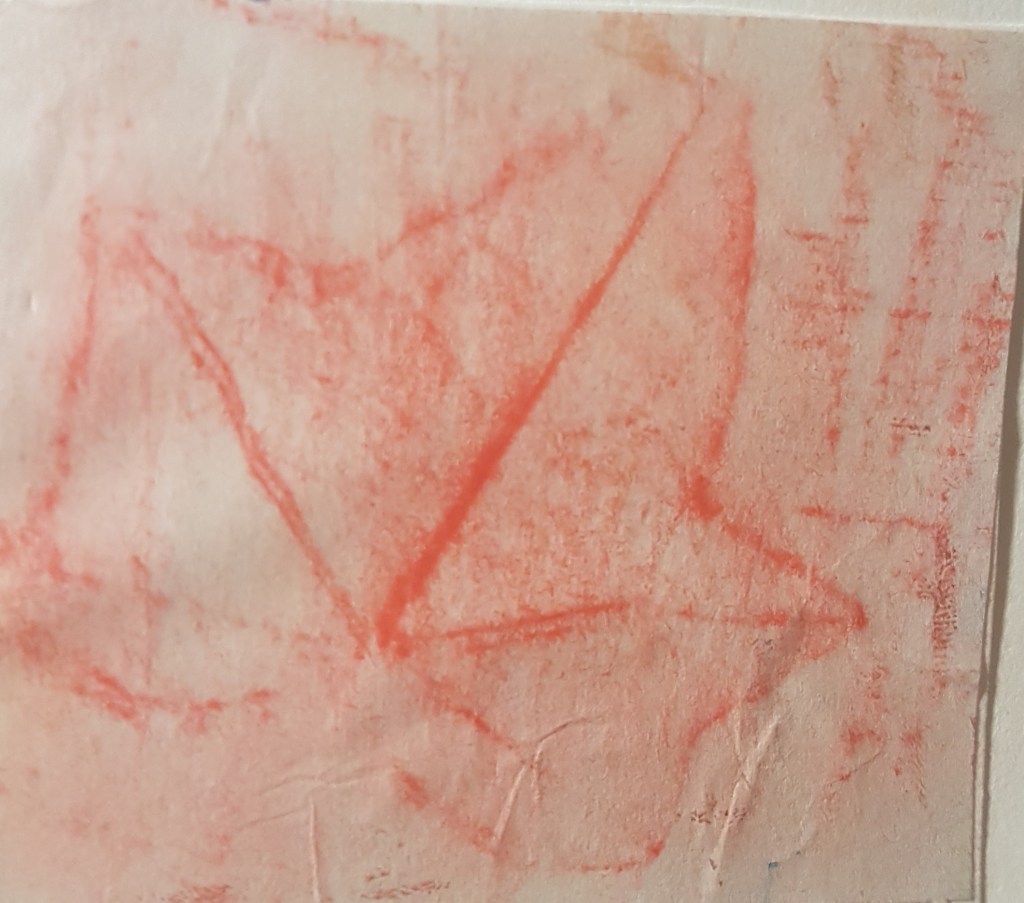
[3] Leaf
I decided to switch it up and used a similar medium to charcoal, soft pastels, but used a variety of colours to experiment. Firstly I tried a bright red on a wooden carving, I think it’s clear that these are good at capturing detail. The main shape of the carving was captured quite well. I like the effect of using a colour rather than black charcoal in [2] as with the texture of the leather, its quite like an animal print you’d find on clothing. I think my attempt at a leaf rubbing [3] came out a lot better than my previous attempt with charcoal, the shape is a lot clearer and the outlines are bold.
Final thoughts
I thought that these exercises were really useful in helping me to understand texture, and how to go about recreating it in a drawing. Using frottage and rubbings and seeing how texture comes out and the shapes and tone it creates helps me to think about how I would recreate certain textures for my drawings.
 Simona Hopewell : Drawing 1