As I begin Project 1 I start with experimenting with expressive lines and marks, which is useful to show yourself how emotions can make their way into your work in the most subtle ways. How feeling happy, sad or angry can effect the pressure and movement of your strokes and thus your drawing begins to express these emotions in your work. This experiment can open your eyes as to how you can create a piece much more personal to you and can help the viewer of your work to feel what you are emoting in a much more touching way than just the content of your piece.
Exploring the emotion of Anger
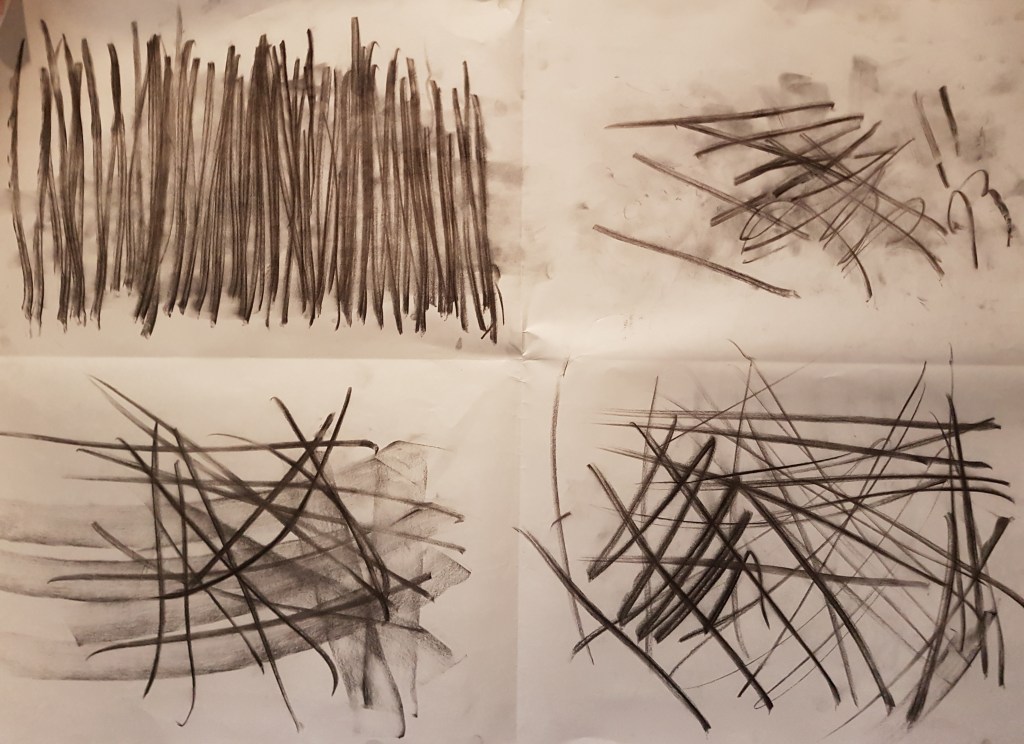
For my first set of four images, I tried to emote anger in my markings. To get into the mindset of anger, I looked to the recent memories of losing a friend that are still fresh. This fuelled the emotion in my work, and found that it encouraged me to create harsh, bold strokes.

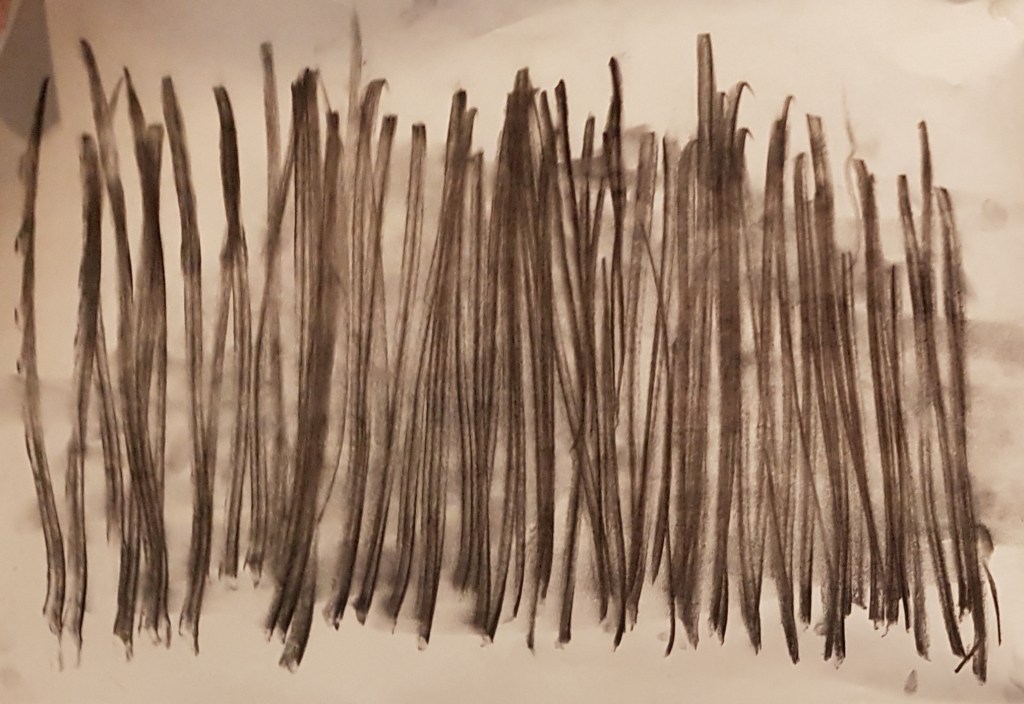
In this first attempt I kept to creating quick strokes. I went with quite an aggressive approach, creating bold straight lines which were almost attacking the page. I used a lot of force but kept my charcoal stick intact. As seen a bit left from the middle, I tried to switch up the way I did my strokes by trying aggressive squiggles.
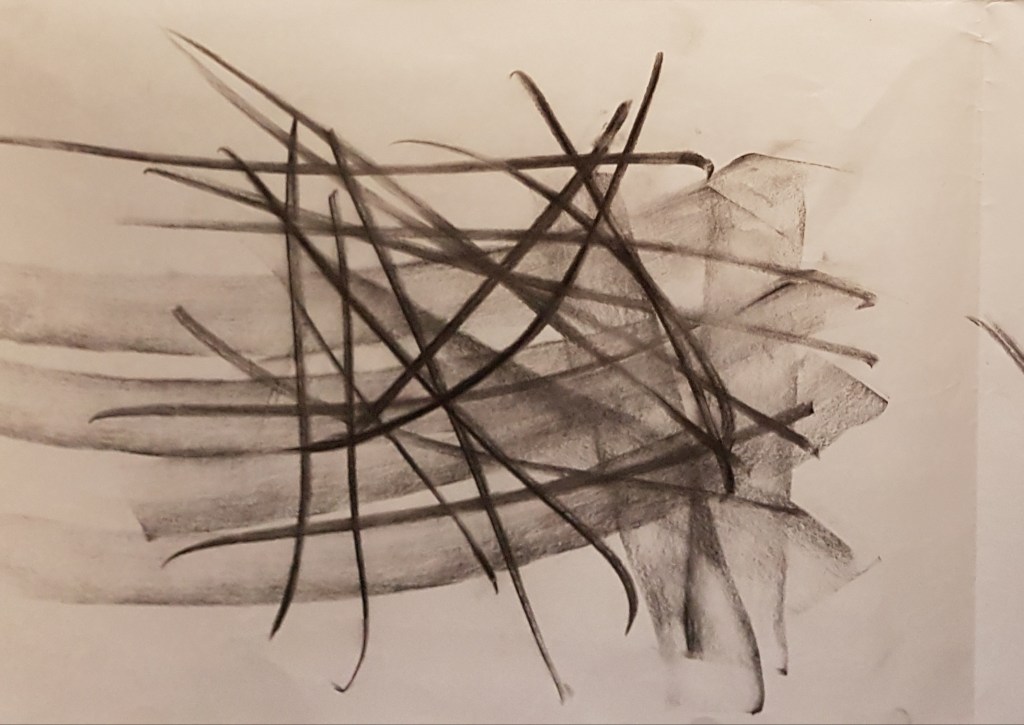
In my second attempt, I utilised the straight strokes again, however I tried curving some of them which changed up piece from my previous attempt. I also tried turning my charcoal stick on its side to experiment with how I can create angry markings that way. I like how my markings look when I turn the charcoal stick on its side, I think the soft sweep across the page adds body to my marks in a way.
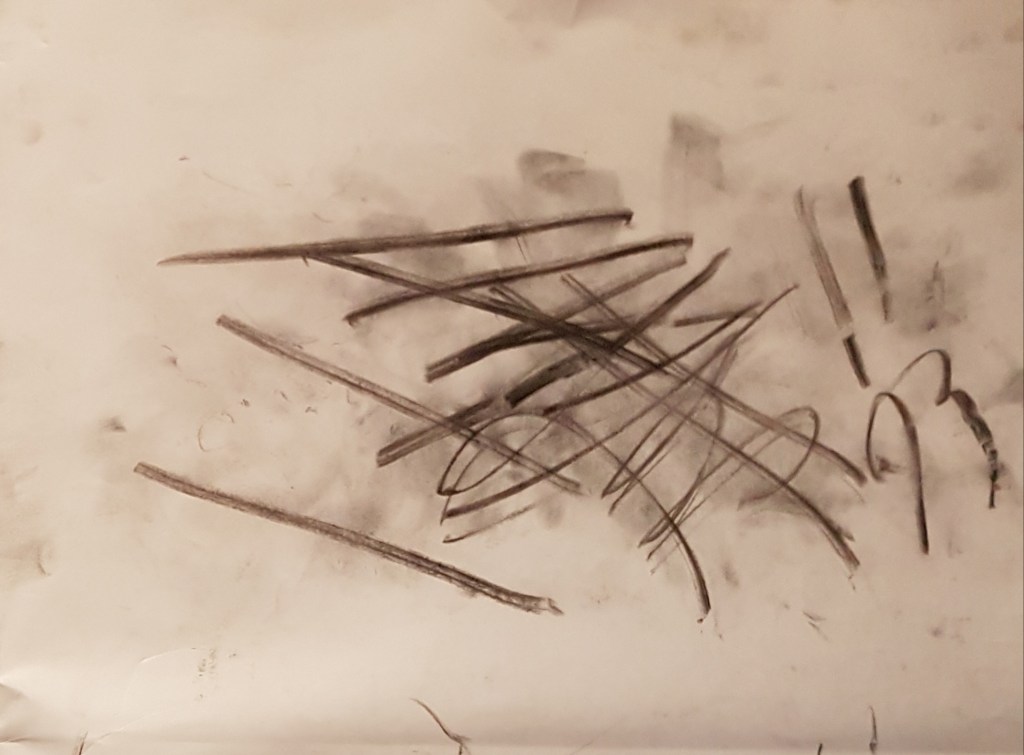
In this attempt I found my anger came out best in fast straight lines. I pressed harder in an act of expressing anger, and ending up crumbling the charcoal as I drew, leaving charcoal fallout all over the page. As I rubbed it off in a brash manner I found it worked effectively to make an aggressive atmosphere and worked well at showing frustration within and around the markings.
In this attempt I took what I learned from my previous attempt and applied it here. I kept to straight, hard strokes, which created fallout, and brushed them off harshly when I finished to create an angry overall feeling to this attempt. I found throughout this part of the exercise how applying hard pressure, and fast abrupt movements to my strokes can help effectively create an angry feel to my piece. This can be applied to how I draw to help subtly tell the audience what I’m feeling or what I would like for them to take away from a piece in terms of emotion.
Exploring the emotion of joy
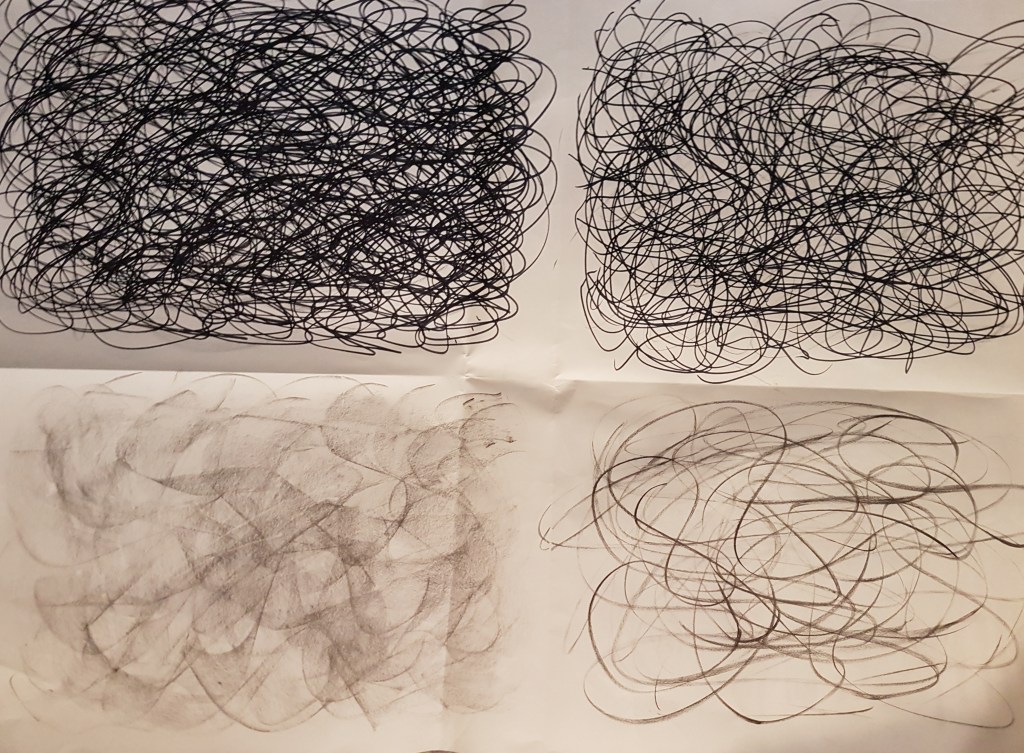
For these four attempts at creating joyful, happy markings, I took inspiration from looking at photos of times where I felt happiest. This helped ease my mind from being influenced from my previous attempt and got me into the right frame of mind to create something that represents joy. I found that in a more positive state of mind I liked my markings to be long and loose, and that I like to incorporate curves.
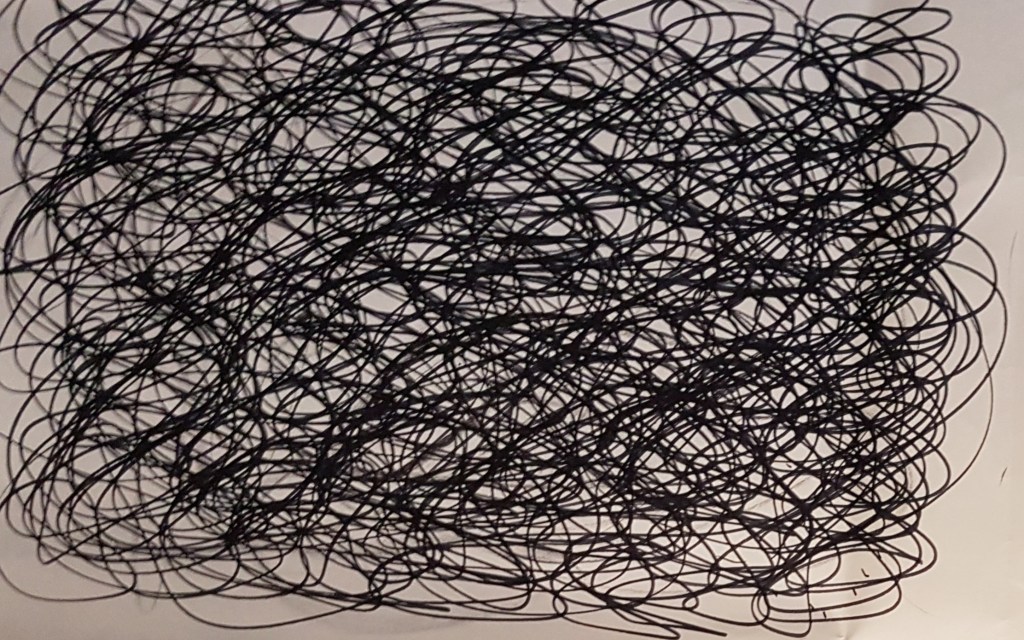
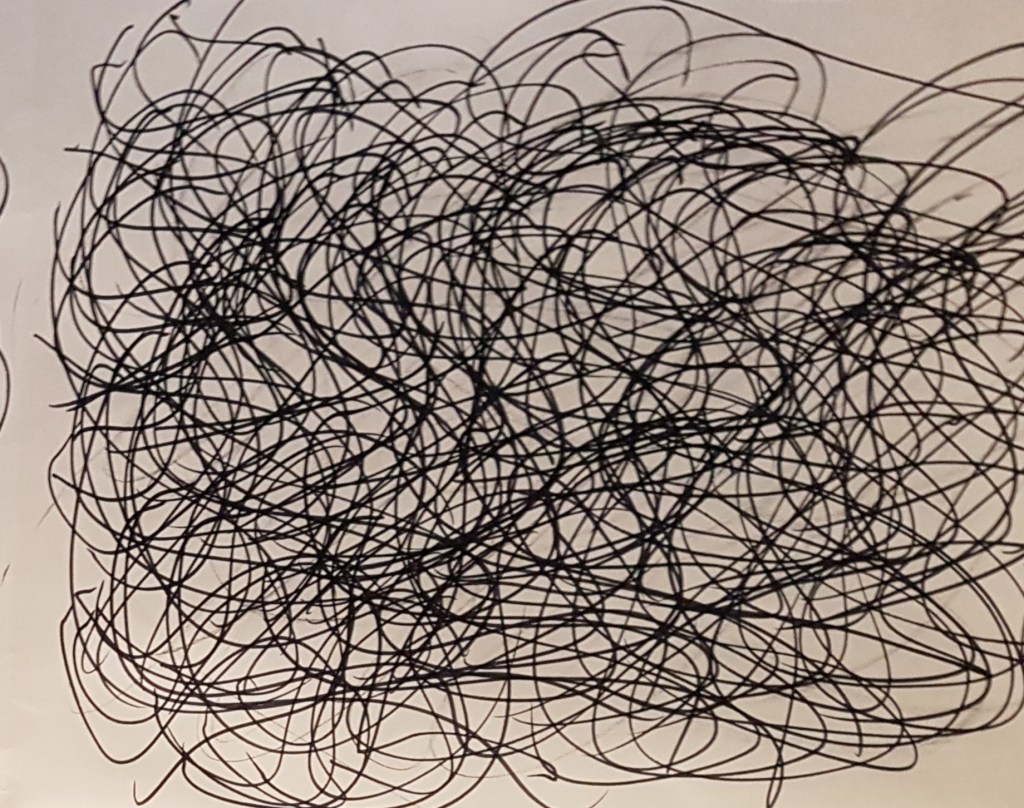
For my first two attempts I changed up my medium to a black marker. Its very bold and contrast hugely with my white paper. The issue with using a black marker is, unlike charcoal, varied pressure doesn’t so easily show up. However the marker is loose and slips along the surface which matches the movement I opted for in expressing myself. I kept to a movement of a ‘figure of eight’ , loosely curving my pen around the page. I think the end result juxtaposes my feelings in some ways, as its quite messy could allude to frustration or anxiety, especially without the variation of pressure being visible in my markings. However I think that the messy result could also resemble the excitement one feels when happy, like butterflies in a stomach. To improve, I thought I would try again with my charcoal stick.
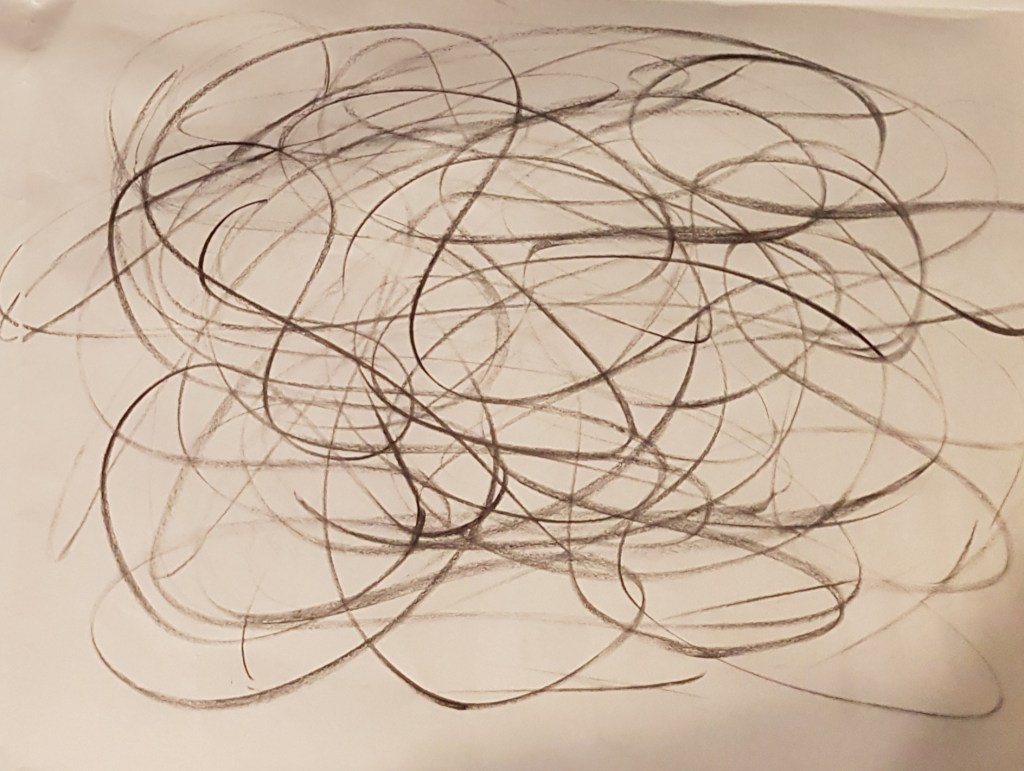
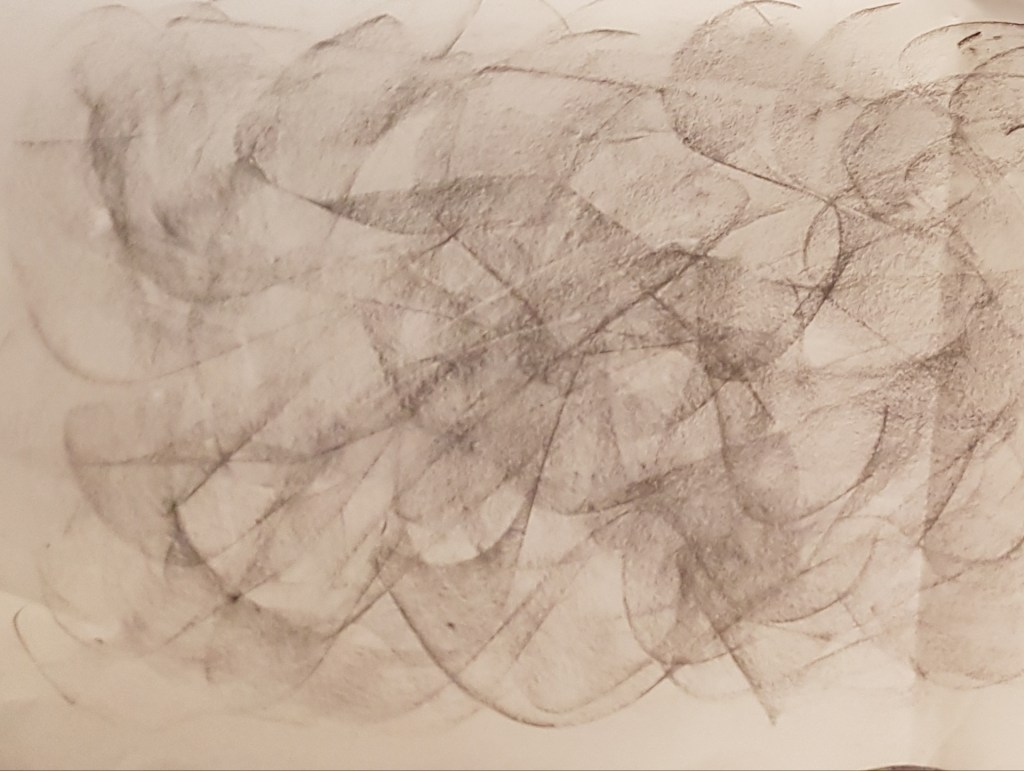
For these two I used charcoal with similar movements to my previous two attempts. I think my third attempt really captures joy with the swift and loose movement combined with the tone created by the varied pressure being visible as I move around the page. I think it really embodies the excitement that comes with happiness/joy. I stopped earlier in my tracks this time as well, which doesn’t make this piece feel clustered and overwhelming, which I feel my previous two attempts did. For the fourth piece I turned my charcoal stick on its side and tried to curve it around the page. It created much softer and more delicate markings than my previous attempt, which I rather liked, as it depicts how happiness is fleeting and doesn’t always last long. What I have taken away from this is that being softer in my strokes can help create a more delicate and joyous feel to my work.
Exploring the emotion of calm
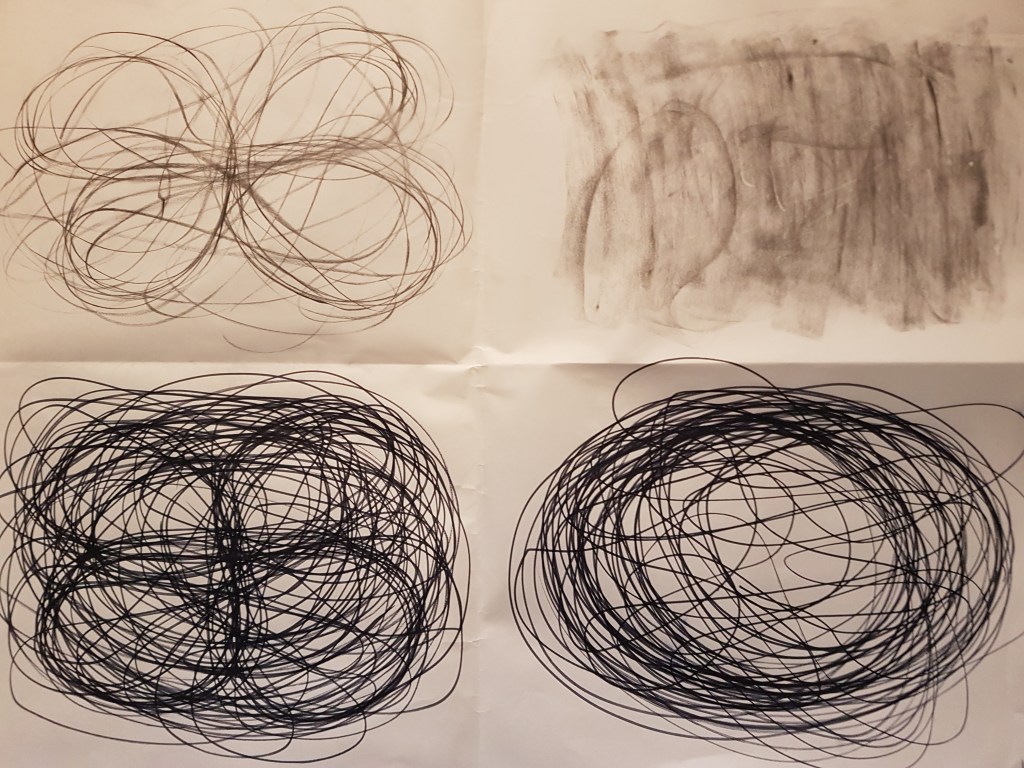
I found when exploring this emotion, my movements being loose and wide. After exploring the previous emotion of joy, I felt I was in a good place to start exploring calmness. I sat and closed my eyes and moved my arm around the page in repeated, smooth motions. I stuck to a movement in a figure of eight, or circular motions.
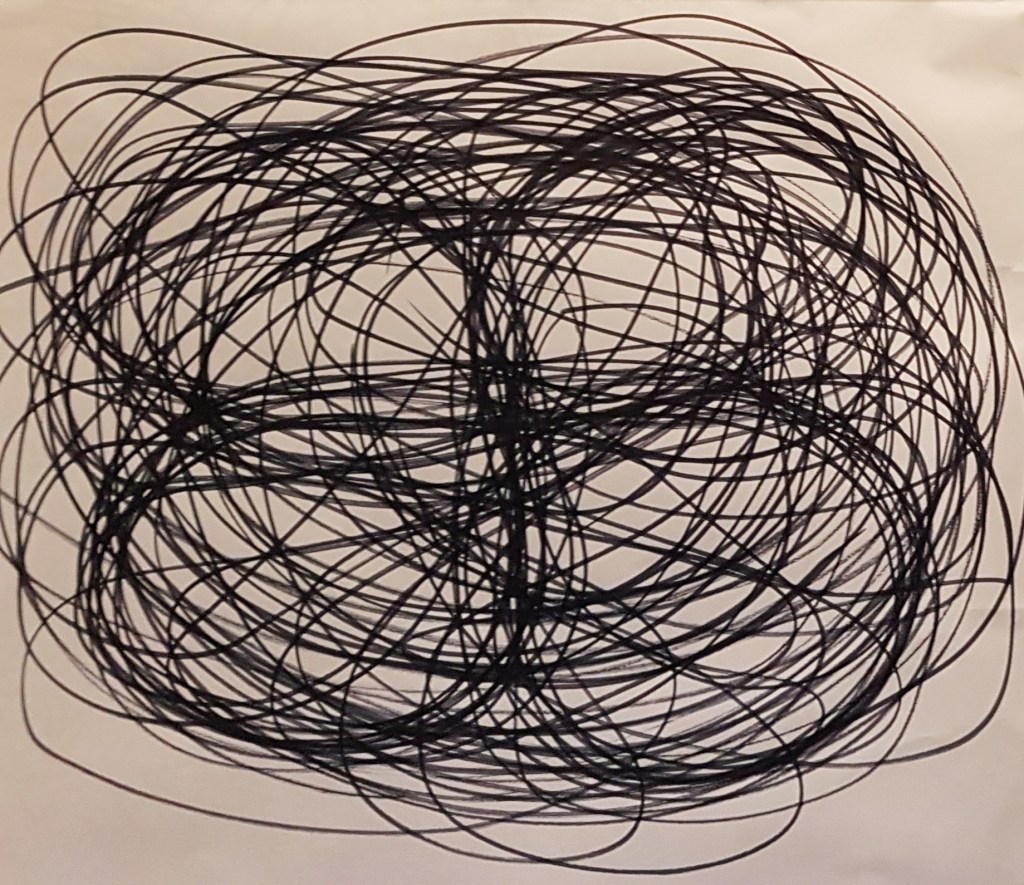
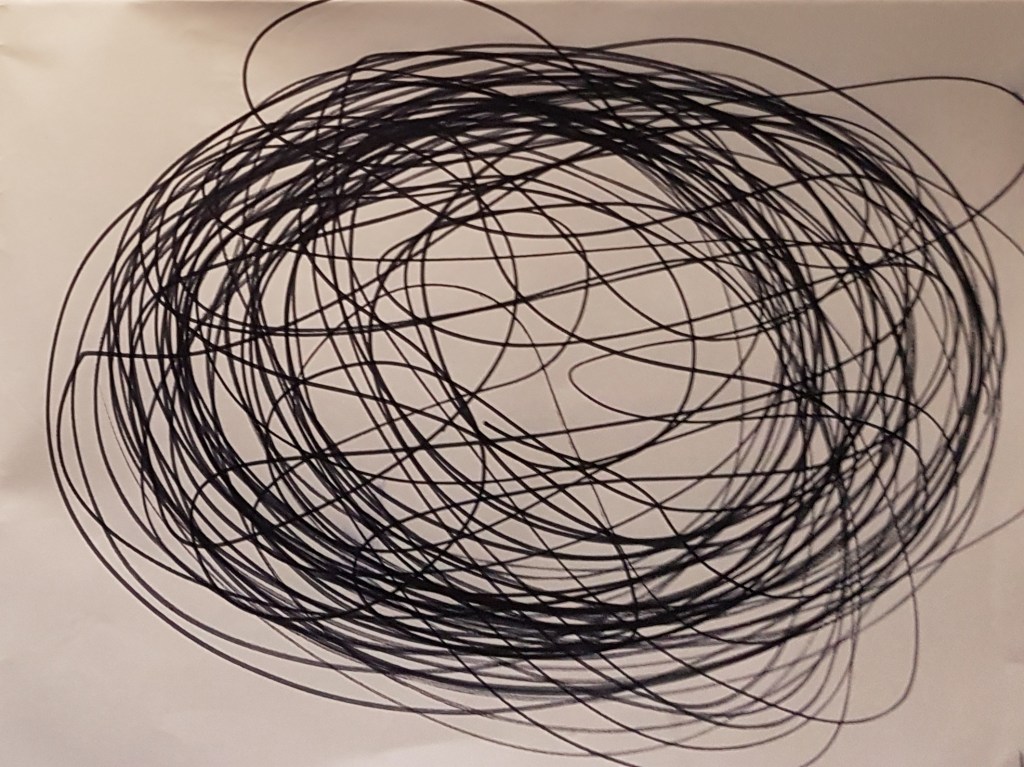
I tried using a marker pen again to get bold clear lines, I wanted the path my pen took to be clearly seen. In my first attempt I went around the page in a figure of eight motion, sometimes doing it on a smaller scale, and building it up bigger to fill out the page. I find repeating movements over and over is very calming, and helps maintain that calm feeling when making my marks. Using the marker was intentional to see the journey of my movement so for my next to attempts, I wanted to go back to charcoal to experiment with the pressure side of my markings.
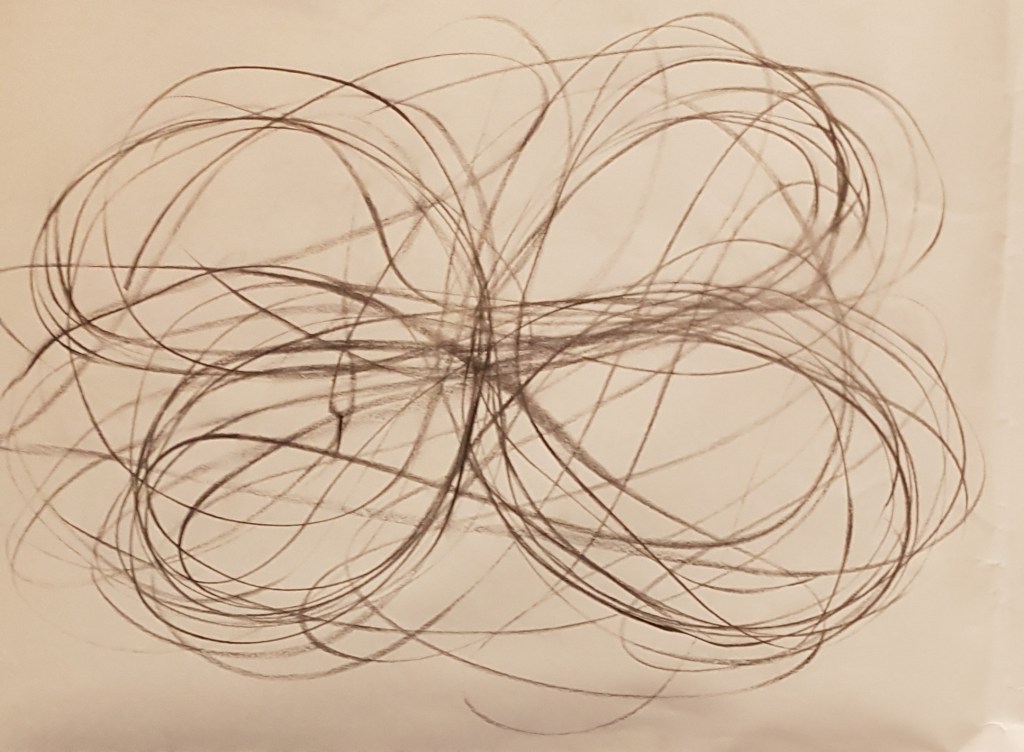
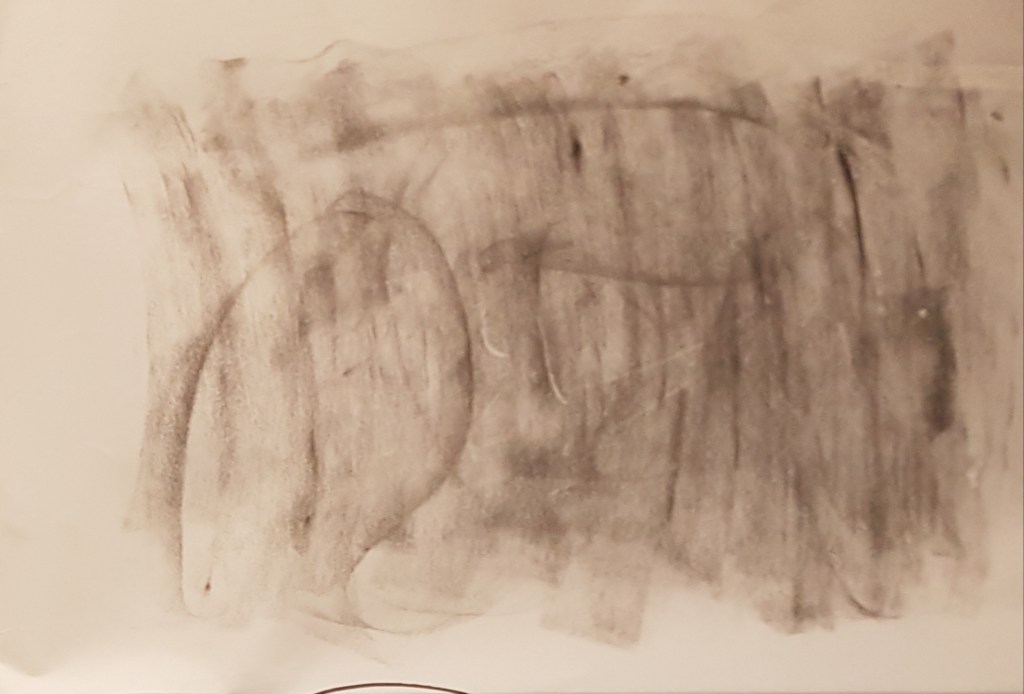
With my third attempt I kept to the figure of eight motion like my previous attempt however this time, due to my change in medium, you can see the soft pressure I use, especially when it comes to the curves. For my fourth attempt I switched it up a little more and turned my charcoal stick on its side to get a soft gradient, and created long straight lines. I then rubbed my fingers through it to create streaks. I focused more on the aspects of creating a calming experience while creating my marks. For me expressing my marks with a calmness to them is creating and maintaining a calm feeling when drawing.
Exploring the emotion of confusion
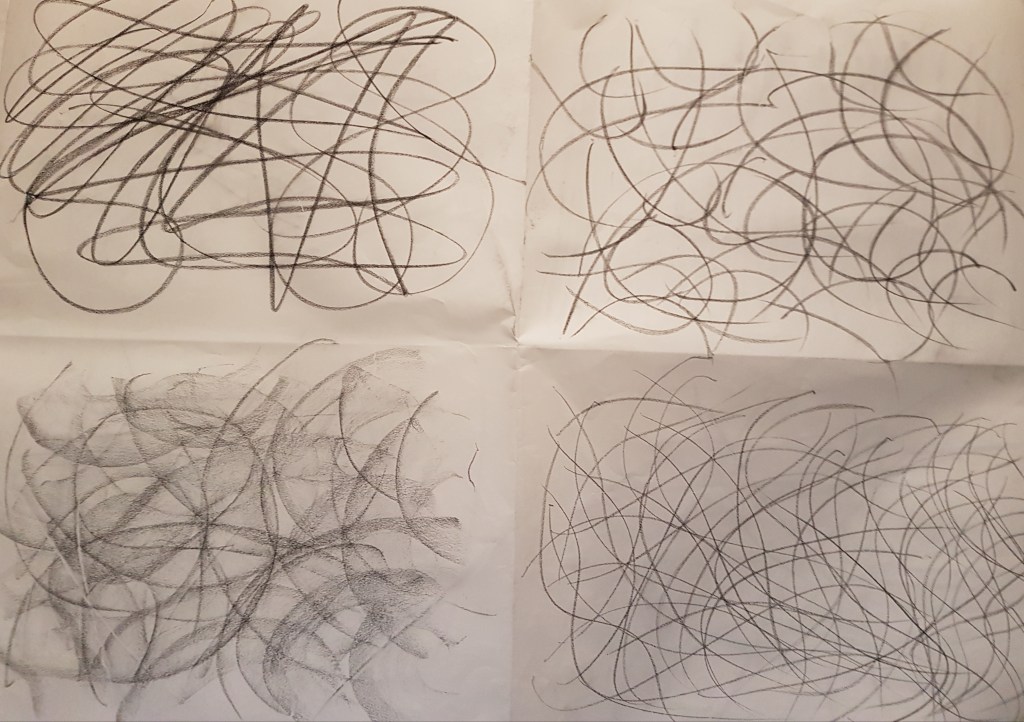
In order to prepare for this emotion I revisited some past memories which have left me still wondering what happened, or what went wrong. My markings, I feel, ended up a bit on the unpredictable side which I think worked well to express the emotion.
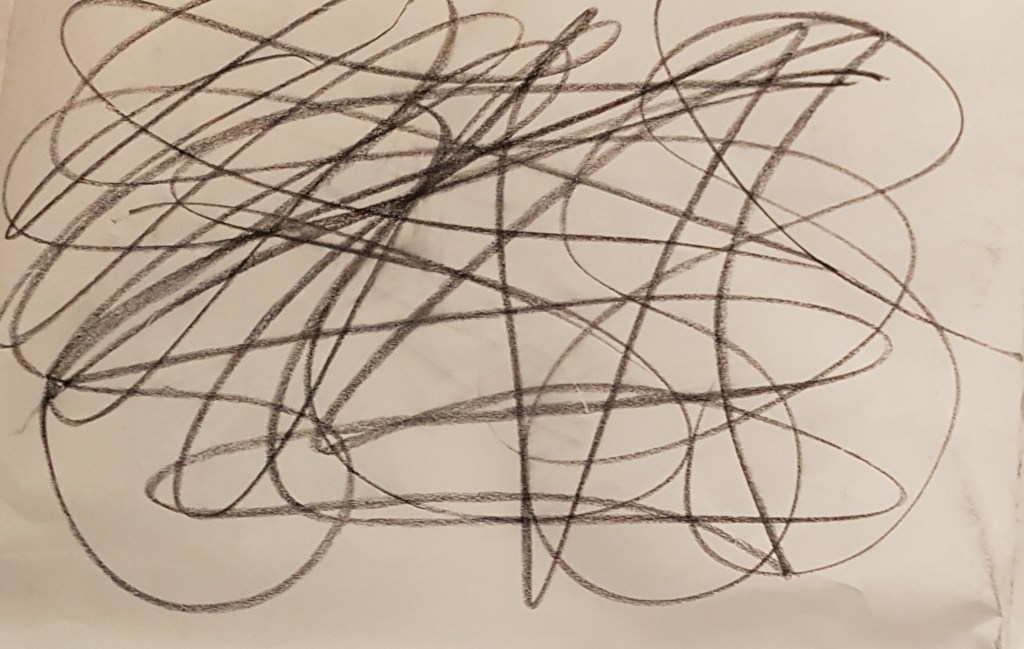
In this first attempt, I had my hand move in random, unpredictable movements, creating this long line of many twists and turns. I like how there is one line straight in the middle, which draws the eye in to the centre. You can also see how my pressure varies with my use of charcoal, though it tends to remain firmer than my markings based on joy.
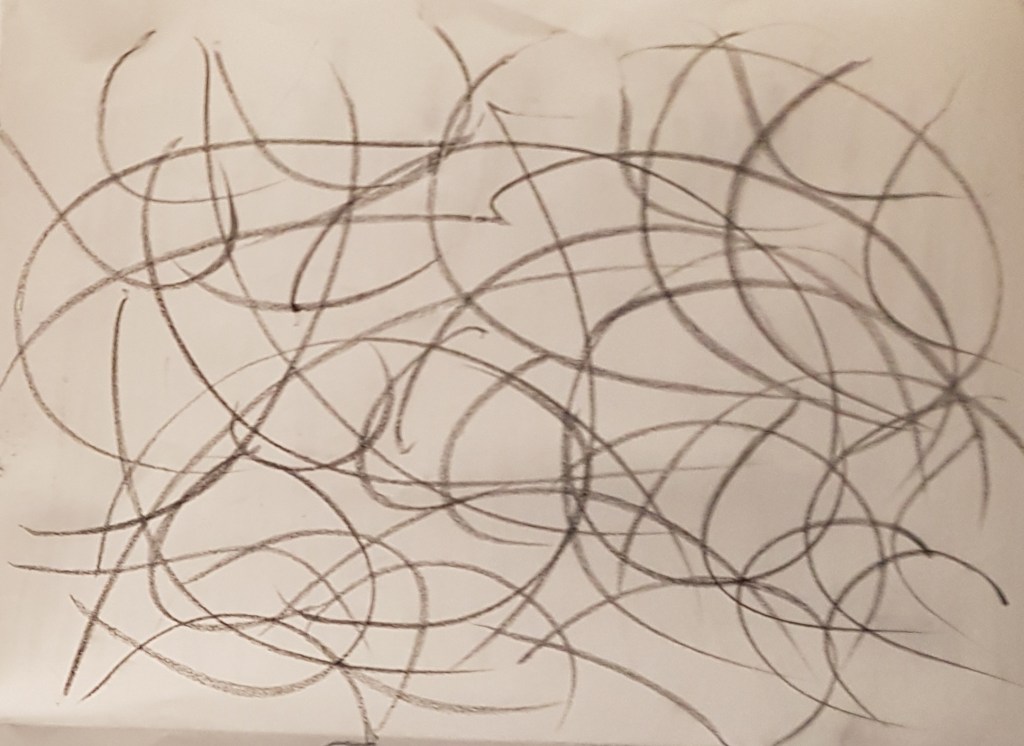
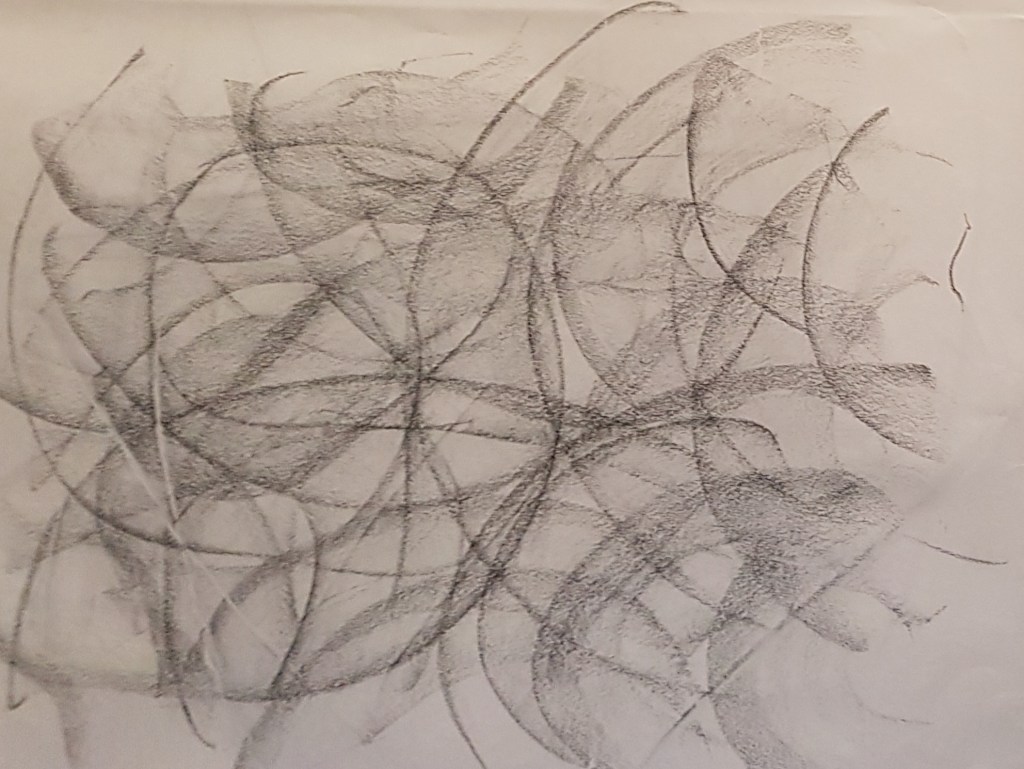
In these two attempts at making markings with confusion, I tried a curved stroke in a ‘c’ shape and repeating it. I quite liked how they turned out, both are similar in terms of the composition of the lines, however I prefer the third attempt where I turned the charcoal stick on its side again. I think it works well to add body to the piece. I think both work well to display the feeling of confusion.
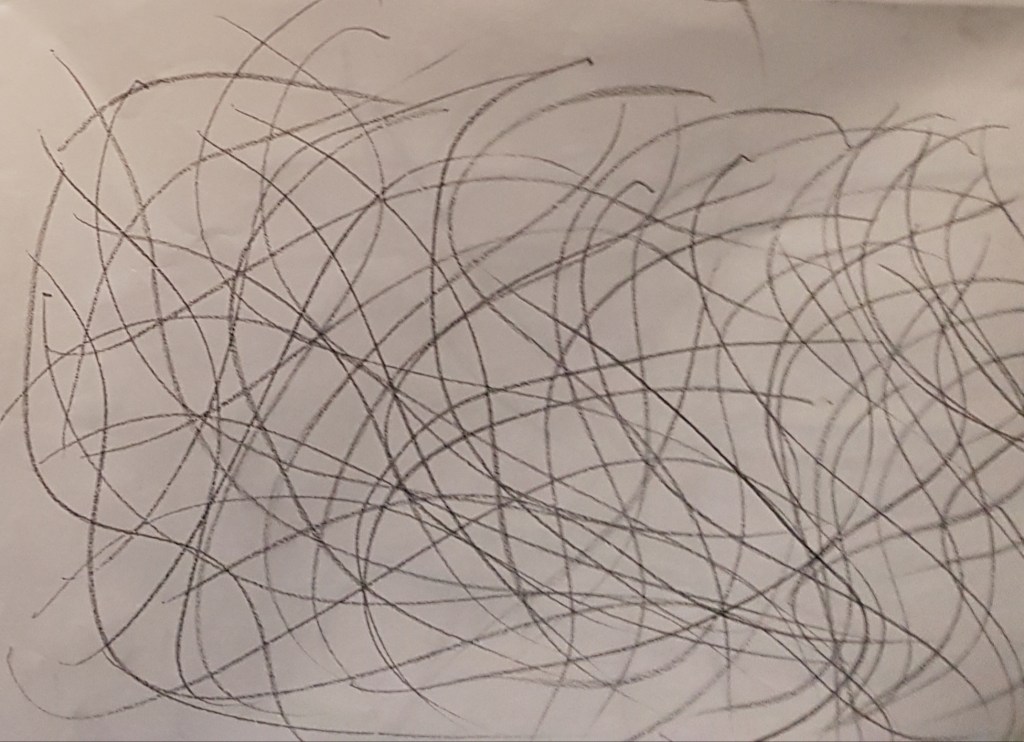
I took what I did previously and expanded on it, this time building up a composition of ‘s’ shaped lines and some ‘c’ shaped lines. I think I filled the page the right amount to make it feel full, but not overwhelming or too little. However I think my third attempt from this emotion works best to display feelings of confusion.
Final Thoughts
I found this exercise very useful in demonstrating the importance of our markings and how they purvey so much more than just a line. Harder pressure can help the viewer to perceive an angry stroke, and therefore affect what the take away from a drawing all together. Where as a lighter, more delicate use of pressure can help create the effect of something sadder or happier within the emotion the markings can give off or with how delicate they feel. Having the right media to create these emotional markings is also crucial. Something like a pen or ink may struggle to give you the variation in tone to show the pressure within the markings being created. Other media like charcoal or pencils can give you that. Your choice of media and your attitude when drawing can have drastic effects on the outcome.
 Simona Hopewell : Drawing 1